
By Ergys Gjencaj in Tirana
As Kosovo’s independence looms on the horizon, Albanian politicians have been going out of their way to reject any idea of unification with the world’s soon-to-be newest state.
Tirana has made it clear that the creation of a Greater Albania, bringing together ethnic Albanians in the two countries, would be detrimental to the cause of EU integration for Albania, Kosovo and the entire region.
Instead, Albanian politicians, both in government and the opposition, have given their full backing to the plan presented by the former UN envoy, Martti Ahtisaari, for the internationally-supervised independence of Kosovo.
To the extent that they see any prospect for forging closer links with Kosovo’s Albanians, the Tirana leadership envisages that development as part of the process of integration within the EU itself.
Even without its strong European agenda, there are reasons why Albania should be wary of any talk of unification with Kosovo, not least because it could create rivalries between the two centres of power in Tirana and Pristina.
For all these reasons Tirana dismisses the notion of a Greater Albania which, in the past it was often accused by Serbia of trying to create through inciting rebellion in Kosovo. Belgrade’s accusations were levelled at an alleged plan to bring together in one state ethnic Albanians not only from Albania and Kosovo but potentially also from Macedonia, Montenegro and Greece.
Conscious that the independence of Kosovo rests on the will of the international community, Albania has been treading carefully, and subscribing to the policy of being an “actor” rather than a “factor” in the process of determining the province’s future status.
On his first visit to Kosovo as Albania’s head of state, last month President Bamir Topi restated that policy by saying that Kosovo should declare independence in coordination with the international factors – the US and the EU. He also voiced Tirana’s caution over the timing of recognizing Kosovo’s independence, implying that it would wait for the US and EU countries to do that first.
“We will be among the first, but I believe we will not be the first … however, with the heart and soul, we will be the first,” Topi told reporters after visiting the Pristina offices of the UN administration, UNMIK, which has been running Kosovo since 1999.
Topi reiterated that Albania would respect national borders when Kosovo declares its independence, and expressed the hope that “Serbia will not remain a hostage to nationalist scenarios,” and would eventually recognize Kosovo’s separate statehood.
Prec Zogaj, the head of the Albanian Parliament’s Foreign Relations Committee, views Kosovo’s declaration of independence as the culmination of a chapter in the entire region’s history.
“We have been loyal in our joint declaration with the EU and the US, by restating the now famous three “nos” proposed by the international Contact Group: no to the unification of Kosovo with another country, no partition and no return to the pre-1999 situation, as the basis for a future independent Kosovo,” Zogaj said, referring to the principles originally laid down by the Contact Group that brings together five Western powers and Russia.
Zogaj argues that in the era of integration and globalization, ethnically-based states are an anachronism that creates tensions, and helps those who are trying to undermine a settlement in Kosovo.
“Whatever happens, we must not fall into such a trap,” he warns.
For the opposition, ex-Prime Minister Ilir Meta agrees that Kosovo and Albania should not be united. The leader of the Socialist Movement for Integration believes that in any case, such an idea is a project that did not come from the Albanians themselves in the first place.
“It is an idea that sprang from Mussolini during World War Two, when he was trying to get more support from the Albanian population during the fascist invasion,” says Meta, recalling the time when Albania and Kosovo were united under Italian occupation.
However, among many Albanians there is an interest in forging closer links with their fellow-Albanians in Kosovo. That was indicated during a recent debate on commercial broadcaster TV Vizion Plus when the overwhelming majority of those who sent in text messages from their mobile phones said they were in favour of some kind of union between Albania and Kosovo – as part of European integration.
Meta argues that projects, such as a “Greater Albania” or a “Greater Serbia” have failed, and Tirana’s priority is to secure rights for Albanians, wherever they live, that are in accordance with the highest European standards.
“Integration into the EU is the most important pillar of our foreign,” the former prime minister says, recalling that nationalist project, such as the one the former Serbian leader Slobodan Milosevic pursued during the 1990s, were a tragedy for the Balkans and the Serbs in the first place.
Keeping in step with the EU’s policy is crucial for Albania at a time when it is seeking candidate member status of the 27-nation bloc. But there are other, domestic reasons why the prospect of unification with Kosovo is not particularly enticing.
Some believe a Greater Albania would encourage rivalry for supremacy between the political establishments of Tirana and Pristina. Others are concerned that it would upset the balance between Ghegs, the speakers of the northern Albanian dialect, who would become a big majority together with the Kosovars, and the Tosks who speak the southern dialect.
However, historian Sabri Godo dismisses the idea that these traditional inter-Albanian divisions matter in the 21st century.
“There is no way there would be any shattering of the balance between Ghegs and Tosks. I believe this whole idea is looking back to the past and to the regionalism that belongs to the past.”
Nonetheless, these domestic considerations, along with a reluctance to shoulder part of the burden of what may prove to be a long period of Serbian hostility to Kosovo, all militate against the notion of promoting unification with Kosovo.
“The prospect of a Greater Albania would have serious negative implications for Albania’s own internal political stability,” says Richard Eames, a Vienna-based senior analyst with the Economist Intelligence Unit.
The key issue, as seen in Tirana, is to demonstrate to the EU Albania’s commitment to security in the Balkans.
According to the Minister of European Integration, Majlinda Bregu, Tirana’s official stance is that there should be no changes to existing borders in the region after the creation of an independent Kosovar state, which she says will help guarantee peace and stability in a troubled region.
“We are looking forward to Kosovo’s declaration of independence, but this does not mean to us the creation of a “Greater Albania,” Bregu says.
One of the widely shared, but usually unstated, assumptions in Tirana is that Albania, which has gone a long way towards integration with the EU, would not want this process slowed down, if it had to wait for Kosovo to catch up. That, too, is a powerful argument against seeking unification with Kosovo.
Bregu argues that Albania is fully committed to a partnership of good neighbourly relations with Kosovo, and this engagement extends to Serbia also.
“European integration remains the major goal of all the countries in the region, and after all, when that happens, we will all be united then,” she adds.
Tirana Shuns Greater Albania

Change font size:
Latest from Op-Ed

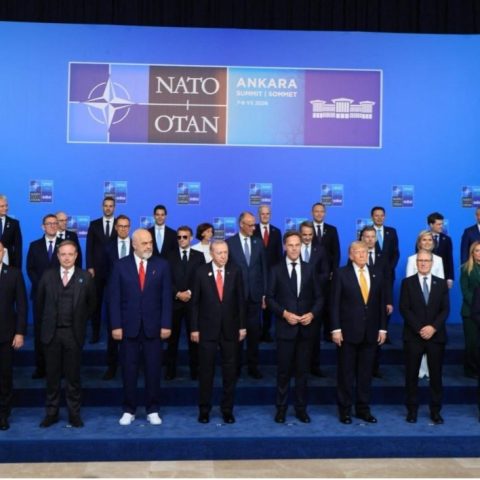
NATO’s Ankara Summit and Albania’s Uncertain Moment
Change font size: - + Reset Tirana Times, July 07, 2026 – The next NATO Summit, where the leaders of Allied member states gather annually, will take place on July 7–8, 2026,

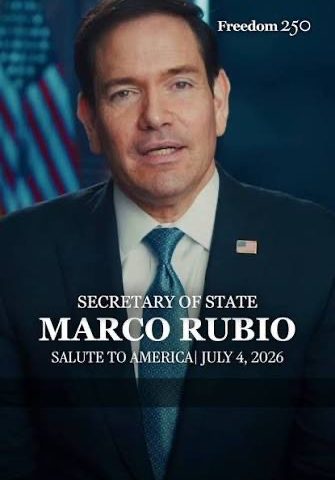
A salute to America
Change font size: - + Reset By Marco Rubio Two hundred and fifty years ago today, in a brick hall in Philadelphia, our forefathers declared their independence from the most powerful empire

From the Nile to the Balkans
Change font size: - + Reset By Dr. Arben Ramkaj Tirana Times, July 3, 2026 – If you sit by the banks of the Nile on a quiet afternoon and allow its

The Strategic Price of Non-Enlargement
Change font size: - + Reset By Albert Rakipi Tirana Times, June 30, 2026 – For more than two decades, the Western Balkans have lived inside the promise of European integration. In

The Political Myth of the “Beautiful Protest”
Change font size: - + Reset A Barthesian Reading By Diana Gëllçi, Ph.D. Tirana Times, June 30, 2026 – A beautiful protest has been unfolding in Tirana for several weeks. What is particularly