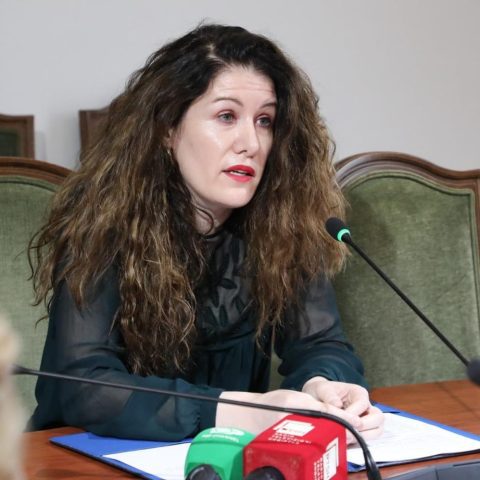
“These are farmers mainly producing for their own needs and not to sell and in Albania there are 300,000 such farmers,” says Fahrad Mehrani, an international consultant who has been hired by INSTAT
TIRANA, Feb. 11 – The review of Albania’s unemployment methodology based on the latest standards recommended by the International Labour Organization is expected to increase Albania’s official jobless rate to 21 percent, up from around 13 percent currently. The country’s Institute of Statistics, INSTAT, currently calculates the unemployment rate based on people who register themselves as jobless with employment offices and excludes around 520,000 people in rural areas, considering them as self-employed in the private agricultural sector because of possessing land.
Fahrad Mehrani, an international consultant who has been hired by INSTAT to improve official statistics, tells local media the new methodology will give a more realistic picture on Albania’s unemployment.
“The key reason is related to the treatment of people who struggle to make ends meet, especially in the agriculture sector. These are farmers mainly producing for their own needs and not to sell and in Albania there are 300,000 such farmers. To date, they were described as employed but under new standards this category is no longer considered employed. The part of farmers putting pressure on the market by seeking jobs will be registered as jobless and there are 40,000 such farmers,” says Mehrani.
The consultant says that if the number of underemployed people and discouraged workers is taken into account, Albania’s official unemployment rate increases to 40 percent.
Just before the June 2013 general election, the Socialist Party then in opposition, claimed Albania had 1 million jobless people, dismissing INSTAT data as fake and manipulated.
Albania’s unemployment rate climbed by 1.1 percent to 16.9 percent in the third quarter of 2013, says a labour force survey conducted by the country’s state Institute of Statistics. The survey on some 5,000 households nationwide showed Albania had some 190,000 jobless people aged from 15 to 64 years compared to 928,500 employed people.
INSTAT data show youth unemployment, people aged from 15 to 29 years, rose to 27 percent in the third quarter of 2013 and to 14 percent for the age-group of 30 to 64.
The survey shows most jobless people, some 88.6 percent, address relatives and friends to find a job. This method is combined with direct applications to employers (63.6 percent) and announcement on newspapers and websites.
INSTAT says 22 percent of employees in the third quarter of 2013 were employed in the market services, 17 percent in public services, 43 percent in agriculture, 8 percent in the construction sector and 7.5 percent in the processing industry.
INSTAT had earlier reported Albania’s unemployment rate remained at 12.8 percent in the third quarter 2013, unchanged for the fifth quarter in a row.
Despite the crisis it has been facing, Albania’s private sector which accounts for 80 percent of the GDP, continues remaining the top employer with around 83 percent of the total number of employees. While the number of people employed in the private agriculture sector is estimated at around 519,000 under an INSTAT survey, the number of those employed in the private non-agricultural sector rose by 5.7 percent to 288,380 in the third quarter of 2013, compared to the same period a year ago, according to INSTAT data. Compared to the third quarter of 2012, some 15,713 people were hired in the private non-agricultural sector.
The number of people employed in the public sector remained unchanged at 163,800 in the third quarter of the year. Albania’s minimum wage rose to 22,000 lek (Euro 154) in the third quarter of 2013, while average wages in the public sector rose to 52,600 (Euro 368). Only around 7,750 people benefit monthly unemployment assistance of around 6,850 lek (Euro 48).