The Albanian government owes the private sector in unpaid bills over Euro 200 million, with the majority Euro 120 million, belonging to the crisis-hit construction sector
TIRANA, Feb. 13 – The rising public debt, now standing above the 60 percent of the GDP ceiling, the accumulation of unpaid bills, and banks tightening lending standards as bad loans soar, has led to a sharp increase in informal borrowing. Gjergj Filipi, the director of Tirana-based Agenda Institute says businesses are turning to informal channels after being classified by banks as unreliable borrowers.
The phenomenon is admitted even by ruling majority MP Selami Xhepa, an economic expert, who says unpaid bills to businesses for public investments must be considered an emergency. “With this money businesses will be able to pay off loans in banks and informal loans stabilizing the financial market,” says Xhepa.
Local media report construction companies, whom government owes money for finished public works, are the most engaged in informal borrowing whose interest rates range up to 5 percent compared to an annual 10 to 12 percent in banks.
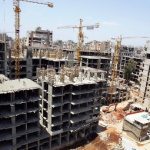
In crisis since the onset of the global financial crisis and facing liquidity problems the construction sector has been widely using the countertrade practice which involves the exchange of goods or services with other goods or services, rather than with money
The Albanian government owes the private sector in unpaid bills over Euro 200 million, according to economy experts and business representatives. The majority of unpaid bills, at an estimated Euro 120 million, belong to the crisis-hit construction sector, followed by Euro 50 million to service companies and 12 million euros in unpaid bills to hydropower plants concessionaries for electricity purchases. Businesses also claim dozens of millions of Euros in VAT refunds.
International financial institutions such as the IMF and the World Bank have also expressed concern over government’s unpaid bills to the private sector, suggesting government to use privatization receipts.
“Privatization receipts should be utilized in a balanced manner, to reduce debt and clear unpaid bills. Given the weak state of the economy today, and the recent buildup of unpaid bills and VAT refunds, part of the receipts should also be used to clear the backlog, which will support growth in the near term,” says the IMF.
One in three households and one out of two businesses already have a debt to pay and do not plan to borrow again in the short run, a Bank of Albania survey showed last year. The results reconfirm the difficult situation both households and businesses are facing as crisis impacts in Albania escalate with domestic consumption failing to recover because of consumers’ falling purchasing power and their rising saving trend expecting harsher times ahead. Bad loans at an official 22.3 percent at the end of the third quarter of 2012 is the clearest indicator of the difficult situation both consumers and businesses are facing to pay off loans they took in better times.
Some 31 percent of more than 1,000 surveyed households said they currently have a debt to pay, which marks a 4 percent increase compared to the second half of 2011. The majority 54 percent of households have borrowed informally from friends and relatives. What’s more concerning is that 15 percent of the surveyed households said they buy on credit from local shops. Borrowing from banks and non-banking financial institutions accounts for 43 percent of the total household’s debts.
The situation with businesses appears even more difficult with 56.4 percent of more than 700 surveyed businesses saying that have at least one debt to pay. Only around 16 percent of the businesses said they extended their activity by making investments in the first half of 2012.