
TIRANA, March 16, 2007 – The size of Albania’s public sector is largely appropriate, but the efficiency of public spending needs to be improved according to a report issued last week by the World Bank, in collaboration with Albania’s Ministry of Finance. “Restructuring Public Expenditures to Sustain Growth: A Public Expenditure and Institutional Review” reveals that the ways in which the public sector finances itself and spends its resources carries risks for Albania’s fiscal stance. Albania’s public spending in 2006 was 31 percent of GDP, with around six percent of GDP spent on physical capital investment. “To increase the efficiency of public resource use and improve its contribution to growth and poverty reduction, Albania must change the composition of its public spending, reduce its public debt, and deepen sectoral reforms in view of enhancing the productivity and sustainability of public capital,” says Alia Moubayed, Country Economist for Albania and lead author of the Report. The document suggests a strategy to maximize the growth impact of fiscal policy by restructuring expenditures and revenues. The Report has six major recommendations: First, altering the input mix of public spending is necessary to boost growth prospects. Alleviating the burden of interest payments will require a continued reduction in overall debt levels, lengthening the maturities of domestic debt, and seeking long-term external (official and private) financing. In parallel, an increase in the share of operations and maintenance is critical in order to maintain the stock of capital investments in good condition and clear backlog maintenance in transport and water. Wages and salaries should remain in check and managed within a comprehensive approach to civil service reform, while gradually reducing remaining subsidies, notably in the water and the railway sector. Maintaining capital spending at current levels would be most appropriate while ensuring that public investment projects are subject to rigorous appraisal, and selection procedures. Second, reallocating spending across sectors will help redirect additional resources to growth enhancing sectors such as education away from spending on general public services. Expenditures in infrastructure, health, and social protection should not increase until reforms to raise efficiency and reduce waste are implemented. Third, adjusting spending within sectors in response to demographic changes and requirements to improve service quality is needed. Additional spending in education should be reallocated to secondary education as secondary enrollment rises. In the health sector, shifting spending from the over-financed hospital sector and pharmaceuticals to preventive care and public health could significantly reduce the burden of non-communicable diseases and their related treatment costs. Moreover, Albania’s young demographic and employment profiles call for a comprehensive reform of pensions and social assistance and insurance programs, and corresponding adjustments to expenditures. Fourth, reducing regional disparities primarily rests on reviewing existing financing arrangements. This should be done through introducing objective criteria for allocating resources to local governments and service providers; linking these criteria to poverty or growth needs; shifting from allocations for recurrent spending based on input to those based on outcomes, local needs, and patterns of resource use; and establishing performance-based rules for allocating capital spending.
Fifth, giving a greater role to the private sector in financing and providing certain services will not only expand overall sector resources but also increase technical efficiency and improve outcomes. Given the reduction in concessional aid flows, Albania needs to deepen private participation, but must first establish a solid legal and institutional framework for public-private partnerships to avoid fiscal risks to the State Budget. It should also increase tariffs to cover costs in infrastructure and tertiary education while strengthening existing social safety net systems to protect the poor.
On the revenue side, a movement away from labor taxation will alleviate the disincentive for formal sector job creation and contribute to gradually formalizing the Albanian economy. The Report stresses that comprehensively restructuring expenditure programs depends on progress in building institutions for fiscal management and capacities to design and manage reforms in the public sector. This is possible through:
Deepening public financial management reforms by consolidating the links between strategic planning and medium-term and annual budgeting; developing transparent rules for in-year budget reallocations; and adopting a new Organic Budget Law to strengthen accountability.
Strengthening capital budget management by consolidating the portfolio of domestically-financed projects; implementing multi-year procurement with full costing of projects; building a robust system for selecting, appraising, and monitoring public investment, and upgrade project evaluation skills at the Ministry of Finance and line ministries; ensuring that appropriate operation and maintenance funding is allocated for planned investments; and channeling all donor funding through the Treasury.
Building an effective and merit-based civil service by ensuring compliance with the Civil Service Law on competitive recruitment and selection, due process protection, and redress mechanisms; continuing functional reviews in subordinate institutions; and reviewing and improving the current system of performance appraisal.
While recognizing recent progress in budget reforms and acknowledging the needs for financing public investment, the World Bank warns that public resources could be wasted unless the budgeting process is further improved. Completion rates for both national and donor-funded projects are low, planning and monitoring is inadequate, the recurrent cost implications of investment projects are not yet well budgeted, and fiduciary management, notably procurement, is weak. Without improved capacity for multi-year planning and budgeting capital investments, and better linking recurrent and capital spending, the risk of wasteful, politically expedient public investments is considerable.
“A single strategic framework for national priority and sectoral policy setting is a laudable step,” says Nadir Mohammed, Country Manager for Albania. “However, it needs to take account of public resource constraints, and ensure that publicly-funded projects, and those implemented in partnership with the private sector, are recorded in the budget with direct and indirect costs implications.”
WB publishes report on Albanian Public Spending

Change font size:
Recommended Articles



Latest from Business & Economy
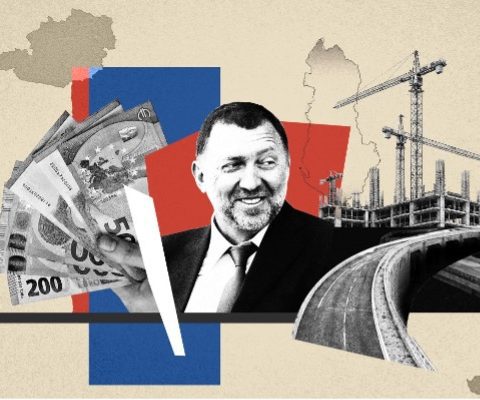
How a Sanctioned Russian Oligarch’s Business Interests Reached Albanian Public Contracts
Change font size: - + Reset Millions of euros flowed to companies linked to Strabag while Oleg Deripaska remained a major shareholder, exposing gaps in Albania’s ability to identify who ultimately benefits

Albania’s Cash Boom Raises Money Laundering Concerns
Change font size: - + Reset Cash outside Albania’s banking system reached a record 5.6 billion euros, last month. Tirana Times, August 30, 2026 – The amount of cash circulating outside Albania’s

Vlora Airport Heads to Arbitration
Change font size: - + Reset Albania faces another potentially costly international dispute after losing several arbitration cases in recent years that have exposed the state to hundreds of millions of euros

Concrete, Cocaine and Corruption: Albania’s Fragile Growth Model
Change font size: - + Reset Albania’s Concrete Economy: How Construction Became the Country’s Dominant Growth Model Tirana Times, July 10, 2026 – A booming construction sector has made Albania an outlier

Austria Leads FDI, but Real Estate Tells the Bigger Story
Change font size: - + Reset Bank of Albania data show Austria topping first-quarter foreign investment flows, while property and construction continue to shape Albania’s FDI model. Tirana Times June 25, 2026