
TIRANA, April 22 – Justice Minister Bujar Nishani said this week the government would start working again on the lustration law that was turned down by the Constitutional Court in February this year.
The court reversed a law banning former Communist secret police staff and informants from holding public office or serving in the judiciary after finding that the law, passed in 2008, was unconstitutional.
The decision followed a challenge by the main opposition Socialists, who claimed the ban gave conservative Prime Minister Sali Berisha sweeping powers to target political opponents.
Nishani said that the court’s verdict was “in conflict of interest” from a number of the judges in that panel.
The law had also found concern from the European Union and the United States saying the law failed to comply with international standards of democracy.
The widely feared Sigurimi secret police was instrumental in preserving Albania’s ruthless Communist regime, which ruled for four decades until 1990.
Post-communist Albania has made many efforts to denounce the communist regime like passing resolutions from the parliament denouncing the crimes of the former communist regime asking that the secret police files on all public figures in the country be opened.
Everybody in the country denounces the crimes of the regime headed by the late dictator Enver Hoxha, who held power in the tiny Balkan country from the end of World War II until his death in 1985.
There have also been many efforts to open the files of the notorious secret police, or Sigurimi, to see if they identified collaborators among the ranks of current politicians and administrators or in the judiciary or media.
But there have been achieved no results yet.
Hoxha led his Balkan country into more than four decades of international isolation and dictatorship.
During those years, the intelligence service was one of the strongest weapons of the communist regime, spying on people’s lives and strengthening the rule of those in power.
The communist regime that followed Hoxha’s death eased some of his most repressive measures, but real democracy only started in 1991, with the staging of free elections.
Many officials of the regime have faced trial after the Democrats took over in 1992, including Hoxha’s widow, Nexhmije, and the last communist president, Ramiz Alia, who both served jail terms for crimes against humanity.
Work to start on new lustration law

Change font size:

Latest from News
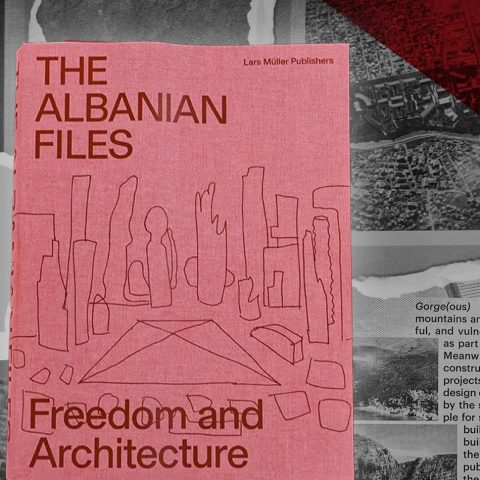
Are Europe’s Star Architects Helping Launder Albania’s Criminal Economy?
Change font size: - + Reset The Albanian Files suggests that international architecture may have served not only as design, but as a prestigious façade for opaque money, captured institutions and one-man

Saudi Ambassador Presents Credentials To Albanian President As Ties Gain Momentum
Change font size: - + Reset Tirana Times, June 05, 2026 – Saudi Arabia’s new ambassador to Albania, Turki Ibraheem Almadhi, presented his credentials to President Bajram Begaj, marking the formal start

Germany’s New Enlargement Formula and Albania’s European Illusion
Change font size: - + Reset For Albania, the real issue is not which accession model Europe chooses, but whether democracy, rule of law, and state integrity can still be restored. By

Pushing Against Inertia: How Harnex Is Testing the Balkans’ Appetite for Innovation
Change font size: - + Reset Tirana loves a good spectacle. Walk through the capital today and you are greeted by sleek new glass towers, vibrant urban spaces, and a relentless political

Shadow Fleet, Weak Oversight: How Russian Sanctions Evasion Reached Albania’s Ports
Change font size: - + Reset Tirana Times, May 18, 2026 – Albania’s ports have emerged as a potential weak point in the international effort to enforce sanctions against Russia, following revelations