The World Bank expects growth in Albania to slightly accelerate to 2 percent in 2014 and 3 percent in 2015. The extractive industry (oil, minerals) and electricity production will remain the drivers of its growth for 2013
TIRANA, June 18 – The World Bank has revised upward Albania’s economic growth forecast on improved external conditions in the Euro area. In its new Global Economic Prospects report for June 2013, the World Bank expects the Albanian economy to grow by 1.8 percent, up from an estimated 1.6 percent in 2012. The 2013 growth forecast is 0.1 percent lower compared to the developing Central and Eastern Europe as a whole which includes Albania, Bosnia and Herzegovina, Bulgaria, Georgia, Kosovo, Lithuania, Macedonia, FYR, Montenegro, Romania, Serbia.
The World Bank expects growth in Albania to slightly accelerate to 2 percent in 2014 and 3 percent in 2015. The current account deficit is expected to drop to -9.5 percent of the GDP in 2013, down from 10.7 percent in 2012 and further drop to 8.3 percent and 7.1 percent of the GDP in 2014 and 2015.
“Growth in developing Central and Eastern Europe is expected increase only slightly to 1.9 percent in 2013 from 1.5 percent as most of the factors that weighed down the growth last year continue to hinder the economic growth this year, but less intensively in some countries.”
In its South East Europe Regular Economic report released last December, the World Bank downgraded Albania’s growth forecast for 2012 to 0.8 percent and expected the Albanian economy to grow by 1.6 percent for 2013, citing impacts from the Eurozone crisis and high commodity prices.
The World Bank forecast for 2013 is in line with the IMF and slightly higher compared to London-based EBRD.
Citing Eurozone crisis effects and high public debt levels, the International Monetary Fund says the Albanian economy is projected to grow between 1.8 percent to 2.5 percent from 2013 to 2018, according to data published in IMF’s World Economic Outlook Database for April 2013.
London-based EBRD, one of top international financial institutions and one of the largest investors in the private sector in Albania, has downgraded Albania’s GDP growth forecast to 1.5 percent for 2013 down from 2 percent in its latest report last January, according to its newly released regional economic prospects report for May 2013. For 2014, the EBRD expects Albania to grow by 1.9 percent, below the SEE region’s average of 2.2 percent, indicating that although handling crisis better than regional countries from 2009 to 2012, Albania’s recovery will take longer.
Fiscal consolidation
The World Bank which has prepared some recommendations to the new government out of the June 23 general elections, says fiscal consolidation is a top priority.
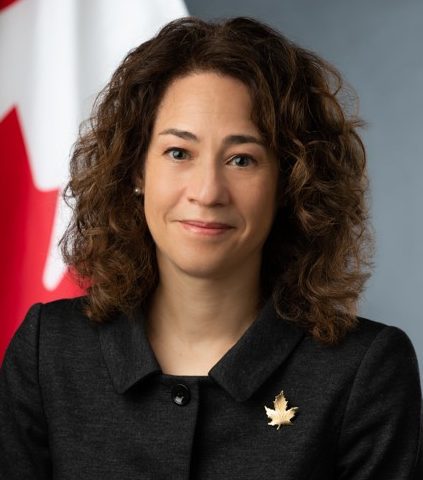
Introducing a South East Europe Regular Economic Report in Tirana, Kseniya Lvovsky, the World Bank Country Manager for Albania, said the good news is that the whole region is getting out of recession and that Albania has in general handled crisis better than neighbouring countries. The new government out of the June 23 general elections must accelerate the programme of reforms, said Lvovsky.
“Fiscal consolidation is of prime importance for each government in order to preserve macroeconomic stability and improve the effectiveness of public spending. Fiscal consolidation can be achieved by controlling expenditure and improving income from tax collection. This requires a careful evaluation in the spending categories and their efficiency as well as the tax collection framework,” says Erjon Luci, an Economist at the World Bank Country Office in Tirana.
Keeping debt at high levels is an additional risk to the management of public finances and modest economic growth could make the debt situation even more difficult, Luci added.
The World Bank has warned the uncertain environment and continued recession in the Euro area pose challenges to the Western Balkans which have the closest links to the Eurozone through the finance, trade and workers’ remittances channels.
With one of the highest public debt levels in the region, economy experts warn Albania faces tough times ahead and will have to embark on a fiscal consolidation reform in order to preserve macroeconomic stability and maintain market confidence.
Currently hovering at around 62 percent of the GDP, the Albanian public debt is among the highest in the Central and Eastern Europe, second only to EU member Hungary, posing a heavy burden on public finances, according to the World Bank.
At 1.6 percent in 2012, Albania registered its lowest annual GDP growth rate since the collapse of the notorious pyramid schemes in 1997, and almost half of the average growth rate during the global crisis year from 2009 to 2011. However, the Albanian economy continued remaining one of the best performing among EU-aspirants despite its growth rate slowing down even compared to the onset of the global crisis in 2009 when at 3.3 percent it became one of the few regional economies to register positive GDP growth rates.
The World Banks has earlier suggested increasing Albania’s competitiveness through improving energy supply, strengthening road network securing property rights and making broad improvements in governance, anti-corruption efforts and public sector management.
SEE 6
Albania is projected to grow at about 1.8 percent, as it did last year, supported by a steady export performance, says the World Bank in its new South East Europe Regular Economic Report (SEE6)
“Albania and Kosovo were again the best performers, contributing a positive 0.4 percentage points to the region’s growth in 2012, but this was more than offset by the negative performance of Serbia, Bosnia and Herzegovina, FYR Macedonia and Montenegro.” The report describes Albania the only country where industrial output grew and where inflation rate registered a record low of 2 percent.
“Because of the close economic linkage, the SEE6 external sector is highly correlated with developments in the EU. In 2012, the SEE6 experienced a deterioration in trade, current account deficits, FDI, and transfers. Albania outperformed the rest of the region, partly because of higher oil and mineral exports and export reorientation to new markets, particularly to China and Turkey,” says the report.
In 2013 the SEE6 region is projected to grow 1.7 percent, ending the double-dip recession of 2012. All countries in the region are projected to grow, with Kosovo again leading the pack, this time because of high public investments and a significant inflow of remittances.
“Albania is projected to grow at a rate slightly higher than in 2012 (about 1.8 percent). It could probably grow even faster if the construction sector was not dragging the economy down. The extractive industry (oil, minerals) and electricity production will remain the drivers of its growth,” says the report. Signaling the end of the double-dip recession of 2012, the group of six South East European (SEE6) countries is now making a fragile recovery. Its combined real GDP is projected to grow 1.7 percent in 2013 after a 0.6 percent decline in 2012, according to the latest World Bank South East Europe Regular Economic Report (SEE RER). The drivers of recovery are the bounce back of electricity, agriculture, and some exports, partly because of improved weather conditions.
Zeljko Bogetic, Lead Economist in the World Bank’s Europe and Central Asia region and co-author of the SEE RER report, suggests that structural reforms are key to a more robust recovery and lower unemployment. “Fiscal consolidation efforts should continue and will become easier now that the output and revenue outlook is improving. The investment climate needs to improve substantially, especially in the main areas of weaknesses: construction permits and licenses, barriers to entrepreneurship and skills, and infrastructure. Its neighbors could learn from FYR Macedonia, which continues to have the most favorable investment climate in the region as measured by the Doing Business indicators.”