
TIRANA, Dec. 13 – Two decades after the fall of the rigid Stalinist regime, Ilirjan Xhixha reminisces over his journey from Albanian migrant to renowned international master.
Back home in Albania, visiting his parents, the sculptor and painter Ilirjan Xhixha is gazing at a picture of the ship Iliria, overloaded with Albanian emigrants in the Italian port of Brindisi.
As a fourth-year painting student at Tirana’s Higher Institute of Arts, Xhixha joined tens of thousand of Albanian youngsters in February 1991 on a perilous voyage across the Adriatic, fleeing Europe’s most isolated country.
The son of artists, Xhixha spent his youth mingling with paints in his father’s studio, trying to emulate him. “We could touch everything in total freedom as long as we communicated with colour,” he recalls as quoted by BalkanInsight.
But life outside the studio in the Stalinist dictatorship of Enver Hoxha was anything but free and colourful. He grew up a rebellious soul, with contempt for authority. The Tirana Arts Academy, with its stringent rules about “Social Realism” and its lack of information, was too rigid for him.
“The only contemporary works we saw in Albania were in secret – some album passed around by hand among friends, or smuggled in by sailors,” he recalls. “Little did we know how the art world had evolved.”
Today, Xhixha’s monumental sculptures and paintings, defined by their rhythm, movement and elegance, adorn piazzas, banks, and private collections from Tokyo to New York.
“I didn’t know where were I was going, but once out, you start running intuitively,” Xhixha, says, tracing the path of his artistic life.
Like many of those on board the Iliria, his journey started in the San Giovanni Bosco high school in Brindisi, which was converted temporarily into a centre for housing migrants.
“The drawers at the school, which had been left open, had aquarelles and pastels and naturally I started drawing,” he recalls.
After two years of fighting bureaucratic red tape over a residency permit, Xhixha entered Brera Academy of Fine Arts in Milan in 1993 to complete his studies.
It opened up doors to the avant-garde. Unlike the academy that he had left behind in Tirana, Brera was an art school where artists from all over the world congregated, redefining its limits.
“At Brera, the concept of art was humanistic and not nationalistic,” Xhixha, says, comparing the two schools. It gave artists “an unrestrained freedom to know oneself”.
In Milan, Xhixha studied under the supervision of some of the Italian artists of the Informal movement, such as Gottardo Ortelli, Davide Benati and Paolo Minolli, who have since become the movement’s symbols.
“I was determined to follow these giants who had created in Milan a monument to the research of light,” Xhixha says. He graduated from Brera in painting in 1998 and in sculpture in 2003.
According to Xhixha the way that artists have used colour and light to communicate has evolved from the Ancient Greeks to the Impressionists, Expressionist or Cubists, all of whom introduced their own concept of it; but light and colour now have no form or dimension.
“The limit to this research of light is recreating light in itself and communicating it with a human code to allŠin a spiritual dimension,” he says.
Sculpture today, he adds, is not only modeling or carving marble; it can be created by putting things together that are tied conceptually.
However, borrowing an example from poetry, Xhixha says that although artists are free to choose their language, “a poem cannot be five words in Greek, three in French and two others in English,” because that would be incomprehensible.
For him, the history of art is continuity, and artists today rely on past masters as much as a “child relies on its parents to learn to read.”
“In the endless stream of movements of today’s contemporary art, one carves a path for oneself,” says Xhixha. “Every artist speaks with his own language – but that language is one.”
Xhixha’s monumental sculptures on display from Tokyo to New York

Change font size:

Latest from Culture

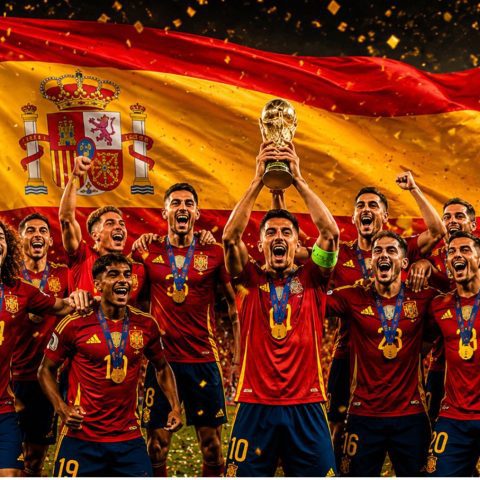
Spain Rules the World Again
Change font size: - + Reset Spain clinches second FIFA World Cup title as Europe continues its dominance on football’s biggest stage By Gautam Karve, Editor-in-Chief, World Media Organization Tirana Times, July
K’cimi dancing of Tropojë – Gazmend Freitag
Change font size: - + Reset by Monika Grill Tirana Times, July 11, 2026 – “K’cimi i Tropoja” – the dance that endured over centuries and kept the Albanian identity alive, has
In Search of Albania’s Soul: Manuel Montobbio Returns to Tirana Through Literature
Change font size: - + Reset Tirana Times, July 02, 2026. The Albanian Institute for International Studies and Tirana Times book house hosted a special literary evening in Tirana with Ambassador Manuel Montobbio, diplomat, writer, poet

This Auditorium Comes With a Price Tag -Corruption in Albania’s Public Universities
Change font size: - + Reset Corruption remains one of Albania’s most stubborn obstacles toward development and its dream for European integration. Although the country marked its biggest historical leap in Transparency
The Heart Of A Patriot That Beats For The People
Change font size: - + Reset by Dr. Jorgji Kote Tirana Times, June 11, 2026 – ”Heart of a patriot” is the new book dedicated to Binali Yildirim, an outstanding political leader and personality