
TIRANA, Dec. 22 – The country’s politics is a mess.
The opposition has boycotted the parliament. The opposition is holding continuous protests asking for the investigation of the June 28 parliamentary election. The opposition says protests will intensify in 2010 and they are to take Prime Minister Sali Berisha of the governing Democratic Party from the post.
Berisha’s Democrats deny there has been manipulation at the June poll, referring to the international observers’ report. They urge the opposition to return to parliament and hold the debate there.
This is a typical political situation in post-communist Albania.
The ever-squabbling politics seems to have been its main hindrance toward greater integration steps with Europe.
Politicians are good at calling each other names, blaming each other for anything bad that happens.
Citizens from three other Balkan countries – FYROM, Montenegro and Serbia – may move freely, without visas to the European Union Schengen member countries.
Albanians cannot.
It is in the same position with Bosnia, a country created by the international community in 1995 after a vicious war with hundreds of thousands of victims.
It is quite different for Serbia, which, in a way, was blamed for the break-out of the Bosnian war. It is different from neighboring FYROM, which was on the brink of a civil war some years ago. It is also different from neighboring Montenegro, a tiny country that is also ahead in the EU integration process.
Tirana only surpasses Prishtina, Kosovo which was created as a country only last year, and which is still without an EU road map for the visa free regime.
So who is to blame for that? Common Albanians? Sure! They are the ones to be blamed for letting the country be in such a position because it is they who elect their politicians.
Albanian politicians know that very well. They also know very well how to behave and treat the common people. They know very well how to collect them in protests or how to throw them against each other, as it happened in 1997 following the collapse of the failed pyramid investment schemes which grabbed all the savings of poor Albanians.
It has become very clear that Albanian politicians do not respect each other. There have been only a few cases when they have cooperated with each other.
But this time they claim they want to take the country ahead towards becoming an EU member.
Is that true?
Hard to believe. Because if that was true they have to pay attention to what the Organization for Security and Cooperation in Europe, the Council of Europe, the EU Council of Ministers, the United Nations’ agencies and the United States (did we forget any?) tell them: If you want to go ahead, you should cooperate among yourselves, you should give-and-take, and compromise on disagreements.
That is European democracy.
The European Union continuously urges Albania to start the political dialogue.
Swedish Foreign Minister Carl Bildt, whose country still has the EU presidency until the end of the year, urged Albanian authorities and political parties to start political dialogue in order to boost the country’s development.
One can easily see: they mention ‘authorities’ and ‘political parties’, which is the government and the opposition. They are not trying to take sides. They are not trying to get involved deeply but to tell Albanian politicians you should get mature enough to claim responsibility and also that you really intend to become an EU member country They have openly called on the opposition to end the boycott. But they have not done that to put a tool in the hands of Berisha’s Democrats in the domestic fight.
EU Commissioner for Enlargement, Olli Rehn said that boycott is not a European policy-making method.
“One of the key conditions of political criteria of Copenhagen is the political stability and democratic maturity. Parliamentary boycott runs counter to democratic maturity,” Rehn said.
Bildt pointed out that Albanian authorities must react and improve the political climate in order to help their country develop.
The European Commission assesses that Albania is making good progress on its road toward European Union membership.
It is expected that it will be the international community present in the country that is to mediate between the two main political parties.
We have already heard that they are preparing a meeting between Berisha and opposition Socialist Party leader Edi Rama, or their institutions or political groupings, for mid-January.
Will it produce results? Sure it will. But normally it will take a lot of time, energy, patience and Šwhat else Šuntil the ‘foreigners’ will hand over a piece of paper where they have written some of the claims of one side joined with some from the other side.
At the end there will be a compromise and both sides will claim they were the winners and will try to come out victorious.
So where is politics going in 2010?
The freezing winter will, for sure, continue for months.
Following a much-expected compromise (whose details will not be a surprise to many) there are more to expect.
Albania is waiting to also have the visa-free regime next July. But no one is really clarifying if the EU is to let Albanians move freely, as they did for FYROM starting Dec. 19, or they will consent for a visa-free regime and then Albanians will have to wait some more months until Brussels takes the other step.
Is that important? Not really.
If Albania waited for such a regime for 19 years after the post-communist period, why not expect to wait some more months?
But that will be really exploited politically by the government to tell Albanians how good they were in promises, and for the opposition to tell Albanians the government was to blame for being so late in such an achievement.
None is to get credit for that. Because if that was the case Albania, could have done it much earlier.
It seems very clear that it is an EU decision to move these countries ahead.
As it was when NATO accepted to take Albania as a new member.
Politics waiting for international intervention

Change font size:
Latest from News
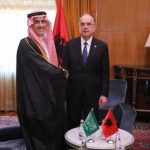
Saudi Ambassador Presents Credentials To Albanian President As Ties Gain Momentum
Change font size: - + Reset Tirana Times, June 05, 2026 – Saudi Arabia’s new ambassador to Albania, Turki Ibraheem Almadhi, presented his credentials to President Bajram Begaj, marking the formal start
Germany’s New Enlargement Formula and Albania’s European Illusion
Change font size: - + Reset For Albania, the real issue is not which accession model Europe chooses, but whether democracy, rule of law, and state integrity can still be restored. By

Pushing Against Inertia: How Harnex Is Testing the Balkans’ Appetite for Innovation
Change font size: - + Reset Tirana loves a good spectacle. Walk through the capital today and you are greeted by sleek new glass towers, vibrant urban spaces, and a relentless political
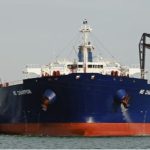
Shadow Fleet, Weak Oversight: How Russian Sanctions Evasion Reached Albania’s Ports
Change font size: - + Reset Tirana Times, May 18, 2026 – Albania’s ports have emerged as a potential weak point in the international effort to enforce sanctions against Russia, following revelations
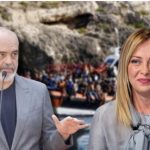
Albania–Italy Migration Deal Continues
Change font size: - + Reset Tirana Times, May 13, 2026 — The Albania–Italy migration agreement remains in force, despite a brief but politically sensitive controversy triggered by comments from Albanian Foreign Minister Ferit