Albanian prime minister delivers questionnaire in visit to Brussels. EU says assessment will be fair and balanced
Tirana Times
TIRANA, April 15. Looking to speed up its EU integration process, Albania delivered this week the answers to the EU questionnaire on the country’s candidate status application. The delivery was done well ahead of the EU deadline.
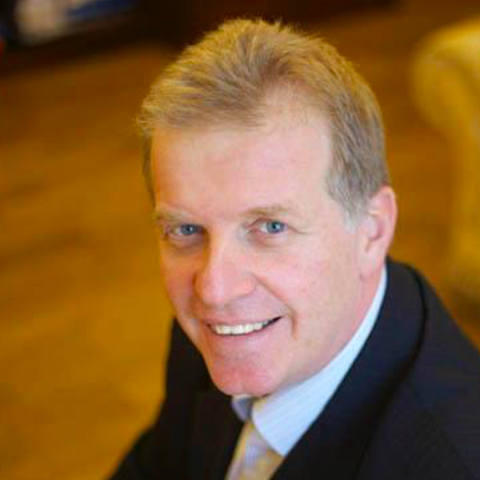
Albanian Prime Minister Sali Berisha delivered a copy of the questionnaire in person to the EU Enlargement Commissioner Stefan Fuele, who congratulated Albania for meeting conditions for visa liberalization and assured that the assessment to the questionnaire would be fair and balanced.
Tirana expects to get the positive answer on that request this year.
Albania’s responses to the EU pre-accession questionnaire are included in the several hundred page long document that the prime minister delivered to Fuele, calling it “the largest book printed in Albanian history”.
About 1,200 Albanian experts and more than 30 international experts were involved in completing the questionnaire.
According to Fuele, the date when the commission might publish its opinion on Albania’s responses will depend on the “quality and completeness of the information”.
The enlargement commissioner promised that the opinion will be fair and objective but warned that Brussels will give particular attention to Copenhagen Criteria and obligations from the Stabilization and Association Agreement.
The government gave answers to 2,284 questions in 3,854 pages. It involved some 1,200 domestic and international experts to prepare the answers.
Political crisis
But there was also a clear indication that the political crisis or deadlock in the country may turn into a big obstacle to the country’s integration process.
“We will pay particular attention to the fulfillment of the Copenhagen political criteria and of the obligations under the Stabilization and Association Agreement,” Fuele said.
“I used the opportunity of our meeting to reiterate the concern over the lack of progress in normalizing the political situation in Albania,” Fuele said late on Wednesday.
“Parliamentary work does not comply with EU standards and democratic institutions,” he added.
“A lot is indeed at stake, and I pointed out that there is a certain window of opportunity for all those involved who have a share of responsibility to find a solution in such a way that the opinion refers to this issue in the past tense,” Fuele said.
Albania applied for that status in April last year after all EU member countries had ratified the Stabilization and Association Agreement it had signed in 2006.
In December, Brussels handed over the questionnaire which the government said it prepared ahead of time. The time limit was about six months.
“This is an important milestone in the history of our efforts for the European dream project of the Albanians becomes a reality. This is a great step forward,” said Berisha.
He congratulated the government departments, the independent institutions and the relevant agencies for doing “a great job”and gaining a worthy experience.
Reforms
Earlier this week, visiting Italian Foreign Minister Franco Frattini said Rome would be a strong supporter to Albania’s integration efforts and would advocate that the EU answer on the Albanian candidate status request comes within this year.
Berisha also said that the government had already carried out “a great number of major reforms”which “confirm the iron will of the government and Albanian institutions to maintain and achieve the European standards.”
The reforms cover all domains, the fight against criminality and total modernization of the security system of the country.
He continued to speak on the border management and the identity cards which are needed at this stage when Brussels will also decide whether to give the visa-free regime to Albanians.
He also mentioned the moratorium on banning the speed boats, the steps in the fight against corruption and other issues.
Reforms have also covered the economy, which, he said, did not suffer from the global economic crisis, and also in the fields of education and health. Berisha also said that the crisis in neighboring Greece has not had its negative impact on Albania. He said that “the Greek banks in Albania have made the most major investments and I say that only one of them has invested 440 million euros among which more than 100 million it brought from the mother banks.”
In an interview with EurActiv Berisha said Albania was one of the safest in Europe following a crackdown on organized crime, and economic growth had remained steady despite the global crisis.
Speaking at an event in the European Parliament organized by the Robert Schuman Foundation, Berisha pleaded the case for his country’s EU accession and provided numerous examples of tough measures to crack down on organized crime and corruption.
Berisha blamed the Socialist opposition for boycotting parliament. Ever since national elections were held in June 2009, the ruling Democratic Party led by Berisha and the Socialist Party of opposition leader Edi Rama have kept accusing each other of fraud.
Berisha said the Albanian mafia was now a thing of the past, as arrests had been conducted in a number of Western European countries and more than 1,000 criminals had been sentenced and sent to jail.
He said he did not expect that a recent massive wave of ethnic Albanian asylum-seekers to Western European countries would constitute an obstacle to the EU lifting visa requirements for his nationals.
Last year, the European Commission offered to lift visa obligations for the citizens of Serbia, Macedonia, Montenegro while Albania and Bosnia and Herzegovina are expected to get that this year.
Berisha met with Herman Van Rompuy, President of the European Council, on Thursday, pledging fast reforms in the integration road.