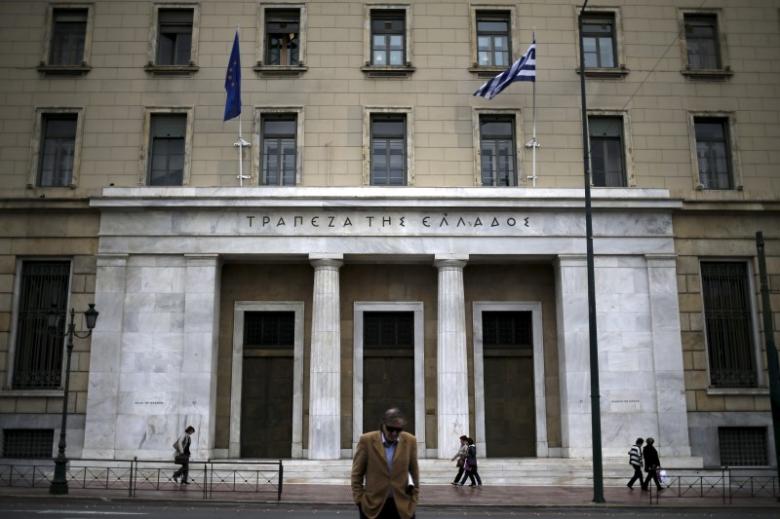
TIRANA, August 1 – The National Bank of Greece has announced plans to sell its Albania unit along with other smaller operations in Serbia and Cyprus.
The planned sales are part of a restructuring plan agreed with European authorities that has forced Greece’s troubled second largest lender to sell assets in several regional including Turkey, Bulgaria and most recently Romania.
Speaking in an interview with Reuters last month before selling its wholly owned Romanian subsidiary, Leonidas Fragiadakis, the CEO of National Bank of Greece, said NBG would sell smaller operations in Serbia, Albania and Cyprus as part of commitments agreed with regulators.
NBG, 40 percent owned by the country’s bank rescue fund HFSF after three rounds of recapitalization, will focus on its home market to help “tow the economy out of the quicksand of recession towards recovery,” Reuters reported.
NBG has been operating in Albania since 1996 and is currently one of the three Greek-owned in Albania, whose market share has considerably contracted since the outbreak of the global financial crisis and Greek debt crisis in 2008.
NBG Albania’s market share in terms of assets at the end of 2016 was at 2.91 percent, making it the ninth largest bank in Albania where 16 overwhelmingly foreign owned banks operate.
Alpha Bank and Tirana Bank are the two other Greek-owned banks operating in Albania with a market share of 5.2 percent and 5.7 percent respectively, according to the Albanian Association of Banks.
Subsidiaries of Greek banks operating in Albania saw their assets in Albania’s banking system drop to about 16 percent at the end of 2016, down from 25 percent in 2008 just before the onset of the global financial crisis when four subsidiaries of Greek banks operated in the country. The situation is also a result of the acquisition of Emporiki Bank by France-based Credit Agricole in 2010. In 2015, the same unit was acquired by U.S.-based NCH Capital Inc, private equity and venture firm, and rebranded the American Bank of Investments.
The Bank of Albania says legal changes in 2011 requiring Greek banks in Albania to operate as independent subsidiaries in Albania have considerably limited the spillover effects although panic deposit withdrawals have been present fuelled by concern over the health of Greece-based parent banks.
In late June 2017, Italy’s Intesa Sanpaolo increased its Albania presence after acquiring the bankrupt Veneto Bank in Italy and its subsidiaries in several European countries including Albania.
The Albanian subsidiary of Intesa Sanpaolo, Italy’s largest retail bank, is already the fourth largest bank in term of assets in Albania.
The Albanian banking system has been well-capitalized, highly liquid and profitable since the 2008 global financial crisis. However, credit has been struggling to recover to positive growth rates in the past couple of years as non-performing loans are still high at about 17 percent, down from a record high of 25 percent in mid-2014.