TIRANA, Dec. 7 – A legal initiative to make insurance against floods and earthquakes compulsory and statements by Prime Minister Edi Rama that the government will no longer provide compensation against natural disasters following massive floods Albania experienced in the past week has been met with skepticism by some economy experts who say Albanian households and businesses will face an extra tax at a time when voluntary insurance is already in place.
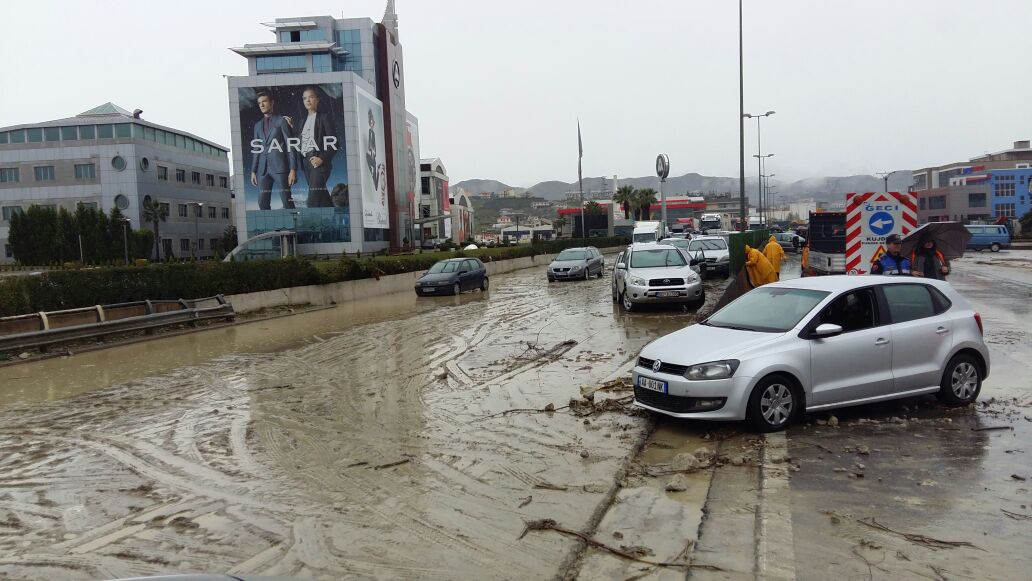
Floods in central and southern Albania last week following 100 mm of rainfall leading to rivers overflowing their banks flooded thousands of homes and dozens of businesses as well as agricultural crops and livestock, destroying the livelihoods of thousands of households.
The World Bank supported legal initiative has already been drafted by the country’s Financial Supervisory Authority, making insurance against floods and earthquakes compulsory at rates believed to range between €20 to €50.
Insurance companies, currently relying on compulsory vehicle insurance for about two-thirds of their income have welcomed the initiative, which would boost their annual income, but households who starting next year will pay more in property tax under a new value based formula at a 0.05 percent rate, could face a new unaffordable tax.
Economist Zef Preà§i says making insurance compulsory, especially against floods is not a solution.
“It is time to understand that the legal framework in place on the insurance of buildings and businesses offers every possible thing for this purpose and whatever extra tax is counter-productive and is not related to solving the issue, respecting climate conditions and legal, territorial or construction standards required for a normal society and rule of law,” says Preà§i, the head of the Albanian Center for Economic Research.
“The solution is through education, prevention, the compulsory displacement, the strict maintenance of every source of danger and the tight territory inspection to prevent at any cost home or business constructions that put at risk human lives and private and public property,” he adds.
According to him, annual flooding of buildings across river beds, most of which built illegally, is an almost bound event and there is no insurance company globally that can provide insurance against a phenomenon that has a 100 percent probability to happen.
Meanwhile, insurance companies whose annual turnover is at about €112 million at a modest per capita insurance of about €35 million, see the introduction of compulsory natural disaster insurance as a golden opportunity to boost their income considering about 1 million home and businesses that could almost double their annual income.
Avni Ponari, who heads one of the country’s largest insurance companies, says Albania, which he considers a mine zone for natural catastrophes, is not doing anything special, but following global practices on compulsory insurance of buildings.
“Albania is a mine zone for natural disasters and in order to minimize the chances of this mine exploding, the government should intervene to prevent and provide a solution to challenges that time and the country imposes us,” says Ponari in an op-ed published on local media.
“Many consider insurance as taxes and not a necessary service, but the more insurance you have, the more independent you are from the government, the municipality, the health sector etc. We pay only €30 per capita at a time when the average around the world is at €3,000 per capita,” he says.
According to him, the compulsory insurance against natural disasters will sharply cut current high rates triggered by the low number of insured households and businesses.
Dozens of businesses along the country’s key Tirana-Durres highway, including a big commercial center, faced flooding for the second time in one year, incurring millions of euros in losses due to being uninsured.
The Tirana Chamber of Commerce has also welcomed the legal initiative considering the poor voluntary insurance culture among Albanian businesses.
The World Bank says Albanian’s population and economy are exposed to both earthquakes and floods, with earthquakes posing a greater risk of a high impact, lower probability event.
The region at greater risk floods is northern Shkodra where the country’s main Drin River cascade and hydropower plants are situated while Fier and Tirana are most endangered by earthquakes.
The World Bank estimates the annual average population affected by flooding in Albania is about 50,000 and the annual average affected GDP about $200 million.
Meanwhile, the annual average population affected by earthquakes with 10 and 100-year return periods is about 200,000 and the annual average affected GDP about $700 million.