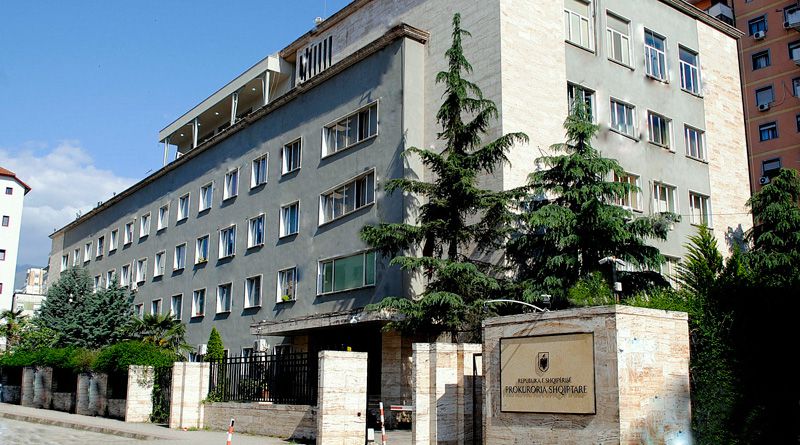
TIRANA, Dec. 13 – With Adriatik Llalla’s mandate officially over, Albania is seeing ongoing political disagreements over who the next General Prosecutor will be.
The ruling majority has decided that a short-term chief prosecutor will be appointed until the establishment of the High Prosecutorial Council, a justice reform-related body. But the method of appointment remains a point of debate among political actors.
The ruling Socialist Party says a simple parliamentary majority is the constitutional and best way to elect the temporary chief prosecutor, while the opposition believes that would be a constitutional violation that would bring the seat under the prime minister’s political influence.
According to the opposition, the General Prosecutor should be appointed with 84 MP votes, 3/5 of parliament, and only after being subject to the vetting process.
International advisory missions in Albania, such as EURALIUS and OPDAT, were the first to propose that the temporary chief prosecutor be selected through a simple parliamentary majority, but this was not welcomed by the political opposition, which claims that this solution would mean Prime Minister Edi Rama could choose the next General Prosecutor and take control of the vital independent institution.
Llalla’s term could have been extended to fill the void left until the establishment of the High Prosecutorial Council – which is responsible for the appointment of the General Prosecutor but currently still subject to the vetting process of judges and prosecutors – but the option was deemed unconstitutional by international experts, when asked by the Parliamentary Law Commission.
The high political tension and open investigation toward the former minister of interior, Saimir Tahiri, have added a new dimension to this debate.
Despite the opposing views on the matter, the official procedure of appointing a temporary chief prosecutor is underway, and different prosecutors have sent their applications to fill Llalla’s seat. Among them are Durrà«s prosecutor Ferdinand Elezi and Shkodra prosecutor Arta Marku.
The majority’s point of view
During a parliamentary group meeting, Prime Minister Rama said that the ruling Socialists have both the opportunity and right to appoint the provisional chief prosecutor, but that they are open to discuss a consensual name with the opposition.
“We should use this moment to explore every possible opportunity of understanding, so that we can have a consensual selection of the temporary prosecutor,” Rama said during the meeting.
According to Rama, the majority’s openness for dialog is an indicator of the desire to foster a cooperative spirit between the parties, despite the majority’s existing right to appoint a temporary prosecutor.
The President’s reaction
President Ilir Meta, who up until Tuesday had made no comments, addressed the topic during a press conference. He called for dialogue between the parties involved, saying that the appointment of the temporary chief prosecutor should not be a one-sided choice.
“As the President I want to underline that, since we are dealing with an important topic that concerns a key judicial institution, the Constitution and its spirit should be respected,” Meta said.
While the President acknowledged the Parliament’s power to appoint the General Prosecutor, he also stressed that the importance of this judicial body calls for dialogue for the future fostering of trust.
“Every one-sided step wouldn’t help the consolidation of independent institutions and the fostering of trust towards the new judicial institutions,” Meta told the media.
The opposition’s reaction
Opposition leader Lulzim Basha reacted through a Facebook post concerning the latest developments, noting the General Prosecutor should be subject to the vetting process in the way the judicial reform predicts in the Constitution.
According to Basha, Llalla’s mandate did not end prematurely, so the appointment of a temporary chief prosecutor by the Parliament is inapplicable in this case.
“In order for the General Prosecutor to fight corrupt and crime-related politicians, he cannot be corrupt and incriminated himself. And there is only one way to guarantee that: he should undergo the vetting process, just like the justice reform sanctioned in the Constitution predicts,” Basha wrote.
In addition, he stressed on how important it is for the General Prosecutor not to be appointed by Rama, but by the High Prosecutorial Council and 84 MP votes.
“The justice reform is in the Constitution. There is no justice reform outside it. Justice can be achieved by adhering to the Constitution and not to party trade-offs,” Basha also wrote.
International reaction
On Tuesday, U.S. Ambassador Donald Lu also gave a public statement regarding the issue, calling on political parties to agree on a temporary substitute for Llalla.
However, Lu also pointed out that all parties involved should agree to bring an end to the era of the General Prosecution protecting corrupt politicians.
“We have called on the government and opposition to work together to find a temporary replacer of the General Prosecutor, whose five-year term ended on the 7th of December. I hope that politicians will set their unimportant disagreements aside and implement the judicial reform,” Lu said.