TIRANA, May 31 – As the euro hit a new 10-year low against Albania’s national currency this week, question marks linger over alleged illegal resources behind such depreciation and whether the Albanian government should intervene to support the country’s Eurozone exporters who are incurring considerable loses.
Europe’s single currency hit a new 10-year low of 126.28 lek this week, having depreciated by about 5 percent compared to the mid-January peak level of about 134 lek for this year and is about 9 percent lower compared to mid-2015 when the euro’s five-year reign of about 140 lek came to an end.
Albania’s central bank and the Albanian government argue the strengthening of the national currency, lek, is a result of the Albanian economy recovering to a 9-year high of 3.8 percent in 2017 and higher euro inflows from FDI-related projects, the tourism industry, exports and remittances and say they cannot intervene in the country’s free floating exchange rate regime determined by market supply and demand as long as this is normal development from fundamental factors.
However, the opposition and some economy experts doubt the main reason behind this situation is euro inflows from drug cultivation and trafficking that are allegedly being laundered in construction projects.
Official Bank of Albania and INSTAT data shows Albania’s foreign direct investment suffered a slight decline in 2017 when TAP and Devoll Hydropower projects moved closer to completing their investment stage, remittances only slightly increased, but exports and travel and tourism income grew by an annual 12 percent each.
Economy expert Arben Malaj says the euro’s considerable depreciation that is mostly negatively affecting the country’s exporters requires intervention through a series of incentives to preserve the competitiveness of Albania’s exports, two-thirds of which are destined for Eurozone countries.
“It’s a concern because it hits a key sector of the Albanian economy and requires a series of measures by the Bank of Albania, the ministry of finance and business associations,” Malaj has told VoA in the local Albanian service.
“It’s imperative for policymakers and bankers to undertake incentives so that the burden on exporting businesses eases as higher costs force them to reduce investment and they could lose markets even temporarily and this withdrawal could add to social problems and negatively affect the economy,” says Malaj.
The garment and footwear industry producing the country’s top exports has been the hardest hit industry from euro’s depreciation due to the low value-added exports it produces as the raw material is overwhelming imported from Eurozone countries, mainly Italy, and labour costs and taxes are incurred in the national currency, lek.
“The measures could be all-inclusive, but should first of all start from the banking sector with the restructuring of business loans. The finance ministry could also restructure debts businesses owe to the Albanian government,” says Malaj, a former finance minister and current member of the central bank’s Supervisory Council.
“There should and there must be immediate [VAT] refunds to exporting companies to avoid their liquidity crisis. More aggressive policies could be adopted such as revising the depreciation rate so that they get modern technology and become more competitive on the markets they operate,” he adds.
Non-performing loans have currently dropped to about 13 percent, down from a record 25 percent in mid-2014 but remain a key barrier in boosting sluggish credit as lending standards remain tight and demand for new loans low.
Businesses owed the Albanian government about 95 billion lek (€750 mln) in unpaid taxes at the end of 2017 while the IMF estimates Albania’s central and local government institutions accumulated arrears worth 26.6 billion lek (€209 mln) to the private sector, equal to 1.7 percent of the country’s GDP last year.
VAT refunds also remain problematic for exporting businesses despite legal changes having made VAT refunds automatic within 30 days for businesses exporting more than 70 percent of their total sale value as of mid-2016.
Alleged illegal sources
The main opposition Democratic Party links the phenomenon to illegal euro inflows resulting from the peak 2016 cannabis cultivation and ongoing drug trafficking in the country, considered a major cannabis producer and a key transit route for cocaine and heroin for European markets.
Some economy experts also support the idea given the ongoing seizures of Albanian cannabis in neighbouring countries and Western Europe as well as transit drug trafficking through Albania.
In late April 2018, a record 613 kilos of Colombia cocaine with an estimated market value of €180 million, apparently bound for EU markets, was seized at the country’s biggest port of Durres, hidden in a container of bananas.
Economy journalist Ornela Liperi, the editor of the local Monitor magazine, argues the strengthening of lek is not natural and is not a result of economic growth.
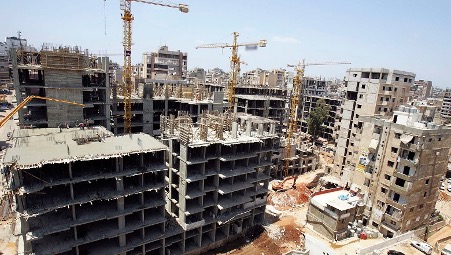
“The dilemma is where did this foreign currency that is not justified by formal resources come from. It is estimated that there has been an increase in informal resources which includes the cannabis cultivation until the second half of 2016, its sale and its laundering through the construction sector. One can easily notice that there has been an increase in constructions in Tirana, along the seaside and everywhere throughout the country. The new constructions are beyond the capacities of the real Albanian economy,” Liperi has told VoA.
“The underworld business is competing with legal and fair businesses and this is of great concern. On the other hand, the secret inflow of unknown amounts of euros is unstable and as soon as these resources are blocked, then the Albanian economy could face the adverse effect. As long as the strengthening of lek is not a result of real economic growth, the national currency will depreciate immediately as soon as the illegal inflow of euros is blocked,” she adds.
Albanian exporters estimate the country’s economy will be stripped of at least 14 billion lek (€108 mln) in losses from exports, tourism and remittances for 2018 if Europe’s single currency continues to trade at this 10-year-low rate against the Albanian lek.
Experts say the euro could further weaken in the next few months as Albania heads to its peak tourist season and Albanian migrants come home to spend their holidays, further increasing euro supply in the local market and leading to a new strengthening of lek.