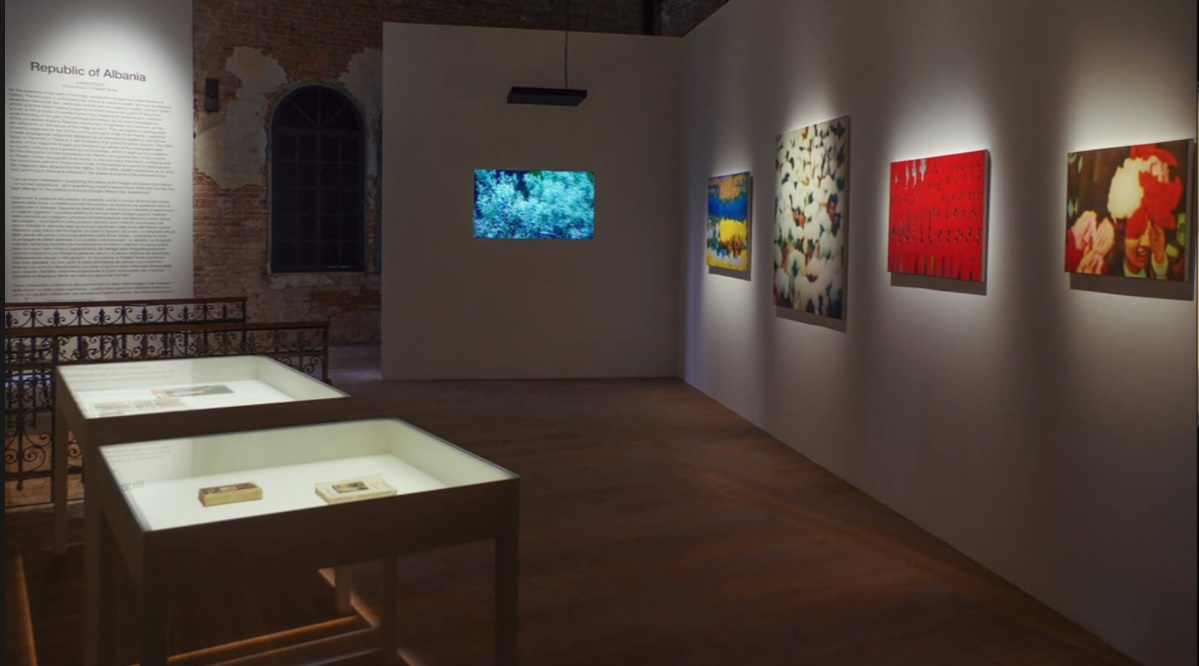
TIRANA, May 17 – “Occurrence in present tense,” a project by Albanian contemporary artist Leonard Qylafi curated by Austria’s Vanessa Joan Muller is representing Albania at this year’s international art exhibition of the Venice Biennale where painter turned politician, Albania’s Prime Minister Edi Rama and his long-time collaborator, Albanian-French artist Anri Sala are among those selected for the main “Viva, Arte Viva” exhibition.
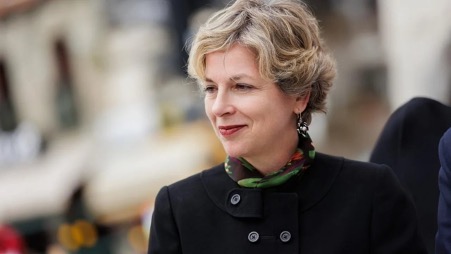
Speaking at a launch ceremony this week in Venice, Albania’s Culture Minister Mirela Kumbaro said the Albanian pavilion represents the tough past the country has been through, serving as a basis for the future.
“Occurrence in Present Tense provides the opportunity to remind us that Albania is not only another mention in crime news, but an arts stop hosting critics, art lovers and culture media,” said Kumbaro.
“Our pavilion showcases a country with a tough and complicated history which everyone of us holds on its shoulders even when it’s a heavy burden, but which many of us turn into added value because they know that they can only build their future through it,” she added.
A Tirana-based Albanian contemporary artist, Leonard Qylafi, 36, works in different mediums including video, photography, music and painting. He graduated in painting from the Academy of Fine Arts in Tirana.
“Qylafi brings into the exhibition paintings and personal documents by making a contrast between, individual stories and collective memory in a political and yet a poetic approach,” said the jury headed by Italy’s Marco Scotini and Hungarian Julia Fabenyi last December when the artist was selected to represent the country.
“By creating its own temporality, Qylafi produces a strong and new iconicity that raises a lot of questions, making the potential dynamics of narratives displayed even more exciting,” the jury added.
The exhibition unveils that the communist past Albania faced for about five decades in one of Europe’s harshest dictatorships is still present in many aspects of everyday life and holds back its integration future.
“Drawing from his own experience, and archival relics of the past, Leonard Qylafi’s practice is inflected by remembrance. Intimate, individual references meet reflect upon, and point to broader notions of identity, ritual and tradition,” says a statement on the Albanian pavilion curated by Vienna-based Vanessa Joan Muller, the head of dramaturgy at the Kunsthalle Wien, Vienna’s exhibition venue for international contemporary art and discourse.
Prime Minister Edi Rama is being showcased with his collection of office works in the exhibition while internationally renowned Albania-born artist Anri Sali is featuring one of his latest artistic research project mixing music, space and remembrance.
Anri Sala is a contemporary artist in his 40s who belongs to the last generation of Albanian artists who grew up under communism and the first generation to set contact with the international art stage in the early 1990s following the collapse of the country’s communist regime. He represented France in the 2013 Venice Biennale of international art.
Kosovo is also being represented with its own pavilion for the third time at the Venice Biennale. Sislej Xhafa’s “Lost and Found” exhibition is “an open-ended riddle in an austere architectural form, providing a platform to find answers as well as further questions about universal issues of human rights and freedom, social injustice and threats to individual safety.”
The 57th Venice international art exhibition, titled “Viva Arte Viva” scheduled to take place from May to November 2017 is a Biennale event designed with the artists, by the artists and for the artists. It deals with the forms they propose, the questions they pose, the practices they develop and the forms of life they choose, organizers say.
“In a world full of conflicts and jolts, in which humanism is being seriously jeopardized, art is the most precious part of the human being. It is the ideal place for reflection, individual expression, freedom and fundamental questions. It is a ‘yes’ to life, although sometimes a ‘but’ lies behind. More than ever, the role, the voice and the responsibility of the artist are crucial in the framework of contemporary debates,” says curator Christine Macel.
In the 2015 edition of the international art exhibition, Albania was represented by “Albanian trilogy: A series of devious strategems” a project by Albanian contemporary artist Armando Lulaj and curated by Italy’s Marco Scotini, showcasing the conclusion of many years of research into the period of the Cold War in Albania.