
TIRANA, Nov. 8 – The European Commission on Wednesday presented its report on Albania’s progress toward integration into the bloc and its future challenges. There were two reports related to Albania: Albania 2006 Progress Report and Enlargement Strategy and Main Challenges 2006-2007.
The Progress Report was divided into three chapters: political criteria, economic criteria, economic standards. While the other report set also what challenges were ahead of Albania’s integration efforts. In the news conference held from the European Commission delegation Head in Tirana Helmuth Lohan there was also mentioned that the EU would give 45.5 million Euro aid to the country from the 2006 budget. Following are some key extracts from the documents.
Albania has continued to contribute to stability in the region, particularly through its measured position on the situation in neighboring countries. EU relations with Albania advanced with the signature this year of the Stabilization and Association Agreement. The priority now is to focus on implementation of the Interim Agreement, which will enter into force on 1 December 2006, and which covers trade-related issues. With EU support, Albania is tackling the challenges of political, judicial and economic reform, as well as the fight against corruption and organized crime. These themes will remain priorities in the period ahead.
As regards political criteria, Albania has made some progress on democracy and the rule of law, including fighting corruption, which is a key European Partnership priority. Some progress has been made on democracy and the rule of law. However, this progress has been uneven. The parliament is assuming a full role politically and its committee on European integration has been very active. The parliament Šstill faces technical and administrative shortfalls. More co-operation between government and opposition is needed to enable important work, such as electoral reform and addressing Stabilization and Association Agreement (SAA) obligations, to go ahead.
The government has adopted a plan to fulfill European Partnership and SAA obligations. It is creating structures to co-ordinate the substance of EU reforms and manage the resources to implement them. Co-ordination between these structures is essential. Better use of expertise in drafting legislative proposals is needed. The restructuring of many ministries has temporarily reduced capacity in some areas of the public administration. Some staff changes have taken place without due attention to the civil service law. Appointments in the administration continue to be politically influenced. Public service management, career structures and pay remain poor.
A new law should improve the career structure and case allocation methods for judges. Transparency has been increased somewhat in the judicial system. Some progress has been made in enforcing judgments. However, overall progress in improving the justice system has been limited. Progress is needed on improving recruitment procedures for judges and employment conditions for judicial administrators. The competences of the two judicial inspectorates need to be properly divided. Co-operation between the police and the judiciary needs to be improved. Execution of judgments remains poor overall. Legal certainty is needed to provide a positive climate for trade and investment.
The fight against corruption has led to large-scale public service dismissals. The number of public officials prosecuted for corruption has increased. A high-level anti-corruption task force has been set up and the law on conflicts of interest has been improved. The High Inspectorate for Disclosure and Verification of Assets is now more effective and steps have been taken to increase public administration transparency. Where anti-corruption measures have gone beyond constitutional limits, the constitutional court has intervened. Further institutional measures to prevent corruption are now needed, as it remains a serious problem. The fight against corruption is a priority for the implementation of the SAA.
Limited progress has been achieved regarding human rights and the protection of minorities. Albania’s ombudsman has been more active on human rights. However, enforcement of international standards on torture prevention, prison conditions, and the rights of detainees, particularly in pre-trial detention, remain weak. Recent changes to the composition of the media supervisory authority should be implemented appropriately. The legal framework for media freedom remains inadequate and poorly implemented. Fostering media freedom is a key European Partnership priority. A new executive agency may speed up property restitution, also a key Partnership priority, but currently the process remains very slow. Certainty on property ownership is vital to fulfill SAA commitments.
Regarding regional issues and international obligations, Albania has continued to play a positive role.
As regards economic criteria, Albania has broadly achieved macroeconomic stability. This has contributed to its progress towards being a functioning market economy. Further considerable reform efforts must be vigorously pursued also to enable it to cope with competitive pressure and market forces within the Union.
Albania’s legal framework for procurement, privatization and concessions needs to be improved. Enforcement of property rights continued to be weak and only marginal progress was achieved in improving efficiency of the judicial system. Strengthening of the regulatory and supervisory framework for the non-bank financial sector constitutes a major challenge. The privatization process is not yet completed and the restructuring of state-owned enterprises, in particular of the electricity utility, needs to be pursued without delay.
Albania has made progress in aligning its legislation, policies and capacity with European standards, particularly in the fields of fighting organized crime, of customs and of competition. Pushing forward reform in areas such as public procurement, intellectual property and veterinary and phytosanitary control is vital for successful SAA implementation.
Progress has been made in some internal market fields, but in others much work will be needed to fulfill Albania’s SAA obligations. There has been some progress in adopting and monitoring standards. Capacity for accreditation, metrology and market surveillance is being strengthened, but legislative improvements and better co-ordination are needed. Coherence of structures for consumer and health protection has improved.
An effective customs system is vital to implement the SAA. Customs revenue has risen following substantial customs reforms. Progress has been made on computerization, customs rules and management of origin. Cooperation between police and customs has been strengthened. Improved infrastructure and further acquis alignment is now needed. Further alignment with EU legislation and a comprehensive tax collection and control strategy are now needed.
Progress on improving the business environment and reducing the informal economy continues to be slow. Progress in agriculture has been very limited. Compliance with EU veterinary and phytosanitary requirements, vital to successfully using SAA and interim agreement trade conditions, remains poor. The fishery service controls the landing of fish, but the illegal damaging of stock continues.
Regarding both environment and transport, some progress has been made on horizontal legislation, but implementation and infrastructure development remain weak. The energy sector remains very weak. Albania is lagging behind in its preparedness to take on SAA commitments on information society and media. Regarding electronic communications and information technologies, liberalization laws need to be implemented and enforced. The regulatory framework is not yet in line with the acquis. The telecommunications regulator is not sufficiently active.
In the field of justice, freedom and security there has been progress in some areas; however, all fields require determined and sustained attention. Border management infrastructure needs to be strengthened. Regarding the fight against money laundering, the Financial Intelligence Unit (FIU) and the prosecutor’s office have been reinforced and international cooperation improved, but both need to be further strengthened and the legislative framework needs to be further developed.
Greater political impetus and better international co-operation have increased arrests of large scale drug traffickers, but better criminal intelligence capacity, domestic inter-agency coordination and procedures for seized drugs are required. Drug trafficking remains a serious problem. Progress has been made in the fight against organized crime, a key European Partnership priority. Strong political will to tackle organized crime has led to police operations against major criminal groups. Operational cooperation with Albania’s neighbors has greatly improved. Cooperation between police and the judiciary at central level has somewhat improved. However, much scope remains for improvement in concrete results. Better coordination between police and judiciary at local level and greater efforts to combat high level corruption in these bodies are needed. Stronger witness protection is required. Trafficking remains a problem. Further resources and better domestic and international coordination are required. The police counter-terrorism directorate has seized large quantities of arms, although infrastructure and inter-agency cooperation needs to be strengthened. The situation as regards the protection of personal data remains a matter of concern.
Albania Progress toward EU, but still a long way to go

Change font size:



Latest from News
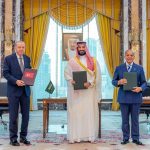
Mecca Defense Pact Signals Saudi Arabia’s Bid to Shape a New Security Order
Change font size: - + Reset The agreement with Turkey and nuclear-armed Pakistan strengthens Riyadh’s position as a central architect of regional security, while reflecting a broader shift toward a more multipolar

SPAK Brings New Charges Against Former Deputy PM Balluku
Change font size: - + Reset Tirana Times, August 07, 2026 — Albania’s Special Prosecution Office Against Corruption and Organized Crime has brought new allegations against former Deputy Prime Minister Belinda Balluku, widening
Milošević’s Language Returns to Serbia’s Government
Change font size: - + Reset Ethnic Cleansing Remark Tests Serbia’s Claim to Have Broken With Milošević A Serbian minister’s declared willingness to expel Kosovo Albanians has drawn condemnation across the region
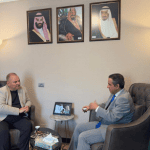
Saudi Ambassador Meets Head of Albania–Saudi Parliamentary Friendship Group
Change font size: - + Reset Tirana Times, July 6,2026 – Saudi Arabia’s Ambassador to Albania, H.E. Turki bin Ibrahim Al-Madi, received Albanian MP Baldi Çomo, Chairman of the Albania–Saudi Arabia Parliamentary Friendship
Anti-Government Protests Escalate in Tirana as Demonstrators Block Parliament
Change font size: - + Reset Tirana Times, July 03, 2026 – Albania’s month-long anti-government protest movement entered a more confrontational phase on Thursday, as demonstrators gathered outside Parliament, blocked access points