
BRDO PRI KRANJU, Slovenia, March 21 – A summit of Western Balkan leaders near Ljubljana ended on Saturday by adopting a joint statement on their countries’ commitment to the European perspective.
The forum was marred by the absence of Serbian President Boris Tadic who boycotted because Kosovo was not represented according to the UN Security Council resolution 1244.
EU President Herman van Rompuy was also absent.
Participants voiced willingness to continue implementing reforms needed for EU integration as well as strengthening regional co-operation. They urged the EU to keep the enlargement process as its top priority and to continue supporting mechanisms of regional co-operation. The forum was attended by the prime ministers of Albania, Bosnia and Herzegovina, Croatia, Kosovo, FYROM, Montenegro and Slovenia, as well as by EU Enlargement Commissioner Stefan Fuele.
Kosovo Prime Minister Hashim Thaci said on the forum’s sidelines that Prishtina remains committed to good neighborly relations and is ready to co-operate with Serbia. He stressed that Kosovo intends to continue taking part in all international and regional meetings as an independent state.
Leaders of Europe’s Balkan region, shrugging off a boycott by Serbia, pledged at a summit to deepen economic ties to spur the nascent recovery and forge a common strategy to join the European Union.
“We will focus more on the economy, on common infrastructure projects, because we sought to address issues other than our efforts to integrate the region with the EU,” Slovenian Prime Minister Borut Pahor told reporters after the summit. His Croatian counterpart, Jadranka Kosor, suggested, “Bilateral issues should be separate” from the EU accession process.
“Those that aren’t here have a legitimate right to have acted so as even EU nations have different opinions on Kosovo and there are also differences on the pace of further enlargement,” Pahor said.
Slovenia is the only former Yugoslav republic that is an EU member and the first former communist country to be a member of the euro region. The 27-nation bloc, emerging from the deepest post-war recession, is wary of admitting new members other than Croatia after 10 eastern European nations have joined the world’s largest trading bloc since 2004.
“Serbia will eventually have to face reality,” said Damir Grubisa, a European affairs professor at Croatia’s Zagreb University for Political Sciences. “The future of all Balkan countries lies within the EU.”
Also, Nikola Spiric, the prime minister of Bosnia – which has not recognized Kosovo, given its substantial Serb population – walked out during the speech of the Kosovo Prime Minister, Hashim Thaci.
The countries discussed how they could help each other in reaching their common goal – membership in the European Union.
EU enlargement Commissioner Stefan Fuele said the meeting was “a step in the right direction.” He didn’t comment on Serbia’s absence.
The prime ministers later declared their “strong commitment” to join the bloc and fulfill all the criteria – including the regional cooperation – required to achieve membership.
They called on the European Union not to give up on the enlargement and promised to promote “good neighborly relations.”
Albanian Prime Minister Sali Berisha considered organization of this ceremony as very important as his country is paying a lot of importance to regional cooperation, as a testimony of deep transformation and very serious effort.
“Kosova is being more and more consolidated as an important factor of peace and stability in the Balkans, and certainly, its presence here is a contribution in problems if peace and security in the region,” he said.
The EU is expected to hold its own summit on the Western Balkans this summer.
Balkan summit highlights strong enmities as Serbia refuses to attend over Kosovo

Change font size:
Latest from News
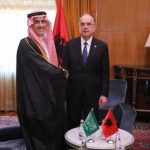
Saudi Ambassador Presents Credentials To Albanian President As Ties Gain Momentum
Change font size: - + Reset Tirana Times, June 05, 2026 – Saudi Arabia’s new ambassador to Albania, Turki Ibraheem Almadhi, presented his credentials to President Bajram Begaj, marking the formal start
Germany’s New Enlargement Formula and Albania’s European Illusion
Change font size: - + Reset For Albania, the real issue is not which accession model Europe chooses, but whether democracy, rule of law, and state integrity can still be restored. By

Pushing Against Inertia: How Harnex Is Testing the Balkans’ Appetite for Innovation
Change font size: - + Reset Tirana loves a good spectacle. Walk through the capital today and you are greeted by sleek new glass towers, vibrant urban spaces, and a relentless political
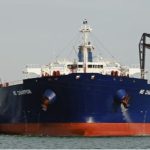
Shadow Fleet, Weak Oversight: How Russian Sanctions Evasion Reached Albania’s Ports
Change font size: - + Reset Tirana Times, May 18, 2026 – Albania’s ports have emerged as a potential weak point in the international effort to enforce sanctions against Russia, following revelations
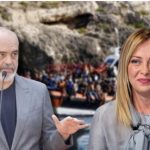
Albania–Italy Migration Deal Continues
Change font size: - + Reset Tirana Times, May 13, 2026 — The Albania–Italy migration agreement remains in force, despite a brief but politically sensitive controversy triggered by comments from Albanian Foreign Minister Ferit