
TIRANA, Jan. 26 – The Council of Europe passed a resolution Thursday urging Albanian political parties to reach a compromise and create an investigative commission on the last year’s parliamentary elections and also the opposition ends its boycott. Taht was the last call from the international community trying to urge Albanian politics gets mature enough and resolve their cries on its own.
In a clear sign that the country’s politics cannot resolve its crisis on its own was the recent ‘fight’ between the two main political groupings – the governing Democratic Party of Prime Minister Sali Berisha and main opposition Socialist Party of Tirana Mayor Edi Rama – on the posts at the delegation taking part at the sessions of the Council of Europe Parliamentary Assembly (PACE). The local media was busy for two days and more on such a dispute.
Albania has a delegation taking part at the PACE which is made up respectively as the participation of the political parties at the domestic parliament. But the opposition Socialists have boycotted the parliament. So first the opposition accused the parliament Speaker Jozefina Topalli of nominating on her own, without consulting them, the participation at the delegation. He was one that is now considered to be against his party leader in daily political life. Then it was learned from the media that a European leftist had asked to freeze Albania’s members, that is without giving them the right of vote, until they clarified the participation.
The next day the PACE decided not to freeze anything.
But that was now used by the governing Democrats to show that the opposition was trying to worsen the country’s image and so on.
What one can rationalize from such a small friction is that the two groupings can hardly achieve a political compromise.
The opposition is asking a recount of the last general vote and has boycotted the parliament. It has also held a series of street protests.
Last week its leader also said they will move the government out by force through protests if they did not agree on a recount.
At this moment the CoE may play a key role. It is to discuss this week a resolution on the country prepared by two of its reporters who visited the country last month.
The draft report urged the government to create an investigative committee for the last elections and also the opposition to return to parliament. They also urged the improvement of the electoral code according to the suggestions made by the OSCE/ODIHR. Both political groupings have interpreted the draft report to their liking.
The governing Democrats referred to the end of the boycott call, while the opposition Socialists to the investigative committee.
The report also urged and supported the country’s president to play the role of mediator.
But it also called on the international community other than itself to enter such a role, which seems the most likely and fruitful in this country. The recent fight showed nothing new to the European parliamentarians or politicians, only that Albania, now a NATO member country, has not changed its level of political maturity. But what’s its result? Further delay in the EU integration efforts? Do Albanian politicians understand that?
CoE On Political Crisis

Change font size:


Latest from News
Mecca Defense Pact Signals Saudi Arabia’s Bid to Shape a New Security Order
Change font size: - + Reset The agreement with Turkey and nuclear-armed Pakistan strengthens Riyadh’s position as a central architect of regional security, while reflecting a broader shift toward a more multipolar
SPAK Brings New Charges Against Former Deputy PM Balluku
Change font size: - + Reset Tirana Times, August 07, 2026 — Albania’s Special Prosecution Office Against Corruption and Organized Crime has brought new allegations against former Deputy Prime Minister Belinda Balluku, widening
Milošević’s Language Returns to Serbia’s Government
Change font size: - + Reset Ethnic Cleansing Remark Tests Serbia’s Claim to Have Broken With Milošević A Serbian minister’s declared willingness to expel Kosovo Albanians has drawn condemnation across the region
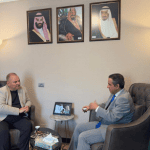
Saudi Ambassador Meets Head of Albania–Saudi Parliamentary Friendship Group
Change font size: - + Reset Tirana Times, July 6,2026 – Saudi Arabia’s Ambassador to Albania, H.E. Turki bin Ibrahim Al-Madi, received Albanian MP Baldi Çomo, Chairman of the Albania–Saudi Arabia Parliamentary Friendship
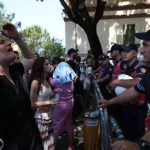
Anti-Government Protests Escalate in Tirana as Demonstrators Block Parliament
Change font size: - + Reset Tirana Times, July 03, 2026 – Albania’s month-long anti-government protest movement entered a more confrontational phase on Thursday, as demonstrators gathered outside Parliament, blocked access points