Durr쳠is one of Albania’s oldest cities, the country’s main sea port and its second largest industrial centre
The city was founded around 627 BC as Epidamnos by Corcyrean (inhabitants of Corfu) and Corinthian (inhabitants of Corinth) colonists on the settlement of the Illyrian Taulant tribe. Epidamnos first appears on coins of the 5th century BC, and it was part of the kingdoms of Cassander and Pyrrhus. In 229 BC, the Romans seized the city and changed its name to Dyrrhachium. However, the city maintained a semi-autonomy and was turned into a Roman colony. The Romans made use of it as a base for forces in Greece and the Balkans; the Via Egnatia had a terminus here. In 48 BC Pompey was based at Dyrrachium and beat off an attack by Julius Caesar. Around 20 BC, the Illyrians gained a higher political status with several rising to the position of emperor.
Durr쳠was an active city in the Albanian national liberation movement in the periods 1878-1881 and 1910-1912.
During the rule of Zog, the city experienced an economic boom due to Italian capital. An earthquake in 1926 damaged some of the infrastructure that had to be rebuilt. It was during this restructuring that the city gained its more modern appearance.
After World War II the city experienced another period of growth and became more industrialized.
Today the city is an important link to Western Europe due to its port and its proximity to the Italian port cities, such as Bari.
The second biggest city
On July 2007 the city of Durres had a population of over 195,000, so it has become the second biggest city in the country after Tirana. The population in the city and its environs has continuously changed origin many times. The city proper and its old quartiers are inhabited by native people, who are the direct descendents of old families from Durres. After 1990, the city of Durres attracted many people coming mainly from the northern and north-eastern parts of the country. This phenomenon contributed not only to the increase of the population but also to the urbanization of its surrounding areas.
Economy
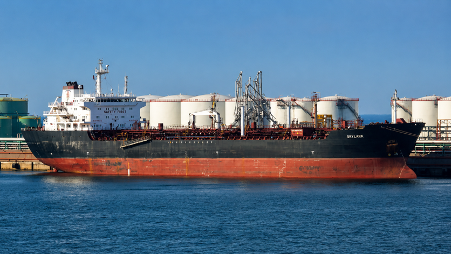
The economy of Durres has been oriented towards tourism, especially in the past ten years. Many luxurious hotels have been built and they are available to tourist and holiday-makes from Albania and the region, especially from Kosovo and Macedonia. Lately, souvenir manufacturing has started to develop as a result of the tourist market. The city port plays a very important part in the city’s economy with its great goods processing capacity.
A city full of cultural heritage
There is a joke for the children as it is a tourist destination. While the city presents ample opportunity for enjoying the dazzling combination of sun and sand, its archaeological treasures offer a glimpse into the city’s rich history. The city nowadays is located exactly on the ancient ruins. There is a joke for the children in this city: “don’t dig on the earth cause you can find any temple!”.
The Roman Amphitheatre
The Amphitheatre of Durres, built in the 2nd century BC, figures amongst the largest monuments of the Antiquity. It is the only monument of this type on Albanian territory. The amphitheatre is situated in the center of the city of Durres, the main port of Albania, at 35 km distance from the Capital. Founding of Durres, a city mentioned by writers and historians, dates back to 627 BC. The monument has the shape of an ellipse with the 132.4 m x 113.2 m dimensions. The size of the arena is 61.4 m x 42.2 m, and it is 20 m high. Only one third of the amphitheatre was excavated during the archaeological research in the 1960s. The major part of the monument is built upon a footstep in the hill. Today, a part of the arena is occupied by contemporary houses. However, restoration and rehabilitation projects have been prepared in order to integrate this significant landmark in the overall city development. Being surrounded by other important archaeological sites of the city, situated near the Archaeological Museum which displays a large number of valuable archaeological findings, the amphitheatre will play a major role in the future of cultural tourism in Albania.
The Amphitheater Chapel
There is a very unique chapel inside the famous amphitheater of Durres. Most of the archaeologists think that this chapel was built in the 5th century, and some think that it might have been built during the reign of the Byzantine emperor Heraclius (610-641). Once you go through the amphitheater main gate and descend down the first entry of the gallery, you can see the chapel. You can find inside it some mosaics and parts of a fresco, on the southern and western part. They are really impressive! Researchers believe that they were made in the 10th – 11th centuries.
“The Beauty of Durres”
The Beauty of Durres is a famous mosaic that was discovered beneath a dwelling in a residential area of town and measures 17 by 10 feet. It is considered the most polychromatic mosaic ever to be found in the country. The mosaic is elliptical in shape and depicts a woman’s head surrounded by flowers. In fact, the mosaic is now exhibited in Tirana, at the National Historical Museum. It is worth to pay a visit at the Museum to see this unique mosaic. It will just take half an hour drive taking the Durres – Tirana highway! The mosaic was initially studied by Praschniker, an archaeologist mobilized in the Austro-Hungarian army. The mosaic is compiled using small colorful river pebbles.
Fatih Mosque
The Mosque overlooks the main square in the city, at one end of the High Street. It was built on the ruins of a medieval basilica, which is composed of a prayer room and quadrangular room covered with a wooden roof, which follows the side lines of the basilica walls. The portico and the minaret date to a later period. This is also called the Small Mosque. It is thought to have been built in 1502-1503, as one of the first buildings after the Ottoman invasion.
Roman Baths
You can notice the Thermal (Roman Baths) from the Roman Period, nearby “Alexander Moisiu” Theatre. It is still preserved from this monument the “caldarium” (hot water hall) and “piscine” (swimming pool) which is covered in black and white tiles, like on a chess-board. The Baths included other place, too, such as: the “Apodyterium” (the changing room), the “Tepidarium” and the “Frigidarium” (cold water hall).
The Mosaic of Orpheus
This mosaic was discovered in the basement of a private house in Quarter 9 of the city in 1988. In the center of it is figured Orpheus, and scholars think that the mosaic is characteristic of the 3rd century BC. Some scholars think that the figure of Orpheus is a covert way to represent Jesus Christ.
The Aqueduct
It is located nearby the Industrial School. You can now find there just the traces of what was many years ago the Aqueduct of Durres. These traces go as far away as Romanat village in the place called “Gjoka’s brook”. The Aqueduct was built during the same period as the Amphitheater, under the reign of the Roman Emperor Hadrian (117-138).
Arapaj Basilica
To reach there, you will first have to take the old Durres-Tirana road, and head for the Shkozet city-quarter. Once arriving at the rotunda, take right, and ride briefly along the road linking Shkozet with the fly-over at the “Plepat” (Poplar Trees). Half-way to the place, you will have to turn left, and in a few minutes you will make it at the village of Arapaj. It is home to the ruins of a 6th-century old basilica. It used to be a famous church until the 11th century.
Beaches in Durres and surroundings
The city’s beaches are also a popular destination for many foreign and local tourists, with an estimated 600,000 tourists visiting it annually.
With e linear length of 4 kilometres, Durres Beach is the biggest national beach with a linear length of 4 kilometres from the Dajlan Bridge to the Kavaja Rock. It is popular for its soft sand and the greatest exploitable sand belt at a width of 150-180 meters. The main characteristic of this beach is the gradual increase of the seawater depth, which makes this sandy beach ideal for sunbathing and swimming.
Golem Beach
An extension of Durres Beach
Golem Beach lies as an extensive of Durres Beach. Just like the latter, it has soft sand, sandy seabed and gradual increase of seawater depth. The luxurious hotels and the holiday resorts, which have recently been built there, the improved infrastructure and various services, have made this beach popular and the main attraction for many people from Albania, Kosovo, Macedonia and other places.
Mali Robit Beach
An elite area
It lies immediately next to that at Golem. Its whole length is dotted by elite tourist resorts and villages.
Spille Beach
One of the cleanest in Albania
Nestled among pine-trees
To reach out here, stick to the itinerary Golem – Rob Mountain – Kavaja – Luz Turn, and then, carry on further to Spille. Nestled among pine-trees, the Spille Beach is one of the cleanest beaches in Albania. Except for a few hotels and several restaurants, this area is lacking in the tourist facilities you have come across with at the above mentioned beaches.
The General’s Beach
400 m long and 50 m wide
This beach is 400 m long and 50 m wide. It is the most beautiful in the whole Riviera of Kryevidhi in Kavaja.
How to get to Durres
By Air
Tirana International Airport N쯫 Tereza is Albania’s only functional international airport. It is commonly known as Rinas International Airport, as it is located about 35 kilometres southest of Durres in the village of Rinas.
You can take a taxi from the Airport, to go to Durres.
By car
Durres is well-connected by motorway to Tirana and all the other cities in the country.
Distances:
Tirana-Durres (35 km) – It takes about 30 minutes to arrive in Durres