
ATHENS, Dec. 8 – Governor of the Bank of Albania Ardian Fullani took part at the Fifth International Banking Forum held in Athens, Greece, Dec. 6 organized by “The Economist Conferences.” Fullani focused on economic reforms, with views on past and future banking and financial reforms in Albania and the region. The BoA has been a constant generator and supporter of reforms both institutionally and as the provider of stable prices, sound macroeconomic conditions and financial stability, according to Fullani. “It will ease the challenges and speed up the process of European integration which Albanians have embraced by wide popular consent.” He said that banking reforms in Albania were implemented as an integral part of the structural reforms undertaken to transform the Albanian economy in a market oriented economy. It has been with a continuous improvement, along with approval and implementation of new banking legislation and supervisory regulation; liquidation and privatization process of the state owned banks; and foreign ownership; have change banking and financial markets. Foreign banks have been an important push factor toward increasing efficiency, number, quality, and coverage of financial intermediation. New entries, mergers and acquisitions are recently altering the market structure in both asset and liabilities, he said. But the banking system needs more legal and institutional framework.
Latest developments in banking and financial markets might foster additional risk factors related to asymmetric exposure, issues of home host supervision and financial safety net with foreign banks dominance. Less than ten European banks with headquarters in Vienna, Athens or Milan dominate the regional banking markets. Many Albanian emigrants are returning to their homeland and the country will see potential benefits from that process. “It is the role of banks to match this human capital with necessary financial capital and provide financial services to develop their entrepreneur skills,” said Fullani. According to the Bank of Albania surveys, Greek companies are ranked first by the size of capital invested in the Albanian economy, while holding the second place for the number of Foreign Direct Investments. Transition economies of the region are lucrative markets.
They are growing substantially faster than traditional European markets and offer impressive prospects for high profits and significant growth. Return on banking activity in Albania during the last two years has been around 20 percent. “We have great confidence in the ability of the banking system to promote the best banking and cautionary practices; however, I believe that pre-emptive action is needed to ensure that latest observed trends do not hamper financial stability,” he said. The country needs to improve legislative, regulatory and prudential measures as a major element of financial sector reforms in Albania.
A new Draft Banking Law is prepared and a new Law on Securities will be introduced shortly. Efforts are underway to revise legislation on Pension and Investment Funds, and draft a Law on the Payments Systems, which will substitute several sub-legal acts issued by the BoA until now, all aiming at gradual harmonization of the banking legislation with that of the Acquis Communautaire. Over the last five years the Bank of Albania stability oriented monetary policy has generated low and stable inflation; it has ensured that medium and long run inflation expectations have been well contained.
The economic growth has been robust at around 5-6 percent of GDP, while enjoying a high degree of financial stability. The BoA has always been focused on maintaining price stability and using the control of monetary aggregates as an intermediate target. Reforms in the conduct of the monetary policy have granted greater flexibility to banks to determine both the volume and terms of lending and deposits. The BoA has provided all necessary conditions to ensure sustainable economic growth and stable prices. With the IMF consent, the government will shortly issue Euro denominated government securities, according to Fullani.
Fullani takes part at the Economist Conference in Greece

Change font size:
Recommended Articles

Latest from Business & Economy

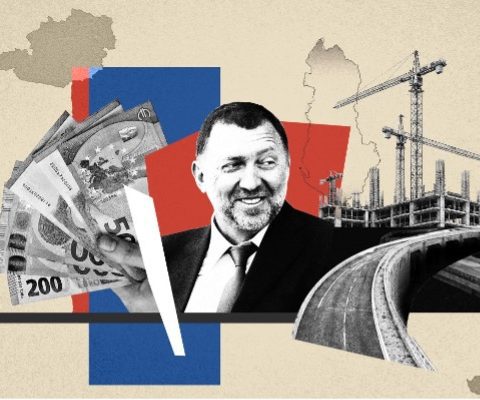
How a Sanctioned Russian Oligarch’s Business Interests Reached Albanian Public Contracts
Change font size: - + Reset Millions of euros flowed to companies linked to Strabag while Oleg Deripaska remained a major shareholder, exposing gaps in Albania’s ability to identify who ultimately benefits
Albania’s Cash Boom Raises Money Laundering Concerns
Change font size: - + Reset Cash outside Albania’s banking system reached a record 5.6 billion euros, last month. Tirana Times, August 30, 2026 – The amount of cash circulating outside Albania’s

Vlora Airport Heads to Arbitration
Change font size: - + Reset Albania faces another potentially costly international dispute after losing several arbitration cases in recent years that have exposed the state to hundreds of millions of euros

Concrete, Cocaine and Corruption: Albania’s Fragile Growth Model
Change font size: - + Reset Albania’s Concrete Economy: How Construction Became the Country’s Dominant Growth Model Tirana Times, July 10, 2026 – A booming construction sector has made Albania an outlier

Austria Leads FDI, but Real Estate Tells the Bigger Story
Change font size: - + Reset Bank of Albania data show Austria topping first-quarter foreign investment flows, while property and construction continue to shape Albania’s FDI model. Tirana Times June 25, 2026