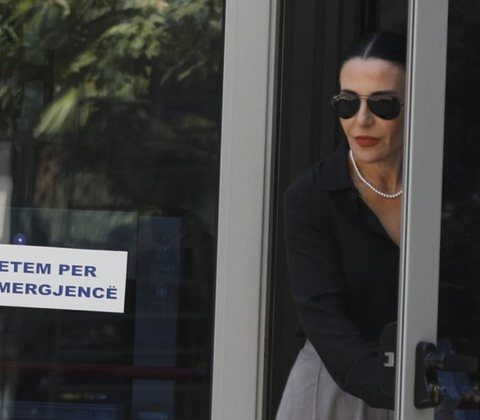
TIRANA, July 26 – The Special Appeals Collegiate (KPA) decided on Friday to dismiss Supreme Court chairman Xhezair Zaganjori after finding problems with the assets declared by him.
Zaganjori was not present at Friday’s session.
The decision came a year after the head of the Supreme Court was confirmed on duty by the Independent Qualification Commission, despite suspicions that had been raised against his assets even by the commission itself.
The appeal against his post was made by the International Monitoring Mission, after which the Public Commissioner addressed the KPA. The latter held several sessions during which Zaganjori handed over additional data.
However, at the end of the trial, the tribunal ruled that Zaganjori had made inaccurate declarations, and that there is a lack of legitimate financial resources over his assets, which include an apartment in the center of Tirana, an office environment, a basement and a shop, an apartment in Durres, or for the education expenses of his children, as well as non-payment of duties to the state for rented profits.
The Supreme Court, according to a 2013 legal amendment, should have 19 members. The law increased the number of its judges by five, but the political clashes between the majority and former President Bujar Nishani led to the additional members not being appointed.
Prior to the start of the vetting, five of the high judges resigned after filling their mandate years, although the law provides that they may remain until the moment of replacement.
Out of the remaining nine members, only four passed the vetting’s first phase, and later on even judge Edmond Islamaj and Zaganjori were dismissed by the KPA.
Of the two remaining, Mehdi Bici left after being elected member of the High Judicial Council, and only judge Ardian Dvorani remains.
Since last fall, the Supreme Court has practically been out of function by performing only emergency obligations for extradition and transferring cases of indirect persons abroad. For several months, actually, it has no longer been able to perform these functions either. For this reason, and to overcome the troubles created, a few days ago, the High Judicial Council, through an unusual decision, chose to allocate “special issues through the lottery, to Court of Appeal judges who meet the constitutional criteria of the minimum professional experience for a judge of the High Court, which means at least 13 years of experience in the exercise of the profession, apart from their confirmed task in the framework of the transitional re-evaluation process.”