By ervin lisaku
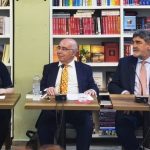
TIRANA, Dec. 6 – A conference bringing together researchers and officials was held last weekend in the southern Albanian city of Vlora to celebrate Albanian iso-polyphony, exactly five years after it was originally proclaimed a Cultural Heritage of Humanity.
Researchers stressed the need to further promote the values of this southern Albanian traditional singing and pass it on to younger generations. A documentary was featured and a CD with masterpieces of iso-polyphony promoted during the conference held in Vlora. The event was preceded by a polyphonic festival held from November 25 to 26.
Vasil Tole, an expert on iso-polyphonic music was awarded a Gratitude title by the Vlora municipality.
Originally proclaimed in 2005, folk iso-polyphony was inscribed in 2008 on the Representative List of the Intangible Cultural Heritage of Humanity and recognized by UNESCO as a Masterpiece of the Oral and Intangible Heritage.
Derived from Byzantine church music, Albanian Iso-polyphony is a sophisticated form of group singing, performed mostly by men. The rise of cultural tourism and the growing interest of researchers are contributing to the revival of this unique folk tradition.
The term ‘iso’ is related to the ison of Byzantine church music and refers to the drone accompanying polyphonic singing. The drone is performed in two ways: among the Tosks, it is always continuous and sung on the syllable ‘e’, using staggered breathing, while among the Labs, the drone is sometimes sung as a rhythmic tone, performed to the text of the song. Rendered mainly by male singers, the music traditionally accompanies a wide range of social events, such as weddings, funerals, harvest feasts, religious celebrations and festivals such as the well-known Albanian folk festival in Gjirokastra.
Preserving intangible heritage
Albania celebrated this year’s European Heritage Days as a new member of the Intergovernmental Committee for the Safeguarding of Intangible Cultural Heritage for the 2010-2014 period.
The Culture Ministry has announced that the ministry has compiled an intangible heritage list which will be followed by concrete measures for their preservation and protection, and invited NGOs and public institutions to apply for intervention projects within November 30, 2010. Apart from Albanian Folk Iso-polyphony, inscribed in 2008 on the Representative List of the Intangible Cultural Heritage of Humanity, the ministry’s list also includes epic poems, linguistic dialects, central Albanian folklore music, traditional Shkodra music, manufacturing of musical instruments traditional, dances by the Dropulli (Gjirokastra) young women.