TIRANA, Nov. 22 – One day after blaming “aggressive Serbian politics” for failing to secure enough votes to become an Interpol member, Kosovo decided on Wednesday to raise at 100 percent trade tariffs of all products with Serbia and Bosnia and Herzegovina, both of which have not recognized its independence.
The Kosovo government decision came only two weeks after applying a ten percent trade tariff for imports from Serbia and Bosnia and Herzegovina – a decision which already incited harsh reaction from Belgrade, but also the European Union.
Kosovo Prime Minister Ramush Haradinaj said the trade tariff towards Serbia is already legitimate, that it should be fully applied and that it can be removed only when Serbia recognizes Kosovo as an independent state.
“It has been twenty years since the war, ten years since independence, it is clear that Serbia doesn’t understand another language unless it is forced to understand and the EU and US know this, that Serbia is not being understanding towards the normalization process, so there are not many solutions left but to protect our own interest,” Haradinaj said.
He added this measure is nothing more than respect which Kosovo is showing towards its own statehood and that its a trade tariff placed “out of need rather than out of pleasure.”
“Dialogue should exist but the protection of our interest is also inevitable. So, this action doesn’t have a time limit, if someone thinks this is a matter of days and it will go away, it’s good they understand we don’t have many ways out, Kosovo is with its back up against the wall. It’s been ten years, the EU-five doesn’t recognize us, we are blocked on the international level, there is no recognition from Serbia, what are we to expect? For how long will this continue?” Haradinaj said after the governmental meeting which decided upon the new tariff.
Kosovo Deputy Prime Minister Enver Hoxhaj wrote on Twitter the decision aims to protect the state’s vital interests, also referring to the Interpol block blamed on Serbia’s lobbying against Kosovo’s membership which fueled it.
“Serbia is continuing its aggressive campaign against Kosovo in the international stage. It is also undermining the normalisation process. To defend our vital interest, Government of Kosovo has decided today to increase the customs tariff to 100 percent. Further measures to be announced soon!,” he wrote.
On November 20, Interpol’s general assembly voted not to approve membership for Kosovo, the result of what the U.S. Embassy in Pristina said was “a campaign, led by Serbia, to pressure countries to oppose Kosovo’s bid.”
This decision is expected to further worsen the already tense and stalled relationship between Kosovo and Serbia, especially since Serbian President Aleksandar Vucic only recently said there would be no further dialogue to normalize relations with Kosovo with the initial ten percent trade tariff in place.
Vucic says Serbia will not be retaliating
Serbian President Aleksandar Vucic met with EU, US, Chinese and Russian ambassadors to discuss Kosovo’s new economic measures and called its own Security Council shortly thereafter.
For the media, he said official Pristina might have some specific motives with its position.
“The first goal is the great pressure that would lead to the capitulation of Belgrade and the recognition of Kosovo’s independence. The second goal is to silently carry out the ethnic cleansing of Serbs from Kosovo. The third goal is pressure on the international arena so that it makes concessions on Kosovo’s visa liberalization, Vucic said.
He called the decision a trade ban and said it is “unfortunately possible due to the 2011 agreement which placed borders between Serbs and Serbs.”
Vucic said official Belgrade is already taking all possible counteractions into consideration, but that it would not be undertaking similar measures or violate the CEFTA and the Stabilization and Association Agreement.
EU seeks immediate removal of trade tariff
The European Union called on official Pristina to give up the trade tariff imposed on the goods it imports from Serbia and Bosnia and Herzegovina.
In a press release from EU Foreign Policy Chief Federica Mogherini it is stated the decision is a clear violation of the Central European Free Trade Agreement (CEFTA) and the Stabilization and Association Agreement (SAA) between Kosovo and the European Union.
“It exacerbates the situation that followed the initial tax setting of ten percent. The Kosovo government should withdraw from this decision immediately,” Mogherini’s office statement said.
International news agency Reuters reported the Kosovo government decision also seeks to apply the trade tariff to products not addressed to Kosovo with its constitutional name, the Republic of Kosovo, which Serbia and Bosnia do not recognize.
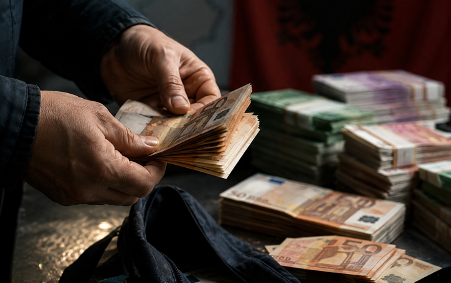
According to official numbers, last year Serbia’s exports to Kosovo reached a market value of 440 million euros (502.3 million dollars), while its imports reached 21 million euros (23.97 million dollars).
Bosnia’s exports to Kosovo reached 80 million euros last year, but it’s Serbia that is Kosovo’s biggest trading partner in the region.
Bosnian Foreign Trade and Economic Relations Minister Mirko Sarovic called the tariffs “the biggest blow to the regional free-trade zone.”
CEFTA, which comprises Albania, Bosnia, Serbia, Kosovo, Macedonia, Montenegro, and Moldova, aims at stimulating its members’ economic development and EU path.
So far, there have not been further reactions by other states, including Albania, on Kosovo’s unexpected decision and its possible implications for the region and beyond.