TIRANA, Nov. 20 – Investor interest in the emerging investment funds has waned during this year amid a considerable decline in interest rates despite two new collective investment undertakings launching operations and increasing investment opportunities.
Both the number of investors and net assets in the now five investment funds dropped during the first three quarters of this year as yields on government securities where local operators heavily invest hit new lows after the key interest rate was cut to a new all-time low of 1 percent last June by Albania’s central bank in a bid to stimulate credit growth and curb negative effects from the sharp depreciation of Europe’s single currency against the Albanian lek.
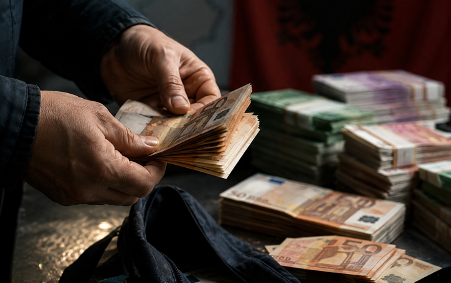
A report by Albania’s Financial Supervisory Authority shows the number of individual investors in the investment funds dropped to around 29,000 at the end of the third quarter of this year, down 7.5 percent compared to the end of 2017. Meanwhile, net assets in the five majority foreign-owned collective funds dropped by a significant 9.7 percent to 65.6 billion lek (€520 mln) compared to the end of 2017, accounting for around 4.3 percent of the country’s GDP.
The market decline was apparently primarily negatively affected by a downward trend in government securities, where market operators invest about 80 percent of the assets, mainly in longer term government bonds and to a smaller degree in 12-month T-bills.
Yields on 2-year notes, the government’s key instrument for long-term debt in the domestic market, slightly dropped to 2.15 percent last month, down from 3.25 percent in late December 2017.
Meanwhile, yields on 12-month T-bills, the government’s key instrument for internal borrowing, dropped to 1.54 percent this month, on a constant downward trend after climbing to 2.77 late December 2017.
Two new investment funds including Macedonian-Austrian-owned WVP Top Invest and a new Raiffeisen-owned Raiffeisen Vizion launched operations this year, taking the number of investment funds to five.
The data for the first three quarters of this year indicates the market will be heading to contraction this year after rapid expansion in the past six years.
Offering higher return rates compared to traditional investment opportunities such as bank deposits, investment funds registered strong double-digit growth rate until 2016 when they suffered their first modest contraction before returning to considerable growth of 11 percent again in 2017.
Operational since early 2012, the two initial Austrian-owned Raiffeisen-run investment funds and Credins Premium, an Albanian-owned fund operational since late 2016, have increased their market share to about 5 percent of the GDP, but yet account for only 7 percent of the bank deposits.
The emerging investment fund market is dominated by investments in risk-free government bonds and T-bills, but a fifth of their assets is also invested in corporate bonds and other assets such as shares, cash etc, placing investors at various degree risk.
Europe’s single currency having lost about 5 percent against the Albanian lek during this year has also slightly artificially led to lower assets at the end of the third quarter due to the financial watchdog reporting assets in the local currency.
Euro-denominated assets in the market account for about 18 percent of the total and are run by an investment fund owned by the Austrian unit Raiffeisen Bank in Albania, the country’s second largest commercial bank.
In its latest country report on Albania, the International Monetary Fund warns that investment fund supervised by the country’s Financial Supervisory Authority, lack an adequate crisis management framework.
“It is critical that the Albanian Financial Supervisory Authority completes the crisis management framework for investment funds, in coordination with the Bank of Albania and the Ministry of Finance,” says the IMF.
The market decline also comes at a time when Albanian investors seem to have been lured by risky digital currency investment despite warnings by the country’s financial institutions.
Several unlicensed brokerage firms have disappeared without trace after defrauding investors or had their operations closed down after warnings by supervisory authorities in the past couple of years.
Prime Minister Edi Rama has recently unveiled the Albanian government is mulling a regulatory framework on crypto-currencies in a bid to diversify investment opportunities in the country in an innovative sector that could create well-paid jobs and turn Albania a hub for such investment in a Western Balkan region that still remains skeptical to digital currency.