A demonstration anti-government protest aggravated with clashes between protesters and the police and resulting at the death of three persons. Meanwhile the political infighting got worsened. US, EU, OSCE and other international organizations immediately intervened with their envoys to defuse the situation.
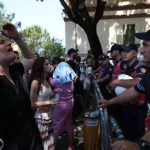
TIRANA, Jan. 27 – The opposition held a protest which soon went out of control with a bunch of people pelting police with stones, police responding with tear gas and water cannons and later exerting useless violence against people when the demonstration seemed to have been closing.
What is worse, three people died, shot dead with gun wounds.
The opposition wants the government to hold early general elections because of the alleged scandal with former deputy Prime Minsiter Ilir Meta and their allegation that the conservative Democrats rigged the 2009 ballot.
Tensions have been mounting for months between Albania’s government and the Socialists, and rose sharply last week when the country’s deputy prime minister, Ilir Meta, resigned amid an alleged corruption scandal.
Prime Minister Sali Berisha has called the demonstration an attempted coup from the opposition Socialist leader Edi Rama trying to come to power through violence.
Berisha has also been harsh on Prosecutor General Ina Rama considering her as part of that effort.
The opposition blames Berisha and the National Guard for the three dead and want people to be held accountable. They harshly protest against Berisha’s decision not to let the six guardsmen be taken from the prosecutor’s office, saying that would destroy the Guard’s chain of command and let the public institutions free to any attack.
The opposition has called for a new protest Friday, saying it will be peaceful, silent with people laying flowers to honor the three dead. Police say they do not bear any responsibility on that gathering.
Deadly Friday
Three people have been killed and dozens injured. That is the result of the opposition demonstration Friday in extensive anti-government clashes outside the prime minister’s office.
That was the worse violence to affect the volatile Balkan country in more than a decade, or since 1998 when the same thing done from the then-opposition Democratic party after the murder of their lawmaker.
Following during several hours of rioting outside the office of conservative Prime Minister Sali Berisha Tirana Military Hospital and Mother Teresa one reported the three deaths (shot from close by) and some 150 other injured _ most of them policemen and soldiers of the National Guard.
Thousands of people tried to gather at Martyrs of the Nation Boulevard from capital Tirana and all around the country. The opposition claimed many were hampered from police in other cities, which was denied from the law enforcement institution.
Demonstrators waving red-and-black Albanian flags gathered at the Tirana’s main Boulevard of Martyrs, chanting “Get Out, Get out!” referring to Berisha.
Clashes broke out when several hundred protesters broke away from the main group of protesters to challenge a riot police cordon.
The demonstrators did not attempt to force their way into the government building, only throwing stones, their slogans and umbrellas against policemen.
Shots were heard time and again together with strong noises of blasts of grenades and tear gas.
The Socialist party demands that Berisha call early elections over because of a scandal over alleged corruption.
Protesters overturned and torched police and other cars, broke window glasses of the government building and the Twin Towers nearby, smashed paving stones and hurled them at riot police and reached the steps of the government building.
Police responded with tear gas, plastic bullets and water canon.
At nightfall, hundreds of riot policemen and national guard officers swept through the center of Albania’s capital, beating protesters with batons and detaining dozens of youths. Many were seen being arrested from police.
The violence follows months of tension between the government and opposition Socialists that was rekindled this week by allegations of corruption.
The opposition, let by the Socialist Party, called for early elections after Prime Minister Berisha’s deputy resigned over allegations of bribery in a power plant tender.
The Socialists have accused Prime Minister Berisha’s conservative Democratic Party of rigging the 2009 general election, which it won by a narrow margin. The next general election is not scheduled until 2013.
Albania, a new member of NATO, is eager to show an improvement in its election standards and democratic institutions to gain eventual European Union membership.
Reactions and appeal calls
President Bamir Topi urged rival political leaders to start an urgent dialogue to defuse the tension.
“The President of the republic calls for calm and maturity …. to guarantee a return of the public order as soon as possible,” he said.
Opposition leader Edi Rama also called for calm, but said Berisha should also heed the message from the mass protest.
“My call is for the so-called prime minister not to go any further down the blind alley,” he said.
Rama also went at the Military Hospital to meet with the injured.
At a briefing after the news on the three deaths, Rama said they would continue their political fight.
“I assure all of you that we shall continue our effort, more convinced and determined, because the way out is clear _ either a free Albania for all, or the people subdued under the heel of that barbarous power,” he said.
Strong Berisha reaction
In what seemed to be a strong challenge to the opposition’s demonstration Prime Minister Sali Berisha directly accused the opposition and its leader of trying to organize a putsch to occupy all the government building and come to power by force through a “Tunisian scenario” using the “phalanges of crime, groups of bandits, traffickers and terrorists no more than 200-300 persons”, adding they will be held accountable on that.
Berisha said that the organizers of the Tunisian scenario held full responsibility for the deaths and the injuries.
“The total responsibility (for the three dead) falls on the organizers of the Tunisian scenario.”
“Institutions will be defended with any price and no one can violate them,” he said, also responding to the opposition’s request for early elections saying the next ones would be held in 2013.
The premier did not offer any way out like negotiations or any other solution with the opposition, repeating they only respect the laws.
“The one who thinks to achieve elections by force will be able to do that only if he sees his ear without a mirror,” said the premier.
Political crisis escalates
The political crisis on Saturday has escalated in Albania as the government and the opposition traded blame for the deaths of three protests during a violent demonstration against an administration accused of deeply rooted corruption.
Arrest warrants had been issued for six officers of the National Guard, army troops under Interior Ministry command who guard government institutions and senior officials. the Prosecutor General’s office said Saturday.
Tensions have been mounting for months between Albania’s conservative government and the main opposition Socialist Party.
They rose sharply last week when Deputy Prime Minister Ilir Meta resigned after a private TV station aired a video that it said showed him asking a colleague to influence the awarding of a contract to build a power station.
On Friday night, protesters overturned and burned police vehicles Friday night and clashed with officers who fought them off with tear gas, rubber bullets and water cannon. Two men were fatally shot in the chest and another died of a wound to the head.
The U.S. and the European Union have both appealed for calm.
The men had been killed by “bandits” within the protesters and accused the leader of the main opposition Socialist Party of attempting a coup, Prime Minister Sali Berisha said at a news conference.
“I am here today to tell that you were the one who organized the anti-constitutional putsch … for which you will have to face the consequences of the law,” Berisha said.
He charged that the demonstrators included “gangs of criminals, bandits, traffickers and terrorists” trying to overthrow the government with a “Tunisian-style” demonstration _ referring to the rioting that drove out Tunisia’s president this month.
Socialist Party leader Edi Rama accused Berisha of being the “political orchestrator” of the deaths and he called for the arrest of Interior Minister Lulzim Basha.
In addition to fueling outrage over corruption, the Socialists have accused Berisha’s Democratic Party of rigging Albania’s 2009 election, in which it was declared the winner by a narrow margin. The next election is scheduled in 2013, but the opposition has been calling for months for new polls to be held sooner.
The demonstration in the center of Albania’s capital, Tirana, quickly turned violent, with people pelting police with banners, umbrellas, eggs and stones.
Police said 113 people were arrested on charges of violence against police and for destroying their vehicles.
Parliament creates probing commission
Albania’s parliament held a special session late Sunday to launch an investigation into an opposition protest that the governing Democratic Party has called an attempted coup.
An 11-member commission was created at the session to investigate Friday’s violence after three people were killed and more than 150 were injured in clashes with police at a rally against the government, which protesters accuse of being corrupt.
Only governing party lawmakers attended the session, with opposition parties boycotting. Prime Minister Sali Berisha has referred to the unrest as an attempted coup, blaming opposition extremists for the three deaths. Opposition leaders say government forces opened fire on demonstrators.
“I invite you to create the investigative parliamentary commission to probe this putsch,” Berisha said before parliament voted 73-0 to create the commission, which will carry out its work for three months.
Opposition Socialist Party leader Edi Rama has denied organizing a coup to oust the government and urged people to come to a peaceful demonstration Jan. 28.
“That is an invitation for you, all those who want a one-way street toward an Albania in which everyone feels free and equal before the law,” said Rama, speaking from Fier, 60 miles (100 kilometers) south of Tirana, where he took part in a funeral for one of the dead.
Rama dismissed the parliament’s decision to create a commission, saying it is “of no importance to comment on such a banality.”
Berisha said his party would postpone their rally against violence from Wednesday to Saturday, following meetings with Western ambassadors who expressed reservations about the demonstration. The premier said he would not tolerate a second attack on the government building.
“If you (Edi Rama) try to surround the government building again, you will find what a bandit deserves. I won’t deal with anyone else. Anyone else will be under an amnesty, but him. If he touches institutions any more it will be him and only him, the chief bandit who will take their cost,” Berisha said.
Rama said “my life is not dearer than that of the three innocent Albanians killed by the hand of the state. I am in the battle together with the others.”
Opposition complaints of not arresting guardsmen
The opposition on Sunday complained that police have not yet acted on arrest warrants issued Saturday for six officers of the National Guard _ army troops under Interior Ministry command who guard government institutions and senior officials.
Arrest warrants have been issued for six guards suspected of shooting the protesters, but prosecutors said on Sunday that police have not yet arrested the men.
The governing Democrats consider the warrants anti-constitutional, and Berisha said the warrants had many technical violations.
Berisha said he would not yield to demands to step down and accused the Socialist leader of trying to “gain power through force.” He also said Rama led “gangs, thugs and criminals” to the government building.
Western ambassadors are meeting with Albania’s top leaders in an effort to mediate a compromise.
The U.S. and the European Union have both appealed for calm, urging both sides to refrain from violence and political leaders to search for compromise.
Investigation urged into protest
Amnesty International on Sunday urged the authorities to investigate the reported deaths of three men during anti-government protests in the Albanian capital Tirana.
“The police have a right to maintain order and protect the public, but they must not use excessive force against those carrying out their legitimate right to protest,” said Andrea Huber, Amnesty International’s Deputy Director for Europe and Central Asia.
Demonstrators also reported the sound of gunfire. Albanian officials said three men died in the demonstrations, reportedly from shots fired at close range from small-caliber weapons; 27 police officers, 81 guardsmen and about 50 civilians were injured.
Rama meets with Topi
Edi Rama, leader of the main opposition Socialist Party, on Monday held a meeting with President Bamir Topi to discuss on the aggravation of the political situation in the country.
The meeting was asked from the opposition leader.
At the end the president issued a statement on the meeting which was also exploited to make a call to the country’s political groupings to deter violence and turn back to dialogue.
“Under the created situation the establishment of the institutional political dialogue is very important for the country’s stability, public order, citizens’ life and Albania’s image to the international arena,” Topi said in his meeting with Rama.
Berisha hails police, Guard and Army
Prime Minister Sali Berisha on Monday and Tuesday held meetings with police and the National Guard who protected his offices during Friday’s violent rally but also with the army.
Berisha hailed police behavior during the rally.
“All your counterparts (from other countries) are proud of your professionalism,” Berisha told policemen.
The next day he also took a flag which a policeman had defended during the rally, in a show of support to the country’s police forces.
“Every Albanian is proud that you bravely stopped a coup d’etait,” he told the guardsmen who defended his offices. “Together with police forces you made to fail one of the most shameful acts, the most criminal act,” said Berisha when meeting the National Guard.
On Tuesday Berisha also met with the army’s top generals to speak about what he called the putsch.
He got assurances from Defense Minister Arben Imami that the army would never get involved in the political conflicts in the country.
Rama asks for international mediation
Opposition Socialist Party leader Edi Rama on Tuesday called for international support against the government.
“[The government] has transformed life in Albania today into a nightmare, starting with stolen elections that were generously forgiven by international observers, stealing everything and transforming the government of Albania into the most corrupt government.”
“We have to go our way with nonviolent resistance and also we are trying to reach the world’s ears and say clearly ‘don’t let us alone’,” Rama said speaking to Associated Press international news agency.
“We are at a surrealistic moment because we are a NATO member country and also knocking at the European Union’s doors and, at the same time, we are experiencing something that reminds us of the former communist regime,” Rama said.
“It is not possible, acceptable or imaginable that the National Guard should kill civilians demonstrating for their rights,” he added.
Western diplomats _ including the US ambassador _ have met with Berisha, Rama, and President Bamir Topi, appealing for work toward a compromise that would defuse political tension.
Rama was pessimistic Monday a compromise could be reached without external mediation.
Berisha bows to western pressure
After the United States urged rival Albanian political parties to call off rallies planned this week, in the wake of deadly Jan. 21 riots that heightened a political crisis in the Balkan country, Prime Minister Sali Berisha on Wednesday said his party would consider canceling Saturday’s rally.
“I hope that the two political leaders, the prime minister and the leader of the opposition will consider postponing or canceling the scheduled rallies for Friday and Saturday this week,” U.S. Ambassador Alexander Arvizu told reporters.
European Union foreign policy chief Catherine Ashton spoke on Tuesday with both Berisha and opposition leader Edi Rama.
But Rama refused, insisting that the Friday’s demonstration would be peaceful.
Berisha should refrain from interfering
Prime Minister Sali Berisha of Albania should not interfere with the criminal investigation into the fatal shooting of three anti-government protesters on January 21, 2011, Human Rights Watch said Wednesday.
“The prime minister’s comments and criticism of the general prosecutor threaten an independent investigation into the protesters’ deaths,” said Benjamin Ward, deputy Europe and Central Asia director. “All political forces should let the prosecutor carry out a proper investigation into the conduct of the protesters and security forces.”
Under human rights law, law enforcement officials may use force against demonstrators who resort to violence. But they may use force and firearms only if other means remain ineffective or without any promise of achieving the intended result. When using force, law enforcement officials should exercise restraint and act in proportion to the seriousness of the offense. In particular when a fatality results from the use of firearms by law enforcement, human rights law requires a prompt, impartial and effective investigation into the death to assess whether the killing was lawful.
“The government, ruling party and opposition should all be working toward the peaceful resolution of political disputes, and avoid actions that risk inciting more violence,” Ward said.
President calls for suspension of demonstrations
President Bamir Topi, at last, spoke on Wednesday and he made that only after two talks with EU envoy Miroslav Lajcak.
The country’s president called on the political parties to “find the proper will and re-establish the political institutional dialogue.”
“I suggest that the temporary suspension of any form of demonstration or public gathering would significantly lower the tension and find the proper space that the independent justice institutions hold an overall, transparent, impartial and professional investigation,” he said in a statement.
Opposition set for demonstration to honor the dead
Despite international calls for restraint, the opposition Socialists have called a new demonstration for Friday.
They will hold a procession led by their leaders and lawmakers, walking in silence and putting flowers where the three were killed close to the government building.
Besnik Bare, a senior Socialist leader, on Thursday went on a news conference to describe in detail how the procession would walk peacefully and silently the next day.
Police considered Friday’s demonstration a “threat to the national security, public security, protection of public order, crime prevention and the human rights” and said they would “not guarantee the holding of that gathering,” according to a statement.
It is not clear what that means, whether police will be absent from the place of the gathering or not.
What one can understand is that, whatever happens, police cannot be held accountable. The opposition should take care of itself and the gathering, of its participants.
Police mentions in its statement the fact that last Friday’s rally and participants went out of control they were with Molotov bombs and weapons and used excessive violence against police.
Alexander Arvizu, the U.S. ambassador in Tirana, said it was “extremely regrettable” that the opposition intended to proceed with its own protest.
After meeting with U.S. and EU diplomats, Berisha canceled this weekend’s pro-government rally to avoid causing more violence in his country’s political crisis.
The opposition Socialists on Saturday had vowed to continue the anti-government protests, but said they would not hold any demonstrations on Saturday, when the three people killed were to be buried.
Scores of people led by Socialist leaders laid flowers and lit candles where two people were killed.
Berisha invited Albanians to come next Wednesday to a peaceful rally against violence. The government also awarded a month’s salary to all National Guard officers and four months’ salary to those injured in Friday’s violence.
The Albanian opposition, led by Socialist Party chairman Edi Rama, who is also the mayor of Tirana, has called for fresh protests against the government this Friday, one week after the clashes that saw three killed and dozens wounded in front of the premier’s office.
“We shall continue our struggle in a determined way, because the way out is clear – either a free Albania for all, or keep the people subdued under the boot of barbaric power,” Rama said at the funeral for one of the dead protesters.
Albania is one of Europe’s poorest countries. For nearly 50 years, the mountainous country of 3.2 million people was ruled by xenophobic Communists who banned contact with the outside world. That regime was toppled in a student-led revolt in 1990.
The nation descended into chaos seven years later following the collapse of popular investment schemes, requiring an international military mission to restore order.
Albania is now a NATO member and seeks to join the 27-nation EU, but corruption is widespread and unemployment is high.
————
US, EU and OSCE call for calm
The United States Embassy, the European Union Delegation and the Organization for Security and Cooperation in Europe issued a joint statement to “deeply regret that today’s demonstration in Tirana was not peaceful and resulted in some casualties. Violence and excessive use of force cannot be justified and should be avoided. We urgently appeal for calm and restraint on all sides and to abstain from provocations.”
They renewed the call for “constructive dialogue and compromise to resolve the existing political differences.”
The U.S. Embassy had also called a day earlier for the protest to be peaceful and called on politicians, too, to tone down their inflammatory rhetoric.
The OSCE Chairperson-in-Office, Lithuanian Foreign Minister Audronius Azubalis, called on all in Albania to refrain from using violence.
“Dialogue and co-operation could contribute to resolving the problems Albania is facing. Violence and provocative statements only aggravate the situation.”
International community concerned on violence
U.S. Ambassador in Tirana Alexander Arvizu on Saturday said he had told Albanian politicians on both sides that the violence “was not necessary. Nor was it inevitable. It could have been avoided. It must be prevented from happening again, for the sake of all Albanians.”
“What Albania desperately needs at this moment is political leadership. We have repeatedly urged Albania’s political leaders to search for compromise,” he said at a news conference. “It’s time to take a deep breath, repair the damage and begin the process of recovery.”
Arvizu, together with EU Ambassador Ettore Sequi and British Ambassador Fiona McIlwham, met with Albanian President Bamir Topi to stress that the “return of dialogue, respect of institutions, maturity and equilibrium is of a vital importance.”
Organization for Security and Cooperation in Europe Ambassador Eugen Wollfarth also urged that “all national leaders, both in government and in opposition, should act constructively and show leadership in restoring public and political confidence so that the country again can focus on its national strategic goals.”
EU wants Albania to sort out crisis by itself
European Union on Monday warned Albania’s warring politicians not to rely on the European Union to solve their country’s political crisis.
‘It is up to political leaders, be they in government or in opposition, to find a solution out of the political impasse,’ Natasha Butler, spokeswoman for EU enlargement commissioner Stefan Fuele, told reporters in Brussels.
She urged all sides to ‘use rhetoric which is respectful of others,’ to put ‘an end to short-sighted political party discourse’ and to focus on the reforms needed to advance Albania’s European Union membership bid.
The spokeswoman also said that the EU welcomed the decision to launch an inquiry on last week’s deadly riots, but stressed that ‘this needs to be done in an inclusive manner.’
US supports prosecutor general
The United States on Tuesday urged the Albanian conflicting political groupings to postpone or cancel their rallies this week, trying to defuse a tense political environment in the tiny Balkan country.
“I call that the two political leaders, the prime minister and the leader of the opposition will consider postponing or cancel the scheduled rallies for Friday and Saturday this week,” U.S. Ambassador Alexander Arvizu said at a news conference as a sign of support to Prosecutor General Ina Rama, who had asked Washington to offer technical assistance for the investigation of the deadly riots.
Both the opposition and Berisha’s governing Democrats have called for new rallies on Friday and Saturday.
Prosecutor General has been under strong criticism from governing Democratic Party and Prime Minister Sali Berisha for taking sides following last Friday’s rally.
The police have not yet acted on arrest warrants issued Saturday for six officers of the National Guard _ army troops under Interior Ministry command who guard government institutions and senior officials.
The Democrats consider the warrants illegal.
The United States on Wednesday has expressed its full confidence in Albanian General Prosecutor Ina Rama, accused by the government in Tirana of orchestrating a failed coup d’굡it with the opposition and the secret services.
The Democrats consider the warrants illegal and have openly accused the prosecutor general’s office of siding with the Socialists in the dispute.
In response to the allegations, Prosecutor General Ina Rama asked the U.S. on Tuesday to provide technical assistance in the investigation into the deadly riots.
General Prosecutor Rama announced during the press conference that she would ask for ballistic experts from the United States to back up the investigation. Rama said that the request for help was due to “the complexity of the case, its repercussions and the involvement of government structures tasked with securing the security of institutions, law and order.”
US Ambassador in Tirana Alexander Arvizu on Wednesday said that Washington had accepted to help Albanian Prosecutor general’s office to investigate the Jan. 21 deadly rally.
“Let the investigators do their work. Trying that case in the media serves no one,” he said.
The police have not yet acted on arrest warrants issued Saturday for six officers of the National Guard _ army troops under Interior Ministry command who guard government institutions and senior officials. Governing Democrats consider the warrants illegal and have openly accused the prosecutor general’s office of siding with the Socialists in the dispute.
Arvizu said that during the press conference at the Office of the General Prosecutor, “I indicated the full and complete support of the United States for that institution.”
The United States believes it is critically important that there be a credible and comprehensive independent investigation into the events of January 21, he said. “We understand that people want answers to their questions quickly. But it is important that the investigation be thorough and comprehensive in order to be credible. ŠTo everyone, I say this: let the investigators do their work. Trying this case in the media serves no one.”
EU sends envoy to defuse confrontations
A European Union envoy tried to ease tensions in Albania on Wednesday.
Miroslav Lajcak was sent by EU foreign policy chief Catherine Ashton for talks in Tirana with President Bamir Topi, Prime Minister Sali Berisha and opposition Socialist leader Edi Rama.
Envoy Miroslav Lajcak met on Wednesday with Berisha and President Bamir Topi, and also with Socialist opposition leader Edi Rama. Lajcak was appointed as an envoy by EU foreign policy chief Catherine Ashton.
He emerged from meetings with a cautionary message.
“We must see an end of violence. We must see an end of the escalation of the tensions,” he said.
“And I made it clear that the European future for Albania depends very much on whether the political leaders chose to do what we’ve asked them to do and do that now.”
Albania applied for EU candidate status before parliamentary elections in 2009. The EU Commission said in November that the country still needs further political and fiscal reforms to advance its membership application.
The Socialists refuse to accept the results of a 2009 election which gave Berisha a second four-year term. They accuse his government of corruption, pointing to the recent resignation of the deputy premier, and vote fraud.
Berisha on Wednesday canceled a rally critics feared could lead to more unrest, as a European envoy demanded an end to violence and warned leaders the crisis could threaten the Balkan country’s relationship with the EU.
The Socialist opposition has refused to call off its own upcoming demonstration, saying protests planned for Friday would be peaceful.
“Saturday’s rally will not be held because there was a fully legal and logical demand from our friends, partners who are following Albania’s situation with concern,” Berisha said at a cabinet meeting.
US Ambassador in Tirana Alexander Arvizu has met both leaders and Assistance Secretary of State on European Affairs Philip Gordon had also asked them to cancel the rallies.
Arvizu welcomed the premier’s decision to cancel the rally as “the right thing to do” and found “it extremely regrettable” that the opposition intended to proceed with the rally on Friday.
“I strongly urge that he (Rama) reconsiders his position,” said Arvizu.
“The differences are pretty serious, clearly. But in English we have a saying – where there is a will, there is a way. People just need to have that will.”
Also Wednesday, Lithuanian Vice-Minister for Foreign Affairs Evaldas Ignatavicius, whose country holds the OSCE Chairmanship, called Berisha and Rama, urging them to refrain from holding demonstrations in the coming days in order to avoid raising tensions.
“I encourage Albania’s political parties to engage in a constructive and inclusive cross-party dialogue in parliament and other existing democratic national institutions,” he said. “Harsh public political rhetoric would only worsen the situation and must be avoided.”
OSCE chairman helps mediation
The Organization for Security and Cooperation in Europe’s chairman on Thursday was in Tirana to try and defuse a major political crisis after a violent opposition protest left three people dead.
Audronis Azubalis, who is also Lithuania’s Foreign Minister, met Prime Minister Sali Berisha, opposition leader Edi Rama and President Bamir Topi.
His visit is another attempt from the international community to help mediate the political dispute in the tiny Balkan country.
A day earlier EU envoy Miroslav Lajcak met Albania’s political leaders and appealed for calm.
They were also joined by the US Ambassador Alexander Arvizu and other western ambassadors in Albania.
That is a clear indication that this post-communist country finds it hard to resolve any internal dispute without external interference
Shadow over country’s EU aspirations
The EU on Sunday warned Albanian politicians to refrain from violence after three anti-government protesters were shot in front of the Prime Minister’s office on Friday in clashes with police. “We urgently appeal to all political forces to call for calm and refrain from provocation,” EU foreign policy chief Catherine Ashton and enlargement commissioner Stefan Fuele said in a joint statement, deploring the loss of life and the violence in the Albanian capital, Tirana.
“In order for Albania to progress on its European path, we once again urge Albanian politicians to engage in a constructive political dialogue to resolve without any further delay the long-standing political stalemate and to mobilize the countries energies to this end.”
The political stand-off dates back to the 2009 elections, which have not been recognized by the opposition. They claim the poll was rigged in favor of Mr Berisha. Since the fall of its Communist regime in 1991, Albania has not yet managed to hold elections fully meeting international standards.
A NATO member and an EU aspirant, Albania – one of the poorest countries in Europe – has seen member states reject its EU application, filed last year, until the political deadlock ends.
there is no reconciliation of the two sides on the horizon, with Rama calling on the “corrupt” government to resign and Berisha accusing him of attempting a “Tunisian-style” coup.
Albania compared to Arab countries
The recent violent developments in Albania have pushed the international media to compare it to some Arab countries who are also in turbulent times.
They wrote how people in Yemen, Jordan, Algeria and Albania took to the streets last weekend demanding democratic reforms in their countries.
Some expressed explicit support for the Tunisian people, calling for similar uprisings in their own countries. Others were more reserved. Jordanians directed their anger at the prime minister rather than trying to oust the royal family.
In Albania Prime Minister Sali Berisha periphrases the opposition’s rally Friday as a “Tunisian-style” one.
The popular demonstrations drew comparisons to the Tunisian protest movement that has captivated the world.
on Friday, three protesters in the Albanian capital of Tirana were shot and killed — one on video — at a protest organized by the socialist opposition party.
The connection to the mostly Muslim Balkan nation of Albania is certainly less direct, but the role of social media, the timing of the protests and the reaction of the international community have attracted the interest of many who are following the events in Tunisia online.
—–
Civic organization urge compromise
Stop the escalation of the political conflict and open the way to stability and European Integration and political constructiveness. That was the call Monday of more than 90 organizations of civil society addressing the political class to overcome the escalation of the political conflict.
The civil society wants the political class to remember that Albania needs stability, a state of law and democratic institutions, it said. They added that the Albanian civil society condemns every violent act against institutions and requests by the later not to exceed their competences.
“We request from the political class that at this moment, they stop the demonstration of force through rallies as an outdated model,” the statement said.”The political class urgently must cooperate and put first the national interests of the citizens and European integration, above political interests.”
Religious communities call for calm
Religious communities urged Albanian political parties to refrain themselves from violence and try to resolve the political deadlock.
The Muslim Community deplored the violence at Friday’s rally.
“We should bear in mind that chaos brings chaos and violence brings violence, consequently we all are lost and there are no winners,” a statement said. They also urged the international community to try to work more in mediating dialogue in the country.
The Catholic Church also expressed its concern over the violence and the deaths.
“We call on those who keep the country’s fate in their hands to leave aside their political ambitions and be put at the service of the citizens with the good will to cooperate in carrying out the civil aspirations for peace, well being and dignity,” according to a statement.
Journalists denounce violence on colleagues
The Union of the Albanian Journalists on Monday expressed its concern on the rally’s violence denouncing the way the political class was violating and blooding the country’s democracy.
The Union also denounced the violence exercised on the journalists, cameramen and other media personnel who were trying to cover and broadcast live the daily developments.
The Union also highly evaluated the tireless work done by the colleagues working at the rally.
Some journalists suffered from police violence.
The Union also called on the interior Ministry, police and prosecutor’s office to hold these officials accountable for the violence against the journalists