
TIRANA, May 7 – Trilingual tourist signs have been installed in the Apollonia archaeological park, the country’s second largest archaeological site, to help increase the number of tourists to Albania.
A project funded by the French embassy to Albania has helped install 16 tourist signs in Albanian, French and English, providing explanations and graphical designs of park’s ancient period.
The Apollonia park was discovered in 1924 by French archaeologist Leon Rey. A French-Albanian archaeological mission has been regularly carrying out excavations and publishing materials on Apollonia in the past few years.
The 14th century Monastery of St. Mary in the archaeological park of Apollonia has benefitted from EU funding on the rehabilitation of eight cultural heritage sites in the Western Balkans through the Regional Cooperation Council.
The contribution is part of the European Commission’s 500,000 euro grant for sustaining the rehabilitation of cultural heritage in the Western Balkans.
Additional 2.8 million euro provided by the Commission are expected to be utilized by 2016 for preserving three Western Balkans sites – the Franciscan Monastery of Bac in Serbia, Banja Luka Kastel in Bosnia and Herzegovina, and Apollonia archaeological site in Albania.
The Apollonia archaeological park, the second largest archeologist park situated in the south-western region of Fier, will benefit Euro 750,000 from an EU-funded project supporting the preservation and restoration of cultural heritage in the Western Balkans, Albanian authorities have confirmed.
Established in the 7th century B.C. by Greek settlers, the ancient city of Apollonia is located 11 km to the west of the modern city of Fier.
Among the most interesting monuments worth visiting are the Bouleterion (city council), the library, the triumphal arch, the temple of Artemis, the Odeon built in the 2nd century B.C., the two-storey 77 m long Stoa, a theatre with a capacity 10000 spectators, and the Nymphaeum, a monumental water fountain covering an area of 2000 m2.
The Apollonia park also features a museum with some of the most important artefacts discovered in the park.
Closed down on safety grounds in the early 90s, the archaeological museum of Apollonia, reopened its doors in December 2011 after 20 years. Restored under UN and UNESCO assistance, the reopened museum in the south-western district of Fier, features 750 archaeological items and ancient coin treasuries, displayed in a 1,000 m2 area, previously stored in the Archaeology Institute of Tirana.
New tourist signs installed in Apollonia park

Change font size:

Latest from Culture

Spain Rules the World Again
Change font size: - + Reset Spain clinches second FIFA World Cup title as Europe continues its dominance on football’s biggest stage By Gautam Karve, Editor-in-Chief, World Media Organization Tirana Times, July
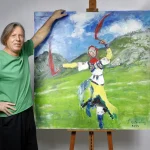
K’cimi dancing of Tropojë – Gazmend Freitag
Change font size: - + Reset by Monika Grill Tirana Times, July 11, 2026 – “K’cimi i Tropoja” – the dance that endured over centuries and kept the Albanian identity alive, has
In Search of Albania’s Soul: Manuel Montobbio Returns to Tirana Through Literature
Change font size: - + Reset Tirana Times, July 02, 2026. The Albanian Institute for International Studies and Tirana Times book house hosted a special literary evening in Tirana with Ambassador Manuel Montobbio, diplomat, writer, poet

This Auditorium Comes With a Price Tag -Corruption in Albania’s Public Universities
Change font size: - + Reset Corruption remains one of Albania’s most stubborn obstacles toward development and its dream for European integration. Although the country marked its biggest historical leap in Transparency

The Heart Of A Patriot That Beats For The People
Change font size: - + Reset by Dr. Jorgji Kote Tirana Times, June 11, 2026 – ”Heart of a patriot” is the new book dedicated to Binali Yildirim, an outstanding political leader and personality