By JUXHINA MALAJ
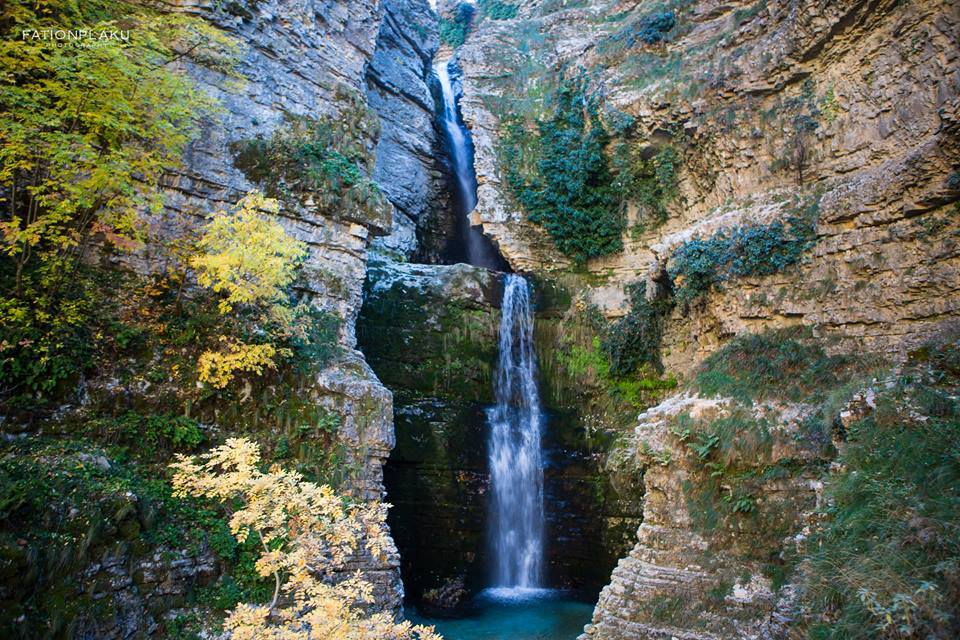
TIRANA, Jan. 11 – Local officials and others are opposing the Ministry of Culture’s recent decision on Nov. 23, 2015 to give the green light for the construction of a hydro-power plant (HPP) in the canyons of Nivice, Tepelena, which are cultural heritage site.
The decision hasn’t been approved by local residents as well as by the head of Tepelena Municipality Termet Peci, and Executive Director of the National Agency of Coastline Auron Tare, who described the decision by the Ministry of Culture as “scandalous” .
“In fact, the approval was made by the Supreme Council of Restoration at the Institute of Cultural Monuments, who have no idea about the Nivice Canyons. Not only do they not know and have not visited the canyons, but they want to destroy one of the most beautiful areas in Albania. HPP, which will continue with its project without the approval of local residents, wants to destroy a natural wonder as well as a whole ancient city which has surprised archaeologists with cultural findings of this area, that date from the IV -II century BC. If the natural and cultural resources of this area get destroyed, there is no chance of having a touristic development, and the area will eventually be forgotten and abandoned,” Tare said.
The head of Tepelena Municipality Termet Peci, said that he doesn’t approve the decision as well, and added that he hasn’t received any information about the project. “I do not approve the HPP project in this area, because this is a touristic place and we are trying to include the whole area in the touristic guide together with Zagoria, because Kurveleshi as a whole is precious for Tepelena,” Peci said.
According to the National Council of Restoration, HPP Driza 1 project will be under the supervision of the Regional Directorate of Cultural Heritage, Gjirokastra. Even though the Ministry of Culture has approved the project stressing that the archaeological objects will be supervised, it hasn’t officially mentioned anything about the canyons, which usually are protected by law worldwide.“Some of the most popular pilgrims of the 19th century, such as Dr.Holland and Francois Pouqueville, suggested that one of the most important cities of ancient Epirus might be located in the exact same area,” Tare said.
In his book titled Travels in the Ionian Isles, Albania, Thessaly, Macedonia, etc. during the years 1812 and 1813, Sir Henry Holland wrote: “Some miles higher up the valley, and likewise in a very singular position is the town of Nivitza [Nivica], containing more than 600 houses. At this place there are considerable ruins which from the description, I judge to be of Cyclopian structure, and belonging to one of the ancient Chaonian cities. In the same mountain region, there are several other villages, chiefly peopled by shepherds, the flocks being very large and numerous upon these mountains. I was informed that nearly 30,000 sheep belong to the village of Bentza alone, and a proportionate number to other places in the vicinity.”
There hasn’t been any archaeological excavation in the area, but according to archaeologists, several iron, bronze, and ceramic objects found in the area by local residents, date from the IV -II century BC. Nivice Canyons are located near the village of Nivice in Tepelena, one of the most beautiful places in Southern Albania. With an altitude that ranges from 250 m to 2100 m, the canyons offer a diverse and rich flora and fauna and together with the highland of Kurvelesh, the whole area has an outstanding natural beauty.