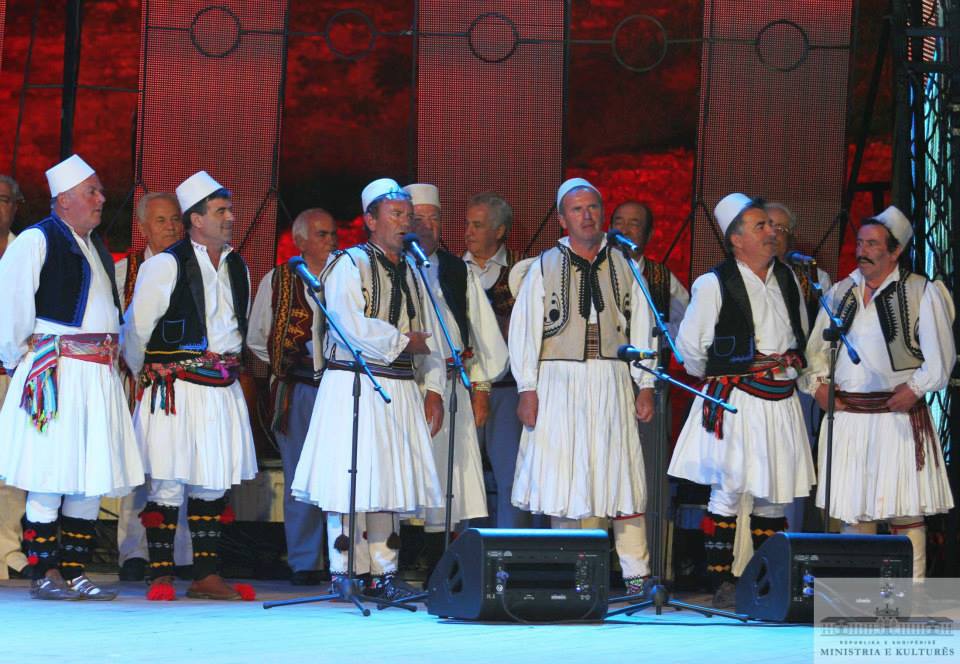
TIRANA, May 18 – A festival where the dress code for everybody performing and attending is the fustanella, a traditional kilt worn by Albanian men since the Middle Ages, is underway this weekend in Gjirokastra in the first Fustanella festival bringing folklore music from around the world at the UNESCO World Heritage site of Gjirokastra, southern Albania.
“The idea was to use a national identity symbol. We hired an aesthetic symbol such as the fustanella. We can say that it was the trendiest product of Albanian fashion for several centuries. We want to put this senior symbol back to where it deserves to be. Even musical bands have a strong link to the fustanella,” says Olsi Sulejmani, the festival’s organizer.
Culture minister Mirela Kumbaro says the festival serves as a linking bridge to understand similar folklore and polyphonic elements around the world.
“The beautiful thing about this 3-day festival is that it will reinvigorate not only Gjirokastra, but the whole of southern Albania because of bringing together different bands from Indonesia, Italy, the UK and Morocco. It is very interesting to note that what we think of as unique in Albania is in fact a cultural linking bridge even with other countries considering that polyphonic elements are also found in other cultures,” says Kumbaro.
The festival scheduled for May 19 to 21 will be held at the local castle and the historic center of Gjirokastra, a UNESCO World Heritage site since 2005.
“I would like to invite all music students to attend the festival so that they understand the rhythm and music mix, to a music festival with its roots in identity, but experienced in the modern sense of globalism,” says Robert Bisha, the festival’s artistic director.
Gjirokastra is also the host of traditional folklore festival held every five years since the late 1960s bringing together regional and Albania Diaspora to celebrate the country’s intangible cultural heritage.
The festival last held in 2015 is known for promoting Albanian folklore dances and music, including iso-polyphony, inscribed recognized by UNESCO as a Masterpiece of the Oral and Intangible Heritage.
Inscribed on UNESCO as a rare example of an architectural character typical of the Ottoman period, Gjirokastra, situated in the Drinos river valley in southern Albania, features a series of outstanding two-story houses which were developed in the 17th century. The town also retains a bazaar, an 18th-century mosque and two churches of the same period. The 13th-century citadel provides the focal point of the town with its typical tower houses.