TIRANA, Dec. 13 – Albania’s central bank has called on commercial banks operating in the country to ease lending standards so that the current sluggish credit growth receives a boost, in a move that would also help the country’s economy grow at faster and more sustainable rates.
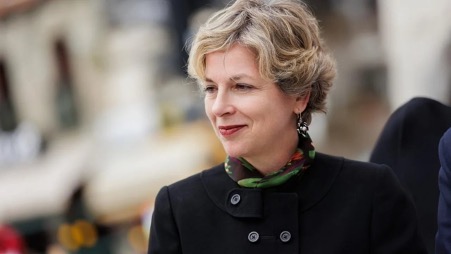
Speaking at a year-end meeting with the Albanian Association of Banks this week, central bank governor Gent Sejko warned the country’s sustainable growth was impossible without the reinvigoration of credit.
“The banks’ role is essential in this direction. The banking sector preserves the Albanians’ savings, but it has to put those savings at the disposal of the country’s growth and development. There is no growth without credit and savings lose their value without growth,” said Sejko.
Credit to the private sector has been sluggish in the past five years amid a high level of non-performing loans and poor demand by both businesses and households despite loan rates on a downward trend due to key rates by both Albania’s central bank and the European Central Bank at record lows.
Credit officially declined by 3.6 percent in the first ten months of this year, but the real growth rate is estimated at moderate rates of 3 to 4 percent when adjusted for the bad debt write-off effect and the strong appreciation of the Albanian lek against Europe’s single currency.
Ongoing tighter lending standards applied by banks are a result of non-performing loans staying at around the same levels of 13 percent this year, but down from a record high of 25 percent in mid-2014, according to Albania’s central bank.
Meanwhile, demand for new loans by both businesses and households remains sluggish as the economy slowly recovers to growth rates of around 4 percent, but mainly due to some large energy-related investment and heavy rainfall lifting Albania’s hydro-dependent electricity sector out of crisis, with not much effect on Albanian households.
Experts estimate the Albanian economy has to grow by an average of 6 percent annually, a growth rate that it enjoyed for about a decade ahead of the 2008-09 global financial crisis in order to produce sustainable growth for Albania’s households.
Albania’s 2017 actual individual consumption, a measure of households’ material welfare was at 39 percent of the EU average, the region’s poorest, when expressed in GDP per capita in purchasing power standards (PPS), an artificial currency unit that eliminates price level differences between countries, according to Eurostat, the EU’s statistical office.
“The overall level of credit to the economy is still far from the potential and there are lots of opportunities to boost lending. I fully understand the fact that this phenomenon is a result of both poor demand and supply conditioned by tight lending standards. However, beyond structural factors, I think we have to react in order to avoid the stagnant situation with lending,” said Sejko.
“For an economy that has to develop faster in order to come closer to the EU, the situation has to change and credit growth be higher by showing constant attention to its health,” Sejko said.
The governor also suggested banks could consider helping potential customers, especially households and small businesses, with financial consultancy by assisting them design suitable projects that can get funding. The governor also said banks could help with the population’s financial education and inclusion as well as assist authorities in pushing reforms that improve the doing business climate.
Albania’s credit is largely deposit-funded with the loan-to-deposit ratio at around 55 percent, hinting ample liquidity and huge room for a boost in credit.
Half of Albania’s credit is still denominated in foreign-currency, mainly in euro, triggering the central bank to undertake a de-euroization strategy that discourages borrowing and saving in Europe’s single currency to protect Albanians from currency exchange fluctuations.
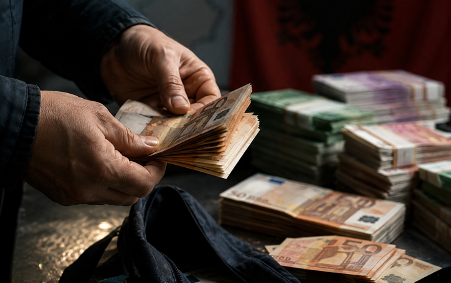
With Europe’s single currency currently trading at a 10-year low of around 124 lek, down 6 percent compared to last year, repayment of euro-denominated debt for both the government and households has become much cheaper.
By contrast, Eurozone exporters, local producers facing tougher competition from cheaper imports, savers and remittance recipients in Europe’s single currency have been hardly hit.
The country’s banking system is considered well-capitalized, liquid and profitable, but is currently undergoing reconstruction with two mergers and acquisitions having cut the number of commercial banks operating in the country to 14 this year, down from a decade of 16.
The Albanian economy is expected to hit a decade-high of 4.2 percent this year, fuelled by growth in energy-related investment and exports, as well as tourism.