
“All my life I have been told my thinking is somehow ‘strange or odd’. Turns out to be something that’s valued,” says the Albanian artist.
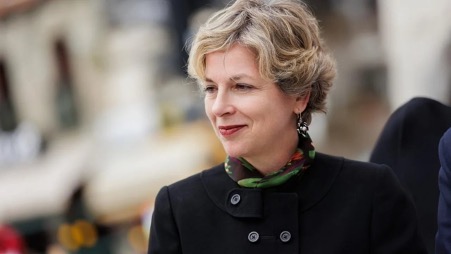
TIRANA, Nov. 20 – Albanian contemporary artist Anila Rubiku has been included in the Foreign Policy magazine’s list of Top Global Thinkers for 2014 for defacing dictators.
“To my surprise yet delight, I find myself on a list that includes Kara E. Walker, Shigeru Ban, Alexander Ponomarev, Camile Henrot….. I’m pleased to announce that I have been included in Foreign Policy magazine’s list of Top Global Thinkers for 2014,” Rubiku writes on her Facebook profile.
“All my life I have been told my thinking is somehow ‘strange or odd’. Turns out to be something that’s valued,” she adds.
Born in 1970, Anila Rubiku grew up in communist Albania that she once called “the most absurd country in the world”. Today, national alienation is a pervasive theme in her art. A recent work, “Effacing Memory” features sketches of 12 dictators and members of their inner circles with their faces erased – stripping the men of their power. An accompanying video documents her almost violent erasures of their visages. She saved Enver Hoxha, the communist who ruled over her homeland for 41 years, for last, writes the Foreign Policy about them.
In 2014 alone, Rubiku’s work has appeared in museums and galleries in Belgium, Albania, Montenegro and France. The artist crosses borders with equal frequency, ever attuned to the psychology of displacement. Her 2011 installation “Other countries. Other Citizenships” features a collection of hats embellished with written passages intended to reflect the thoughts of immigrants acclimating to new cultures. “Exile” one reads. “It’s not easy coming from nowhere when no foreign external condition compels us to.”
Anila Rubiku lives and works in between Toronto, Milan and Tirana. Rubiku’s work includes drawings and installations. She has developed a unique way of actively incorporating local people into community projects that combine tradition and art, local history and a contemporary perspective, creating a fascinating new hybrid. She takes as her material: gender; architecture; memories and history.
Albania’s Anila Rubiku among Top Global Thinkers for 2014

Change font size:

Latest from Culture

Spain Rules the World Again
Change font size: - + Reset Spain clinches second FIFA World Cup title as Europe continues its dominance on football’s biggest stage By Gautam Karve, Editor-in-Chief, World Media Organization Tirana Times, July
K’cimi dancing of Tropojë – Gazmend Freitag
Change font size: - + Reset by Monika Grill Tirana Times, July 11, 2026 – “K’cimi i Tropoja” – the dance that endured over centuries and kept the Albanian identity alive, has
In Search of Albania’s Soul: Manuel Montobbio Returns to Tirana Through Literature
Change font size: - + Reset Tirana Times, July 02, 2026. The Albanian Institute for International Studies and Tirana Times book house hosted a special literary evening in Tirana with Ambassador Manuel Montobbio, diplomat, writer, poet

This Auditorium Comes With a Price Tag -Corruption in Albania’s Public Universities
Change font size: - + Reset Corruption remains one of Albania’s most stubborn obstacles toward development and its dream for European integration. Although the country marked its biggest historical leap in Transparency
The Heart Of A Patriot That Beats For The People
Change font size: - + Reset by Dr. Jorgji Kote Tirana Times, June 11, 2026 – ”Heart of a patriot” is the new book dedicated to Binali Yildirim, an outstanding political leader and personality