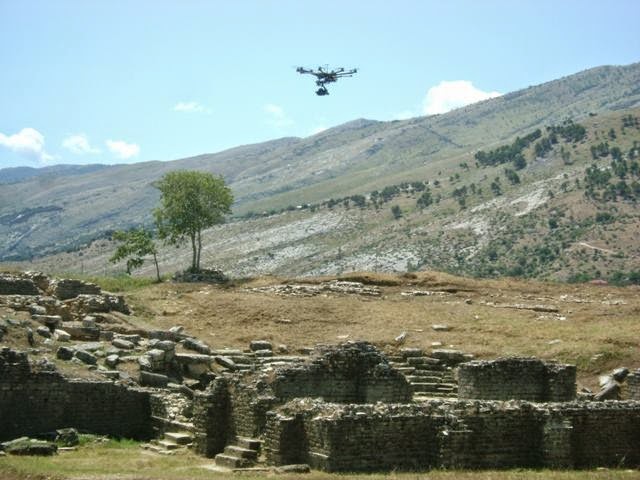
TIRANA, March 5 – An Albanian-Italian archeological mission which has been conducting excavations in the southern Drino valley in the region of Gjirokastra for the past decade has recently used drones to capture images and video footage from local archaeological sites which will be used for their study and protection.
The pictures and video footage feature archeological sites such as Hadrianapolis, Antigone and the local Gjirokastra fortress.
The use of drones for the study and management of archaeological sites and the territory and the results of the 2014 research will be shown in a seminar at the National Museum of History on March 13, says the Italian Institute of Culture which is organizing the event.
The drone initiative targets sharing technology potential on archaeological sites and promoting cultural heritage sites.
Since 2005, an Albanian-Italian mission led by Roberto Perna of Italy’s University of Macerata and Dhimiter Çondi of the Albanian Institute of Archeology, has been conducting research and excavations in the Hadrianapolis and Antigone parks of the Drino valley.
Located in Drino valley in Gjirokastra region by a village bearing the same name, Roman Hadrianopolis dates back to the second century A.D. The theatre was excavated in 1984 and has a capacity of 4,000 seats in 27 steps.
The settlement, Hellenistic in origin, was re-founded under Emperor Hadrian, who gave it its name. The excavated remains include public buildings such as a theatre and Roman baths, large parts of the urban settlement and an extensive necropolis.
Meanwhile, Antigonea lies on a hill about 600 meters above sea level and the wall circuit is estimated to have had a length of ca. four kilometers, covering 35 hectares. The Agora of the city has been excavated and a Stoa, 59 meters long and 9 m wide has been brought to light. Coins from various city states have been found in excavations, arriving from Korkyra (modern Corfu), Apollonia, Dyrrachium, Oricum, Ambracia but also the Epirote League, most of them made of bronze and few in silver.
A new 8-km road built few years ago has made access to the archeological park of Antigone much easier for tourists and put Antigone on the agenda of tourists who visit Gjirokastra and southern Albania.