NOVI SAD, July.1- Apart from being one of the largest music festivals in Southeast Europe, Exit also has an enormous influence on society. Founded as an alternative to Milosevic’s dictatorship in 2000, EXIT continues to involve itself in social campaigns that are important for Serbian and Balkan youth continue struggle to end inability to receive visas
The ‘Visa Abolishment Campaign’ is working to abolish the complicated and harsh Schengen visa regime that has kept young people from Serbia, Montenegro, Bosnia and Herzegovina, Macedonia and Albania in isolation for years. For most of them it’s virtually impossible to visit the EU as they are required to prove that they own some real estate or that they have high incomes. Bearing in mind that these countries are surrounded by EU member states, it’s no wonder that many Balkan youngsters often say they feel as though they are living in a ghetto.
More than two thirds of the youth in Serbia have never been abroad – the Schengen visa regime for them became the ‘Large Schengen Wall’, an impassable hurdle to the countries they wish to visit. Complicated procedures, high costs, excessive and sometimes bizarre documentation which is necessary to submit are impossible tasks for most of the youths from Serbia, as well as from Macedonia, Montenegro, Bosnia and Albania.
At this years festival there will be a stage called ‘Serbia in Action’ which will host representatives of non-governmental organizations, experts on the visa issue and representatives of the Serbian Government, including the Vice President, Boߩdar ѥli殠
In 2006, EXIT instigated a “NOT60EUROS!” campaign, where people from all around the EU were invited to record the phrase “NOT60EUROS!” in their own language and send it to the campaigners. The plan was to make the song using all the samples and to distribute it all over Europe as protest against the announced rise in visa fee from 35 to 60 EUR. The campaign received a lot of publicity and, as a result, the visa fee for Western Balkan countries was frozen at 35 Euros for two years.
However, the visa fee is only one part of the costs for those applying for a EU visa, which can mount up to 200 – 250 EUR, the equivalent of an average month’s salary in most of the Balkans. During the festival, organizers erected a large billboard with a picture of the Eiffel tower and words “GREETINGS FROM EUROPE” written on it. Visitors were invited to have their picture taken in front of it so the image could be sent to them as an e-card together with the e-mail addresses of EU institutions and media, as well as the addresses of Western Balkan governments. The point of this was to show that these people are the same as tourists in the front of the real Eiffel tower – the only difference being that they are not allowed to travel there.
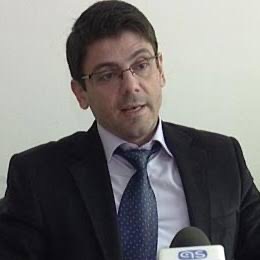
In November 2006, EXIT was invited to present the importance of this problem for young people from the Western Balkans at a seminar in the European Parliament. The seminar was organized by the Alliance of Liberals and Democrats for Europe in the European Parliament (ALDE) who have constantly been fighting for liberalization and for the abolishment of the Schengen visa regime. Franco Frattini, the European Commissioner for Justice, Freedom and Security was one of the speakers and EXIT was represented by the General Manager of the festival, Bojan Bo۫ovi殠
The European Commission has recently approved a mandate for negotiations on the easing of visa requirements for certain categories of people from Macedonia, Serbia, Montenegro, Bosnia and Herzegovina and Albania. The liberalization will, it seems, only be intended for scientists, students, business people and civil servants.