The uncertainty over the summit exposes tensions between Prime Minister Rama’s international ambitions, Albania’s limited resources and a deepening political crisis at home.
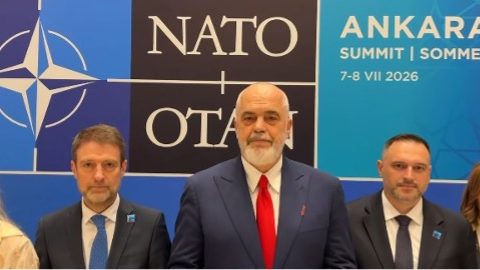
TIRANA, Albania – Albania will not host a NATO summit in 2027, Prime Minister Edi Rama has acknowledged, reversing months of confident government announcements about what had been presented as a major diplomatic achievement for the small Balkan country.
Speaking in Dublin on Nov. 12, Rama said NATO allies had not agreed on when their next summit would take place. “For sure not in 2027, and in 2028, if there will be a summit, it will be in Tirana,” he said.
The announcement marked a significant retreat from the government’s earlier declarations that hosting the summit demonstrated Albania’s growing international influence. NATO has maintained that Albania remains the intended host, but the alliance has set no date.
The uncertainty became particularly apparent after Defense Minister Ermal Nufi told POLITICO that Albania was preparing for the meeting while suggesting that a summit could even take place online. Nufi subsequently disputed that interpretation, saying he had referred to the possibility of NATO leaders deciding the summit date virtually, not holding the summit itself online.
The controversy reflects broader disagreements within NATO over the frequency of leaders’ meetings, defense spending and relations with U.S. President Donald Trump. Several allied diplomats have expressed reservations about another summit in 2027, while NATO is considering abandoning its recent practice of annual meetings.
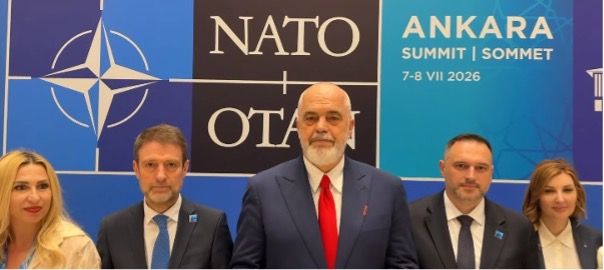
At the alliance’s 2025 summit in The Hague, leaders anticipated a meeting in Albania following the 2026 gathering in Türkiye. But the declaration adopted in Ankara last July made no reference to Albania or a specific date.
Albania’s defense spending is another concern. Although Tirana expects to exceed NATO’s previous benchmark of 2% of gross domestic product in 2026, it remains well below the alliance’s new long-term objective of 5% by 2035, including 3.5% for core military requirements.
Albert Rakipi, chairman of the Albanian Institute for International Studies, has argued that Albania should concentrate on becoming a credible contributor rather than exaggerating its international importance.
“I believe Albania should behave as a serious member of the Alliance, but also as a modest one,” Rakipi said. He has compared some of Albania’s foreign policy rhetoric to its communist-era political culture, when the isolated country behaved as though it were a major international power.
Political analyst Ilir Kalemaj has similarly questioned whether hosting a summit should be treated as a political achievement for the government rather than an opportunity to strengthen Albania’s contribution to collective security.
“The real issue is how this increase will be implemented, and how transparent defence spending will be,” Kalemaj said, referring to Albania’s military budget. He has also warned against turning the summit into an electoral asset for the ruling party.
The financial implications have raised equally serious questions.
Former Finance Minister Arben Malaj estimates that organizing the summit could cost approximately 160 million euros ($185 million), with NATO covering only about 10% and Albanian taxpayers bearing roughly 145 million euros. These figures are Malaj’s estimates, not a publicly verified final budget.
“What impact would it have on Albania when 145 million euros would fall on the shoulders of Albanians?” Malaj asked, questioning the justification for such spending in a country where many households struggle to meet basic expenses.
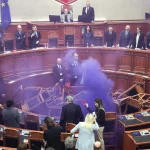
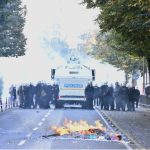
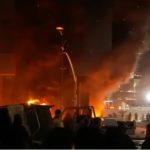
The debate comes amid Albania’s most serious domestic political confrontation in years. Months of anti-government demonstrations, initially driven by opposition to controversial development projects, have expanded into protests against corruption and concentrated political power. Demonstrators are demanding Rama’s resignation, a caretaker government and early elections. Some protests have turned violent, increasing concerns about political stability.
Against this background, the government’s determination to host a prestigious international gathering has acquired an unmistakable domestic political dimension. Critics see the summit as an attempt to secure international recognition and legitimacy at a time when the government’s legitimacy at home is increasingly contested.
Rakipi has warned that the period when Albanian governments could seek international support for short-term domestic political interests may be coming to an end.
A diplomatic source speaking to Tirana Times on condition of anonymity described Albania’s ambitions to host the summit as excessively pretentious, suggesting that the government should approach its international role with considerably greater modesty.
Hosting NATO leaders would undoubtedly represent an important diplomatic event for Albania, a member of the alliance since 2009. But membership already provides the country with security guarantees and a place in collective decision-making. Its credibility ultimately depends on its contributions, institutional reliability and political stability, not on the international ceremonies it organizes.
For Rama, the loss of the 2027 summit is therefore more than a scheduling disappointment. It exposes the distance between the government’s international ambitions and the country’s economic, military and political realities.
Whether NATO eventually gathers in Tirana in 2028 remains uncertain. What is already clear is that an event promoted as proof of Albania’s rising international stature has instead reopened questions about the priorities of a small, relatively poor country whose government appears increasingly preoccupied with international prestige while facing a profound crisis of confidence at home.