TIRANA, Jan. 7 – Business and consumer confidence dropped for the third quarter in a row in late 2018, signaling that the decade-high growth of around 4.2 percent that Albania is estimated to have registered last year was not enough to restore confidence in the country’s economy.
A periodical survey conducted by Albania’s central bank shows the Economic Sentiment Indicator, measuring both business and consumer confidence, was down by another 1.2 percentage points in the final quarter of 2018, after dropping by a total of 14 percentage points in the previous two quarters, to stand only 0.2 percent above its long-term historical average at the end of 2018, in a similar level compared to mid-2016 when the economy was growing by an average of 3.5 percent.
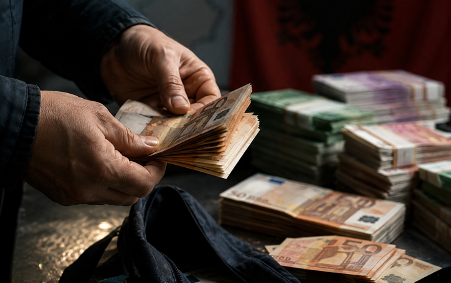
The survey shows the Economic Sentiment Indicator was negatively affected by a confidence drop in the key services, trade and industry sectors, apparently hit by the end of the peak tourist season, a further weakening of the euro against the Albanian lek and a new decline in oil and mineral prices hampering 2019 prospects in the key oil and mining industry.
Meanwhile, confidence in the construction sector and among consumers registered a turning point, but yet remaining slightly below their long-term historical average.
Expectations for the first quarter of this year remain mixed at a time when capacity utilization in major industries and services sectors stand considerably below potential, ranging from 62 percent to 75 percent.
The findings in the central bank survey contradict GDP growth results for the first three quarters of 2018 when the Albanian economy grew by an average of 4.35 percent, in growth that was primarily led by the energy sector following a sharp increase in rainfall-fed electricity exports and a recovery in commodity prices with a positive impact on key oil and mineral exports. The peak tourist season in the third quarter of the year also had a positive effect on the key services sectors, accounting for half of the country’s GDP.
Experts estimate the Albanian economy has to grow by an average of 6 percent annually, a growth rate that it enjoyed for about a decade ahead of the 2008-09 global financial crisis in order to produce sustainable growth for Albania’s households and catch up faster with EU member countries.
Albania’s 2017 actual individual consumption, a measure of households’ material welfare was at 39 percent of the EU average, the region’s poorest, when expressed in GDP per capita in purchasing power standards (PPS), an artificial currency unit that eliminates price level differences between countries, according to Eurostat, the EU’s statistical office.
The Albanian government expects the country’s economy to recover to 4.3 percent and public debt to drop to 65.5 percent of the GDP for 2019 in more optimistic forecasts compared to key international financial institutions such as the and the World Bank and the IMF which predict the Albanian economy will slow down to 3.5 to 3.7 percent on lower contribution by the hydro-dependent domestic electricity sector, lower investment from two large energy-related projects already in their final stage and increasing risks to growth in Europe, especially Albania’s main trading partner Italy.