TIRANA, Nov. 23 – A series of articles in UK media outlets indicating there is a plan to transfer UK’s third-country asylum seekers to Albania has led to repeated denials by the Albanian government but also increased questions as to what is behind the British press campaign.
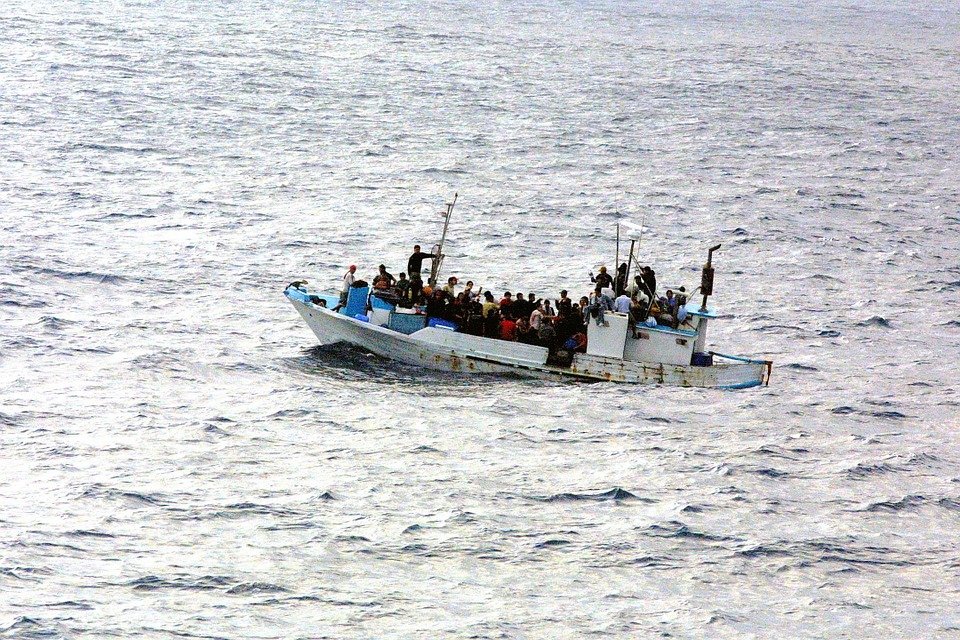
According to the reports, which have continued since early October, the United Kingdom aims to use Albania as a holding place for migrants caught crossing the British Channel in small boats from France in a new asylum crackdown.
The British government is hoping to seal an agreement to fly the migrants to Albania as a central measure to end the crisis, according to The Times, one of Britain’s most prominent newspapers.
“Under the plan, arrivals on Britain’s beaches in small boats would be taken to the country within seven days for off-shore processing,” the newspaper wrote.
It also reported the plan would cost about 119,000 euros per person.
That large sum had at least one ruling majority member of the Albanian parliament expressing interest in the UK plan.
“The way I see it, such a deal would not be bad for us,” said Paulin Sterkaj, a Socialist MP during discussions in a parliamentary committee. “There is nothing wrong with all that money coming to Albania. We are talking about 100,000 pounds coming with each person.”
But the Times’ front-page story also led to another scathing denial by Albanian Foreign Minister Olta Xhacka.
“Same old fake news this time in the front page of a respected paper as The Times,” she said.
It is not the first time Xhacka has had to deny these stories publicly. In early October she took to Twitter again calling the reports “fake news” and “embarrassing.”
Xhacka linked to an article by The Sun tabloid, but more reputable newspapers like The Times had also written about the issue, citing a leaked UK Home Office proposal.
UK Home Secretary Priti Patel had earlier this year signed an agreement with the Albanian government with critics in Albania expressing concern at the time the agreement could be used to hold third-country nationals in Albania.
The agreement, as reported in the Albanian press, had primarily to do with extradition and readmission of Albanian citizens but had a clause tagged to it allowing transfer of third-country nationals, which raised alarms among local analysts at the time.
Albanian Minister of Justice Ulsi Manja told the local press the agreement does not cover anything that resembles what the British press is describing.
A document sent to Albanian parliament for approval and leaked to the local press specifies that the only people to be returned to Albania would be the ones who have used the country to get to Britain, something that fits with international norms.
These would be primarily Albanian nationals who have for decades filed asylum claims in Britain, with many failing to obtain residency because they migrated for economic reasons not fear of persecution.
In 2020 alone, which was a slow year due to the pandemic, 7,000 Albanians filed for asylum in the UK, part of a non-stop wave of about 250,000 Albanians who have sought asylum in an EU member state since 2008. The vast majority of these applicants were denied and deported back to Albania, which is deemed safe by European officials.
However, according to the leaked proposal in the British press, anyone who enters the UK through illegal means and applies for refugee status would have been flown to a processing center in Albania.
There is a huge difference in numbers between the two groups, as the vast majority of migrants trying to cross from France to Britain have not gone through far-away Albania first.
The fly-to-Albania plan appears to be part of UK authorities efforts to make life harder for anyone who enters Britain illegally, while making it easier for refugees to reach the UK legally.
Previous ideas Patel has suggested, according to the British press, include sending asylum seekers to Rwanda and setting up an immigrant processing center on the South Atlantic territory of Ascension Island.
Albania has suffered massive depopulation in recent decades as a result of the migration of its own people and low birth rates, with some, including Prime Minister Edi Rama, noting that migration to Albania from poorer countries might be necessary to prop up the local economy.
However, experts note that Albania’s poverty and geographical proximity to wealthy EU member states makes it more likely any would-be migrants would see it as a temporary jumping point to Europe rather than a permanent place of residence.