Adrian Paci in Italy’s 21st century sculpture exhibition
Tirana Times
MILAN, Oct 20 – Albania’s contemporary artist Adrian Paci is participating in an exhibition featuring the latest Italian sculpture trends. The 21st century Italian sculpture exhibition, inaugurated last Wednesday in Milan’s Arnaldo Pomodoro Foundation premises, will be open to the public until January 30, 2011, organizers said in a statement.
Organized by Marco Meneguzzo, the exhibition will present the work of 80 artists, all born in the second half of the last century.
“This exhibition, a natural continuation of the September 2005 show of the 20th century Italian sculpture, will bear witness to the most diverse expressions of what could be defined as “the new trend in sculpture”- the most difficult discipline to define today. The language of sculpture has become hybrid, traditional codes have been rapidly abandoned over the last thirty years, and what was the most “certain” artistic discipline by definition, has become the most uncertain,” said the gallery.
This new exhibition is part of the same project to promote Italian Art, with the critical, scientific and historical intention of making Italian art known internationally, along with artists that belong to the most diverse trends , excluding no-one of merit – not even the youngest.
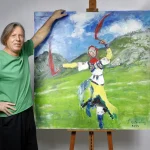
Last June, Adrian Paci displayed some new videos and a painting inspired by Italian poet and film director Pier Paolo Pasolini in Swtizerland’s Kunsthaus at the Zurich museum.
Paci is also known for his video work, ‘Albanian Stories’ (1997), and ‘The Last Gestures’ (2009), his four-part video installation.
Born in 1969 in Shkoder, Albania, Paci currently lives in Milan. He has earned a broad reputation with contributions to key international exhibitions.
Adrian Paci is one of Albania’s few internationally renowned artists. In his work, which comprises videos, paintings, installations and photography, he addresses topics like migration, globalization and cultural identity and uses urgently compelling images to demonstrate the effects of exile, war and social upheaval on the human subject.