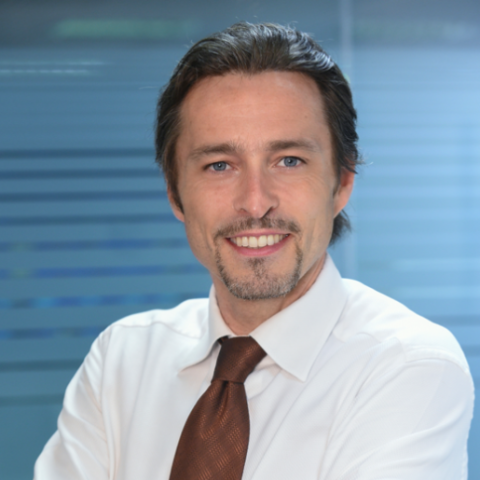
TIRANA, Aug. 16 – Twenty paintings featuring Helidon Haliti’s personal world are being displayed for the first time at the National Arts Gallery in Tirana. His “Personal” exhibition is both a challenge and early dream for the 44-year old painter.
“The exhibition is titled ‘Personal’ because it is based on my personal life. Personal contains a human concern of the artist who sees it from different viewpoints, the artist wants a mix of passion, concern, auto-sarcasm and hyperbole. Some 90 percent of the works are new,” says Haliti.
The exhibition has been conceived on a poem written by his father who was sentenced to forced labour during the communist regime.
The painter said he accepted the challenge of displaying his exhibition, which he has been working on for three years, in the peak of the tourist season when most people leave Tirana. “August is a dead month and there is no news, I think my exhibition will be news. The Albanian public could be lukewarm but numerous tourists will come and visit,” says Haliti.
“I have been working on this exhibition for three years to concentrate on an artwork I have been thinking of almost all of my life. The exhibition is a mix of my latest exhibit at the Mezuraj museum with the present. Self-closure, the necessary space needed to gain time and the next concern, a return to my childhood, inevitable reminiscences, current affairs, rancor, taboos, events on our planet, global warming, family, sarcasm, transparency, love for art and the dilemma to desert it as many times as it is not under my control, hatred, revenge, existence and survival, are my heroes. Home is my prison and my nest, built not to be eternal. I am amazed by the fact that all children draw their house in the same way with open windows, I do the same thing, but now with consciousness,” says Haliti.
The exhibition inaugurated this week will run until September 10.
Haliti’s exhibition comes after a 40-day display of more than a hundred works by some of the most renowned British contemporary artists were displayed to the Albanian public for two months at the National Arts Gallery in Tirana. The “Made in Britain” exhibition brought to Albania 111 artworks including paintings, sculptures, graphs, photographs, installations, part of the British Council collection, belonging to 1980-2010 period.
Heldon Haliti belongs to the new generation of contemporary Albanian students who graduated during the early 90s from the Academy of Fine Arts in Tirana. He has been present in numerous exhibitions in Albania and abroad, especially in Greece, where he currently lives and works. Haliti creates his works in different genres and techniques. The drama of emigration and the spiritual distemper he is still suffering as an emigrant are reflected in several painting cycles, such as “The Legs”, “The pigeon”, “The cage”, “Eva and Adam”, etc.
Comments over Haliti’s works
Ismail Kadare
Helidon Haliti’s paintings make a man to stop in front of them, maybe not knowing his name, age or birthplace, says Albanian internationally renowned writer Ismail Kadare. This is the first unrepeated act of art. An artist owning this talent, let’s say, has the key of the enigma. We know these scenes; we have met them on the world we are living, or deep in our consciousness. However, we feel the need of staring again at them, in this second life of ours, offered to us by the painter. In this case, this is made possible thanks to Helidon Haliti, an Albanian painter of the new generation of 21th century. These paintings, as well as the all arts, do and do not have a connection to life. To be more precise, they are connected to life not by chain but by means of freedom, that is a connection of the highest rank, the only one accepted by art.
Shkelzen Maliqi
“The style of Helidon Haliti’s paintings is that of controlled surrealism which can also be called magical realism. It is inspired by topics of national roots as well as those of personalized and intimate mythology. However, the painter is careful not to fall prey to the pantheism and folkorism preferring illustration from a child’s innocent point of view,” says Kosovo art critic Shkelzen Maliqi.