Artists like Driton Selmani (Kosovo, 1987), Endri Dani (Albania, 1987) and Irgin Sena (Albania, 1982, based in New York) are “half way”, between a desire to create and build for their own countries, and a sense of delusion over former cultural and social promises
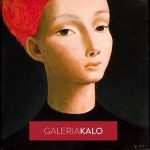
TIRANA, Dec. 25- Twelve artists have been selected to participate in the Onufri visual arts competition which in this 20th anniversary comes as an international event focused on the ‘Praise of Doubt’ concept. The annual competition named after Onufri, Albania’s famous 16th century icon painter, is showcasing at the National Arts gallery artworks by young contemporary artists from Albania, Kosovo, Italy, France and Bulgaria.
Praise of Doubt, proposed by Italian curator Claudio Cravero for the new edition of the Onufri Prize, investigates some of the new artistic practices and areas of research, demonstrating their links to today’s changeable political situation, as a mirror of the constant doubt. In the selected artworks, doubt emerges as something that inevitably affects everybody.
“At the social level, especially in the last decade, for the new generation (born between the mid 1970s and late 1980s) doubt has become a basic feeling, a vital instinct telling that generation which way to move. Also in countries that are now considered as the former Eastern Europe, where new forms of democracy seem to clash with a desire to experience Western models, artists have to make a choice between remaining rooted in the cultural context they were born and grew up in, or moving permanently abroad. So, dreams of change, of utopia, are in stalemate. And in this state of suspension, what prevails is the persistent feeling of doubt, coinciding with ‘being in the present,'” says the Italian curator.
Artists like Driton Selmani (Kosovo, 1987), Endri Dani (Albania, 1987) and Irgin Sena (Albania, 1982, based in New York) are “half way”, between a desire to create and build for their own countries, and a sense of delusion over former cultural and social promises. Nevertheless, in this global era of hyper-flexibility and hyper-speed, artists from Albania to Kosovo, but also from Italy to Egypt, are taking a new approach to tackle the present day. There is no particular significance to the medium employed, but rather to the in-depth search for meaning. Jasmina Metwaly (Poland, 1982, based in Egypt), Alban Muja (Kosovo, 1980), Ivi Topp (Albania, 1985, based in France) and Marzia Migliora (Italy, 1982) are torn between a political and a revolutionary era that does not seem to take them very far: it seems neither to delve into the past (in terms of nostalgia for yesteryear), but nor does it look to the future. This lack of long-term perspectives is influenced by “ghost tracks” from the remote past. Former dictatorships or various different coercive forms of politics, even though they are part of history, seem to wave from far beneath the surface.
Some of the doubts arising from Praise of Doubt comprise a sort of “free-zone”, where today’s artist condition must be defended as a ‘multidisciplinary’ and invulnerable space dedicated to freedom and transformation. This kind of “immunity” is visible in the statements by Ergin Zaloshnja (Albania, 1979), Flaka Haliti (Kosovo, 1982, based in Germany), and in the drawings by Elton Kore (Albania, 1981). In this connection, also the installations by Py Verde (Italy, 1981; France, 1986; based in Belgium) and the video by Silva Agostini (Albania, 1979, based in Germany) suggest a place subordinated by a series of tensions and forces. They reflect perseverance and extreme physical exertion, reminiscent of a type-3 lever, where the effort is applied between the fulcrum and the load.
“Praise of Doubt becomes a metaphor for being positively hesitant when we make a strong mental effort in the attempt to achieve effective, or ineffective, action.”
The exhibition featuring artworks by artists who come from Albania, Kosovo, Italy, France and Bulgaria will remain open at the National Art Gallery from December 26 until February 2, 2014. The Onufri Prizes will be awarded by an international jury at a ceremony on January 30.
In last year’s 19th edition, a picture and a sculpture featuring two holding structures for trees created by young artist Alketa Ramaj was announced the winning work of the Onufri competition. The jury awarded Ramaj the first prize for the symbolism of the continuation of life brought by her works. The artist participated in the exhibition with a picture featuring a leaning tree being held by a metallic structure and a similar gypsum sculpture featuring a structure to hold a sapling straight.