“One and indivisible” collects the “reflections on the 150 years of our Italy” made by the Italy’s longest serving president going over the stages of the historic process that has made Italy a modern European nation
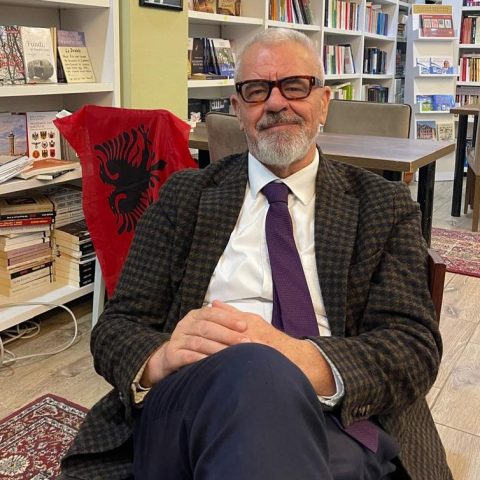
TIRANA, March 6 – The Italian President’s reflections on the 150th anniversary of Italy’s unification have been published in an Albanian version. The book titled “One and Indivisible – Reflections on 150 years of our Italy” published in Albanian by the Albanian Institute for International Studies, was promoted in Tirana on Thursday during the second day of President Giorgio Napolitano’s visit to Albania.
Italian Ambassador to Albania Massimo Gaiani, the executive director of the Albanian Institute for International Studies Albert Rakipi and Pellumb Xhufi, a former Albanian ambassador to Italy elaborated in the book’s promotion ceremony at the Italian Institute of Culture “Literary Thursday” event.
The translation into Albanian allows the public to retrace the key stages of the process of Italian unification.
The book was first published in 2011 for the sesquicentennial of the Italian Unification. Its second edition, released in 2012, reports Napolitano’s advise to “continuously ask about our history, study and discuss it, as it will create widespread awareness on the heritage of our experiences and values; it will be a source of pride and confidence from which we can strengthen our national community by putting it in a better position to deal with the difficult challenges of the present and future.”
“One and indivisible” collects the “reflections on the 150 years of our Italy” made by Italy’s longest serving president going over the stages of the historic process that has made Italy a modern European nation, despite the very difficult tests faced and the trust in the ability of the country to overcome the challenges awaiting it.
The words carved in the Constitution to define the Republic – ‘one and indivisible’ – have found an authentic response in millions of Italians.
The President of the Republic wrote in the preface to the volume, “Levering on the occasion of the 150th and focusing on shared celebrations was right and has paid off. However, launching a general appeal wasn’t enough. Historical facts and experiences had to be referred to in a discussion, account had to be taken of questions and also commonplaces, promoting what I don’t hesitate to call a widespread re-appropriation by Italians of the thread of their historical development, their advance – between obstacles and difficulties, falls and rehabilitations, halts and jumps ahead – as a society and as a state in the 19th and 20th centuries. The interventions I’ve made, the succession of the events for the 150th, have marked the times and contents of the effort made. I hope that reading them, collected in a book, makes the overall sense, the development consistent.”
The various texts making up the book touch the salient features of the process of national unification – the wise architecture created by Cavour, the heroic dash caused by Garibaldi, the active participation of southern society in the construction of a united Italy, the profound ties of the movement for national unity with European experiences, the unifying action of the language and culture – not hiding the shadows and the promises not kept, in particular the imbalance between north and south and the slow and partial implementation of that independence, through to federalism.