
TIRANA, Sept. 9 – Pillows, kilims, leather bags, animal figurines such as sheep, dogs, cats, elephants, bunnies, embroidered and decorative bowls, hot mats with felt balls and strips, necklaces and other accessories, naturally dyed wool were some of the items displayed in a recent exhibition of woven and felted items held in Tirana. Featured as part of the “From Shepherds to Artisans – The Revival of Wool Processing in Albania” implemented by the Sweden-based Cultural Heritage without Borders (CHwB), the exhibition held on Sept. 3 at the Rogner Hotel showcased some 50 woven and felted items created by local artisans in the southern Albanian district of Gjirokastra under the guide of Albanian and Macedonian experts.
Tirana fashion designer and textile engineer Arjela Kule took the task to develop the woven products with the inspiring contribution of Skopje-based felt-making mastermind Vesna Avramovska.
“Arjela and Vesna have daringly treaded the fine line between history and present, the beautiful and the useable, opening a new door for handcrafts in Albania,” says CHwB.
The knowledge of felt-making had been entirely lost in Gjirokastra, but the animal figurines are simply heart-warming and funny, and what could be a better guarantee that felt has come back to the Gjirokastra bazaar to stay. Arjela has created woven textiles of a whole new kind which can be recognized immediately as traditional Albanian while being also modern lifestyle items, to the degree that the modern appears as a continuation of the tradition, and the traditional and the modern in fact become one.
The products receive added value by the fact that for the first time in recent Albanian history, a complete local value chain has been re-established on the basis of wool from the shepherd to the artisan. Instead of using ready-made imported wool, the raw material was bought from shepherds
from the nearby communes of Antigone and Lunxh쳩, where it was also processed, bringing much-needed income to the local women. The dyeing, too, was done with local plants and revitalizing traditional knowledge and practices, and the weavers of the “Artisans of Antigone” re-learned to produce ancient weaving patterns and techniques. Finally, these new, local, authentic and high-value products add significantly to the offer in the Gjirokastra bazaar, say project organizers.
‘From shepherds to artisans’
The centuries-old tradition of wool processing in the southern Albanian region of Gjirokastra is back again this time with a chain involving local shepherds and craftspeople. A project implemented by Sweden-based Cultural Heritage without Borders (CHwB) with financial support by the Swiss Agency for Development and Cooperation (SDC) and the Centre for International Migration and Development (CIM) has revived this tradition in the UNESCO World Heritage site of Gjirokastra.
The revitalization of the sheep wool processing tradition has brought income to both shepherds in the communes of Lunxheri and Antegone who now have found a market for their wool and local craftspeople, says the CHwB.
Some 20 women in the communes of Lunxheri and Antigone have been self-employed in the dyeing of sheep wool with natural paint obtained from plants. Some 14 other craftspeople from these two communes have also been trained by professionals of wool processing and textile design to create and produce new handicrafts products with lower costs and higher quality than the ones created with imported material.
The project named “From Shepherds to Artisans – The Revival of Wool Processing in Albania” creates opportunities for higher income for the local community also diversifying the market with more quality products.
“Imported wool dyed with chemical paints does not make the handcraft products attractive and force artisans to sell products at a high price and poor quality. By replacing imported products with domestic ones, both the production and processing costs drop and artisans can produce quality products for the local market and tourist,” project coordinators say.
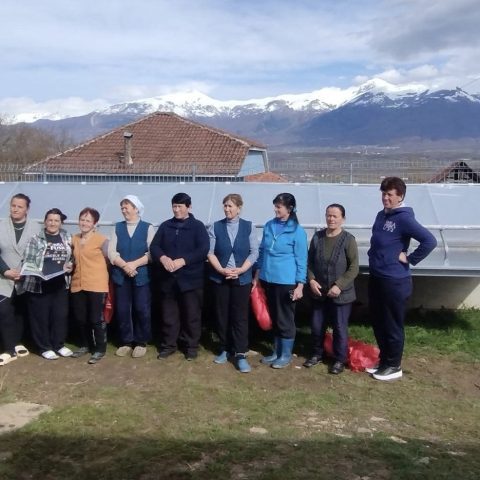
Gjirokastra artisans display woven and felted items

Change font size:
Recommended Articles


Latest from Culture
Where Art Meets Memory: The Gallery Kalo Journey
Change font size: - + Reset A Q&A with Gallery Kalo founder Përparim Kalo on art, cultural heritage and the gallery’s expanding vision along the Vjosa Valley. Introduction Gallery Kalo is more

Pride in Tirana Sends Message of Unity Against Hate
Change font size: - + Reset As Albania’s LGBTIQ+ community marches under the slogan “Together for Family,” activists say the real threat to family and society is not diversity, but hatred, exclusion

Pushing Against Inertia: How Harnex Is Testing the Balkans’ Appetite for Innovation
Change font size: - + Reset Tirana loves a good spectacle. Walk through the capital today and you are greeted by sleek new glass towers, vibrant urban spaces, and a relentless political
Modigliani Comes to Tirana as Kalo Gallery Expands Albania’s Cultural Horizon
Change font size: - + Reset Tirana Times, May 15, 2026 — Kalo Gallery, one of Tirana’s most prominent private cultural spaces, has opened an exhibition dedicated to Italian painter and sculptor Amedeo
The Forgotten Synagogue and the Belated Love for Jewish Culture
Change font size: - + Reset By Auron Tare These days, in the noisy marketplace of Albanian opinions, a new theme is being articulated: the “love” of certain Albanian public gentlemen for