Even though women in Albania makeup half of the entire population, their path to entrepreneurship and business faces hardships. An investigative piece by Mimoza in the Voice of America Balkans inspects some of the issues businesswomen in Albania face.
Women are the half of the coin of a normal functioning of society, holding a crucial contribution in the welfare of both the economy and the social spectrum. However, in terms of establishing and carrying out private businesses they have faced various hardships towards survival and success. Only 35 percent of Albanian existing businesses as in the service, production or other sectors are owned by women.
Experts believe that women face more difficulties and discrimination than men in the business fields, even though issues faced might be the same, from corruption in customs and the tax agency, unfair competition and informality. A thrifting entrepreneurship from women positively affects the state’s economy and welfare, thus it is important to offer a kind of security.
The Association for Entrepreneur Women have laid claims that post-90s policies and governances have undertaken limited works towards this interest group. However, since 2017 we have a state’s minister for entrepreneurial protection, who offers a few reliefs for businesswomen, considering their complaints.
‘’After the 90s the first to overpower the great problems of poverty were women. Think of an unemployed person. Think of a person who has children to raise. And yet, women did it,’’ said Flutura Xhabija from the Professional, Business and Crafts Women Association.
Even though we live in a patriarchal society with multiple hurdles where economical problems remain in abeyance unsolved, experts have noticed a positive trend in the progress of women owned businesses these past 28 years.
Xhabija said that the number of female businesswomen has increased over the years. From previously 21 percent, the number has now grown into 33 percent without including the three percent of female farmers. As things are going more in balance, the crafts women are also receiving more weight.
State economy observers claim that the investments of women is focused on the small business, or the family one. Female owned business in the country have usually started as small and medium individual businesses.
‘’A few are in judicial forms as limited liability company. These include from beauty salons, up to activities with consumer service nature, and fewer in production,’’ said Dr. Aelita Mani, director of the Business Administration Dept. at the Luarasi University.
Out of 200 large business in Albania, only 37 are owned or led by women. Yet, the state’s minister for entrepreneurial protection is a female. The minister, Sonila Qato, seeks to help and safeguard the Albanian business.
Through various programs Qato aims to support women in Albania, also by enabling them qualifications and traineeship programs. From the two last fiscal packages approved by the parliament, one was especially for self-employment.
However, as mentioned, women face more hardships in business success than men. Dr. Mani says that these issues come from the corruption in the customs, corruption in the tax service, and pressure.
‘’We function in a different way and the tax agency cannot classify us. They give us solutions which hangs us around and confuse us, and then what happens is that two tax agents hide behind a tree across your store and wait until they catch you doing something wrong. If the government can’t help us, then it shouldn’t frustrate us,’’ said Manjola Lloja, director of craftsmanship store ‘’Nje mar nje mrapsh’’, with works of 250 women and girls from all over Albania.
The discrimination of businesswomen is a visible trait and it can be found in fiscal policies, quick information, and tenders for entrepreneurships. Other discriminations arise from the business model, employees, and annual profit. This discrimination also leads to less benefits, support, and more prejudice and vulnerability to blackmail.
The minister for entrepreneurial protection Sonila Qato said that all businesswomen in Albania have an ally, since she herself is a woman. Qato said that she will try to understand their activities and offer solutions to issues with the administration. Some experts though, offer more concrete solutions as to how the government could help.
Dr. Mani said that help can come from easier fiscal policies on taxes which would incite more businesses to open, and fiscal policies to support loans or grants, even in cases where no ownership title exists. Xhabija said that the government should offer more funds and grants to women, and instead of putting percentages, to ask questions on how they make it.
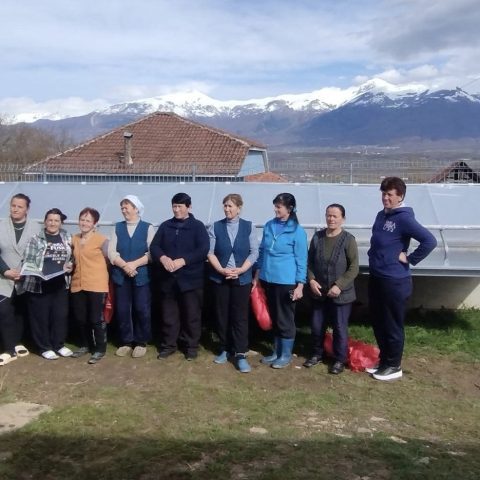
Qato said that a concrete focus are women living in rural areas, first to enable them wages and secondly to give them a fair opportunity to compete for funds or state subsidies for agriculture.
Another field which remains to be notices is tourism. Women see themselves far from the resort investments, but prefer more authentic artisan works and traditional cuisine. Lloja said that there are more than enough resorts for tourism, but more should be on the little things. For instance, at the Kruja bazaar tourists can see how fezes are made. Another authentic Albanian touristic activity is offered in Shkodra in a small loom atelier, where women work the fabric by banging the batten with their feet.
The Albanian Investment Development Agency (AIDA) is one of the agencies which has financially supported hundreds of women to start their businesses. UN Women has also dedicated grants to entrepreneur women, and UNDP is focusing in women’s work qualifications. So, in a sense, progress is being done to support businesswomen, and that has left them a bit more optimistic.
‘’Hardships are forgotten when success is achieved,’’ said Xhabija optimistically.