TIRANA, April 4- “When he arrived in 1992, he returned with the idea of opening an art academy and re-paint the frescoes of the great Shkodra church and could not do neither because he found no open door. So it’s hard to understand Lin Delija without getting into him,” expressed Gjon Radovani five years ago when speaking of Lin Delija.

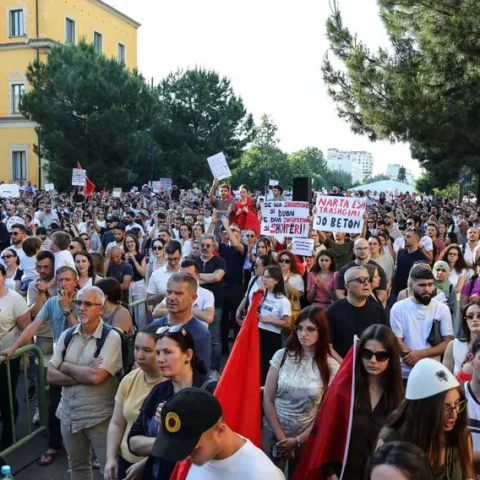
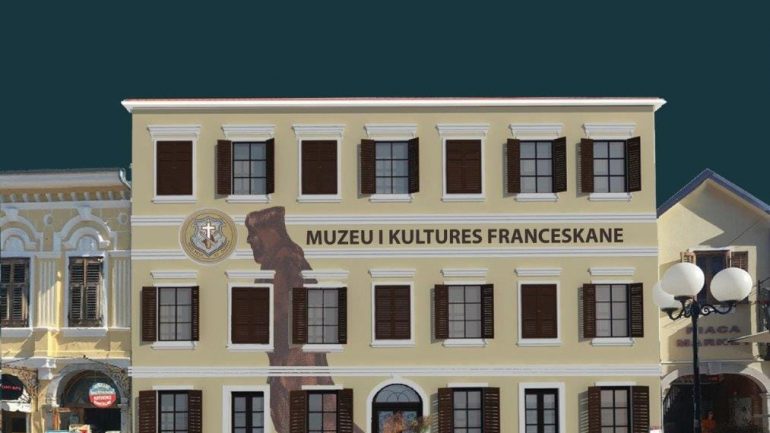
On April 11 at Gjuhadol of Shkodra will be held a symposium in the Franciscan Assembly, which final goal is the establishment of the Franciscan Culture Museum. The music of the Franciscan composers will accompany the activity, while Father Flavio Cavallini will talk about the historical stages of the Franciscan presence in Albania. Director of the National Library, Persida Asllani, will stop at a museum story of the cultural contribution of Albanian Franciscans, while Prof. Ardian Ndreca will show how painter Lin Delija recreates the world in art.
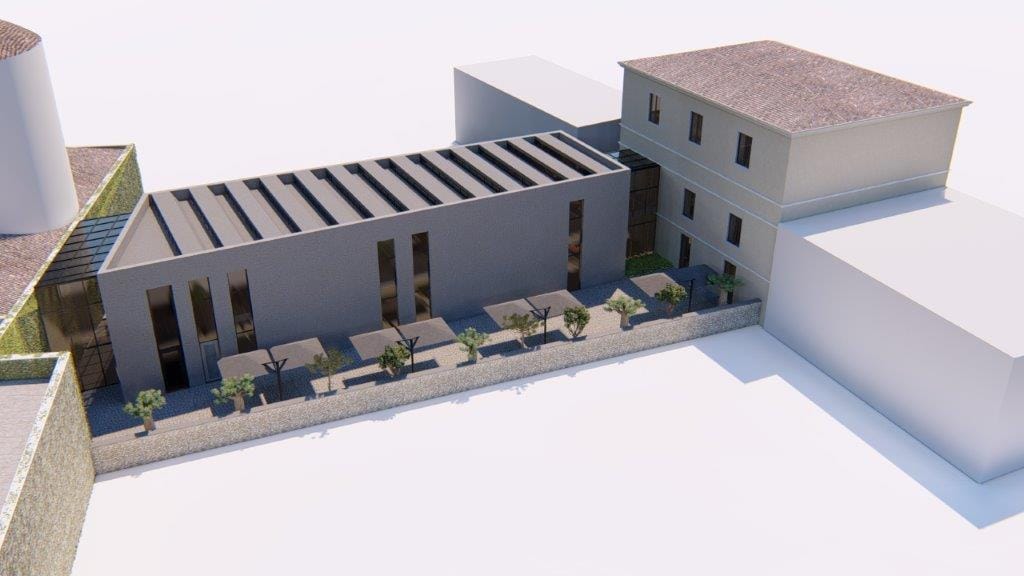
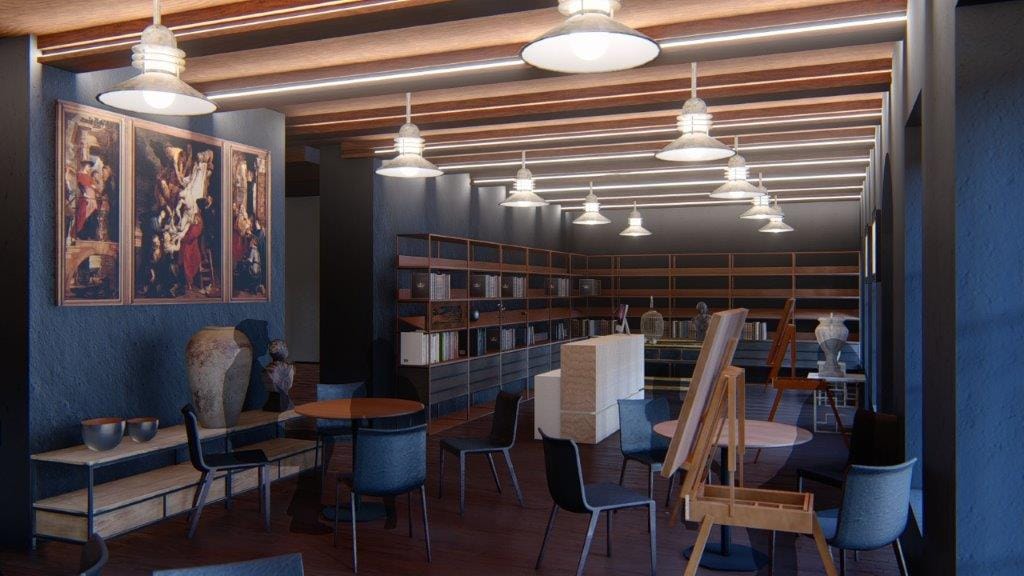
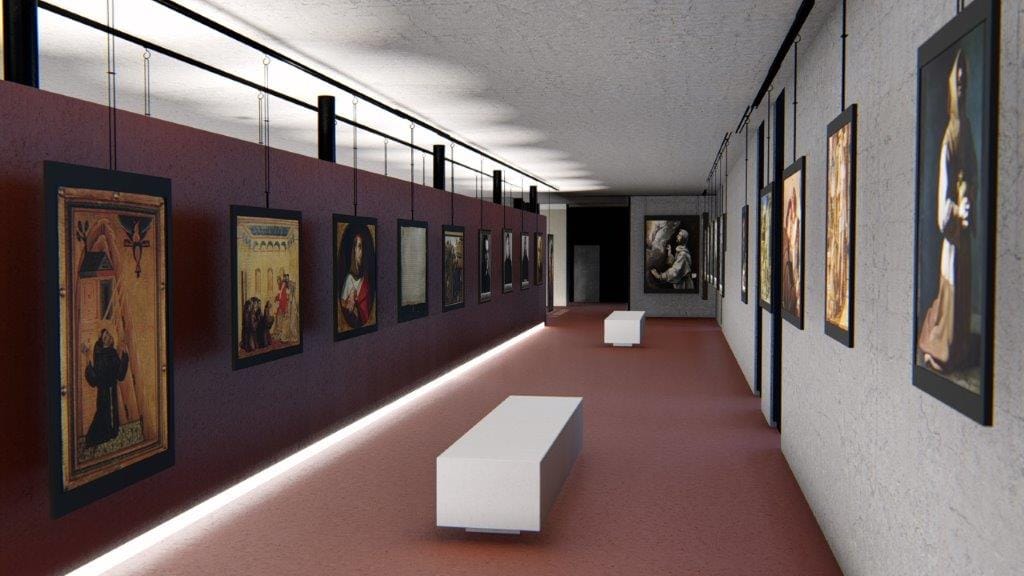
At the end of the symposium will be announced the launch of a fundraising for the establishment of the Franciscan Museum whose project idea is presented by architect Gjon Radovani. He will also sign the contract of donation of works by art director Lin Delija from “Art Union Albania” to “Museum of Franciscan Culture” , while the works will be exhibited.
Years ago, Gjon Radovani opened at the National Arts Gallery the exhibition “Lin Delija” between the sacred and the profane. It stretched out into three distinct spaces which sparkled three stages of the painting and the painter himself. In the first space, the pictorial gesture walks in the midst of a complex dual quest to know oneself and seek spiritual roots. This inseparable binomial would become the subject of existence.
The second space was followed by the painful journey of Imago Dei. Martyrs of freedom, slain because of faith, the suffering of parents and children continue with the gesture of prayer in the sacred sign of humility and faith. The third space paved through the sanctity of beauty and thanks to its human discovery. This permanent, original and structural quest deepens at the same time the indefinable mystery of life, being, and God.
112 paintings and 38 drawings were part of the exhibition. While the soutane with which Lin Delija fled in 1949, he returned to Albania 65 years later. In the bag he had taken with him at the age of 23 when he left, he had put the soutane, the dress of the friars in whose assembly he studied painting before the fleeing. He did not wear the soutane again, but kept it in his home in the Antrodoco until he passed away in 1994. Beside him came the painter’s tent with his signature on it. He has left behind 3500 works that are owned today by various museums and collectors. Radovani said that he could not get many of them, but the “Art Union” association owns about 120 of his works, 30 works available to the National Arts Gallery as a gift from Erica Schutz, a Bavarian collector and Armando Nicoletti. Meanwhile, the Albanian Franciscan Province alone has 30 works, which Lin Delija handed over to the Franciscans of Rome, to donate them to Shkodra, as well as two works of private collectors.
“Profanity is the product of the sacrament, so there is no controversy. So the sacrament to him is not boring, merely confessing, just liturgical, there is a mix of real life with the afterlife. Even in the Bible scenes dealt with by Delija, a real person from 2000 years ago is seen, but also highlanders, a sinner, a judge, a person of daily life. It’s a mix of sacrilege with the profane,” has said Radovani about Delija’s art.
Lin Delija was born in Shkodra in 1926. He grew up and was educated at the Franciscan Brother’s school, where his artistic talent first came to light. He first studied in Herceg Novi (Montenegro) and later in Zagreb at the Academy of Fine Arts. Later, with the help of Ernest Koliqi, he obtained a scholarship at the Academy of Fine Arts in Rome. His great masters were Mario Mafai and Amerigo Bartoli, from whom he acquired the knowledge of contemporary techniques and further perfected his artistic vision by harmoniously combining modern with the ethnic, Albanian and Balkan elements. Although studying with great masters, Lin Delija would end up being the original painter of rare talent whom he refused to sell and become part of the market.
In 1969, Lin Delija founded the Academy of Art “Gjergj Fishta” and in 1983 created the “Carlo Cesi” Academy of Arts at the Mentuccia villa in Antrodoco. The painter Lin Delija closed his eyes on 9 April 1994 in Rome at the age of 68. Today, his works are exhibited at the Pinacoteca di Arte Moderna in Vatican, at the Museum of Contemporary Art in Rome, at the Lin Delija Museum in Antrodoco, at the Osimo City Museum, at the Center for Modern Art Studies in Brescia, Modern Art Gallery in Palermo, St. Anne’s Museum in Quebec, Canada, University of Erlangen in Germany, New York, etc. In the town of Osimo there is a museum dedicated to the craftsman Delija, while his old friends of Antrodoco have erected a museum in 2002 in the city that sheltered him.