By Genc Pollo
Tirana Times, September 21, 2026 – At Thessaloniki in June 2003, the European Union made a promise that sounded historic and irreversible. The heads of state and government declared that the future of the Western Balkans lay within the European Union. The phrase “EU perspective” was Brussels jargon for a firm commitment that these countries could and would become members once they were ready. More than two decades later, that promise has lost its credibility. In Tirana, Belgrade and Skopje, few citizens, journalists or politicians really believe that full EU membership is realistic in any foreseeable future. Thessaloniki has become a ritual, repeated in every Council conclusion but emptied of political substance.
There are reasons for this fatigue on both sides. On the EU side, the Union was absorbed by its own crises for more than a decade. The eurozone debt crisis, migration, Brexit and the pandemic shifted political energy inward. Enlargement was no longer a political project; it became a bureaucratic file managed by DG NEAR. Croatia, which joined in 2013, remains the last country to enter the Union. Jean-Claude Juncker, taking over as Commission President in 2014, captured the zeitgeist when he openly said there would be no enlargement during his five-year mandate. It was honesty that did damage: if there is no political will at the top, why should candidate countries reform? A second excuse for stagnation became the argument about internal reform. The Union, it was said, had to reform itself before it could enlarge. The core problem is well known: the EU still requires unanimity in crucial areas — foreign and security policy, taxation and treaty change. Even on existential security questions, one member state can block meaningful action, as it has been shown over Russia-related sanctions and aid to Ukraine. Some member states and many federalists argued that unanimity had to be replaced by qualified majority voting before any new members were admitted. Yet replacing unanimity requires treaty change, and treaty change itself requires unanimity. To make enlargement conditional on an almost impossible internal reform was a polite way of saying no.
Then came the rupture of 24 February 2022. Russia’s full-scale war of aggression against Ukraine changed the geopolitics of enlargement overnight. Suddenly enlargement became security policy: how to anchor Ukraine and Moldova firmly in Europe and prevent the emergence of a grey zone that Russia could exploit. This gave a new dynamic to the enlargement process, and the Western Balkans benefited from the spillover: candidate status for Bosnia and Herzegovina, accession negotiations with Albania and North Macedonia, a new growth plan and new financial pledges. Seemingly, Thessaloniki was alive again.
However, on the eligibility side, the actual state of the Western Balkan countries, developments have moved at very different speeds and in very different directions. The region is not a bloc. Simultaneous accession is an illusion. North Macedonia is perhaps the most painful case of EU failure. It changed its name, changed its constitution and settled a 27-year dispute with Greece at enormous domestic political cost, based on an explicit promise from Brussels. Today it is blocked again, this time by Bulgarian demands over history, language and identity a bilateral dispute that the EU should not have allowed to derail the process once again. Kosovo remains in legal limbo. Five EU member states still do not recognize its independence. This hinders its EU path, from candidate status to the more important accession talks. Its post-independence relations with Serbia have also been poorly facilitated by Brussels, which has too often favoured might over right.
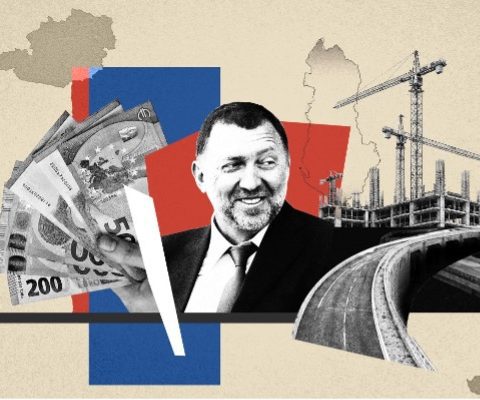
Bosnia and Herzegovina, in its Dayton constitutional form, is almost inherently paralysed. A state with three presidents, a dozen governments and no truly functional central authority was designed to stop a war, not to join the EU. The Republika Srpska leadership, aligning itself with Moscow and repeatedly threatening secession, makes fulfilment of the membership criteria objectively impossible. Serbia has, under Aleksandar Vucic, become an authoritarian one-man state. The model is well known: juggling the EU and the West, Russia and China, while extracting money and legitimacy from all sides EU funds, Russian energy and weapons, Chinese infrastructure and surveillance technology. Yet until recently it continued to receive praise for its “European reforms” from Commission President Ursula von der Leyen. In October 2025, the European Parliament itself called on “the most senior EU officials to refrain from making unfounded statements praising the reform process in Serbia”. Brussels’ tone has since changed somewhat, mostly because of Serbia’s geopolitical misalignment, but this has hardly impressed the Vucic regime. Albania has also become an authoritarian regime, sustained in good part by narco-proceeds and marked by a series of kleptocratic scandals reaching the highest levels of government. OSCE election reports point to increasing state capture of the electoral process — misuse of public administration, vote-buying and the involvement of the underworld in securing votes. Yet this did not prevent Enlargement Commissioner Marta Kos from describing the elections as “free and fair”; nor did the EU’s anti-corruption stance prevent her and the EU ambassador from publicly taking the side of a minister indicted for serious corruption and of Prime Minister Rama protecting that minister. Montenegro has reduced its legacy structural problems and has no major external dispute apart from some interference from Belgrade. It is now being presented as the sole genuine front-runner: it has closed numerous negotiating chapters and the EU has established a joint group to draft the future Accession Treaty. At this point, it is worth remembering why the peoples of the Balkans and of Eastern Europe more broadly wanted to join the EU in the first place. There were three main reasons.
First, the grand idea of a united Europe — a return to Europe after communism and the Iron Curtain; and, for those who suffered through the Yugoslav wars, a means of overcoming destructive nationalism.
Second, the promise of catching up economically through the market economy, but also through EU support in the form of cohesion funds, agricultural subsidies and other instruments.
Third, and most importantly for many reformers, support for the basic values of the EU: human dignity, freedom, democracy, the rule of law and human rights. In EU jargon for candidate countries, these are embodied in the Copenhagen Criteria: stable institutions guaranteeing democracy and the rule of law, together with a functioning market economy. These countries have a communist past, relatively weak state traditions and endemic clientelism. The prospect of EU accession was supposed to serve as an external anchor strengthening those values domestically. It is precisely on this third pillar that the EU, and mainly the Commission, has been blind to serious problems, especially in Serbia and Albania. The logic of DG NEAR has too often been stability and absorption of funds, not democracy. Authoritarian leaders who delivered on paper opened a chapter, adopted a law, signed a regional agreement were praised as reformers. Democratic backsliding was whitewashed. The Commission’s annual progress reports increasingly became copy-and-paste exercises. The situation in each country is primarily the responsibility of its own politicians and society. Nevertheless, it is appropriate to assess realistically the impact of the Commission’s and the EU’s highly influential enlargement policies. This has led to the current debate about “staged accession”. The idea, floated three years ago by the Commission, was later supported by several member states. This May, the German chancellor backed it in a letter addressed to the presidents of the EU Parliament, Commission and Council. A month later, he and the French president issued a non-paper with similar content at the EU-Western Balkans summit in Tivat. Five enlargement-friendly member states, led by Austria and Italy, also suggested staged accession beginning with sections of the Common Market. The idea is to replace immediate full membership including political rights such as voting and veto powers with gradual access to the single market, EU institutions, programmes and financial benefits, combined with reversibility in cases of democratic backsliding or non-alignment on major issues. The Commission is working on the concept. Some steps already point in this direction, including access to the Single Euro Payments Area and the “Roam Like at Home” initiative. However, access to the common market, or even to cohesion funds, cannot replace the necessary standards, foremost among them institutions functioning on the basis of legality. There are not supposed to be shortcuts here. Yet Albanian Prime Minister Rama and Serbian President Vucic, in a joint article published earlier this year in the German daily Frankfurter Allgemeine, suggested that their countries should be admitted immediately to the common market while forfeiting the vote, the commissioner, MEPs and other political rights associated with full membership. The catch is obvious: the circumvention of undesirable reforms, starting with the rule of law. Without those reforms, however, a Spanish consumer buying products from these countries, or a Danish company operating there, could not be certain of benefiting from the same standards, legal protections and rules that underpin the Common Market elsewhere in the Union. Russia’s aggression against Ukraine has given enlargement a new security rationale. That is legitimate. But security without values and standards will create problems if not Trojan horses inside the Union. Thessaloniki promised a European perspective. The resurrection of that perspective requires not less conditionality, but more. And it must be genuine conditionality, not the fake conditionality we have seen over the past decade. The EU must return to the original, tough and honest Copenhagen Criteria. Only then will enlargement regain credibility both among the citizens of the Western Balkans and among the citizens of the European Union.