Lecturers, writers and parents joining the demonstrations deepen the political challenge facing Prime Minister Edi Rama, as allegations of police brutality fuel demands for his resignation.
Tirana Times, October 20, 2026 – The participation of university lecturers, writers, artists and parents in Albania’s student protests marks a significant widening of the confrontation with Prime Minister Edi Rama’s government. Their intervention brings broader public support to the students while exposing a central obstacle to resolving the crisis: a growing loss of confidence in dialogue.
Hundreds of lecturers from universities across the country joined a solidarity march on Tuesday, according to Reporter.al, demanding an end to what they described as disproportionate police violence against young demonstrators. Marching from the Polytechnic University toward the prime minister’s office, participants also called for Rama’s resignation.
An accompanying petition sought his departure and the formation of a caretaker government to restore institutional stability and calm tensions. Reports indicated that support was growing: Lapsi.al initially cited 963 signatories among academics and public figures, while Reporter.al subsequently reported 1,350.
The mobilisation broadens the protests beyond their student base. Lecturers bring professional standing and direct relationships with the young people involved; parents and cultural figures reinforce concerns about their treatment. Their participation makes it harder for the government to contain the dispute within a narrative centred on violent demonstrators or outside manipulation.
It does not establish that universities as institutions have endorsed the demand for resignation, or that all participants share the same political objectives. Nevertheless, it shows that the government’s response has become a source of mobilisation in its own right.
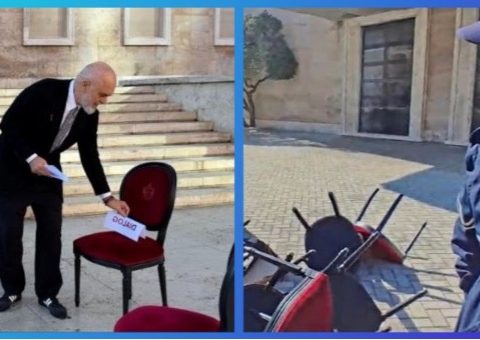
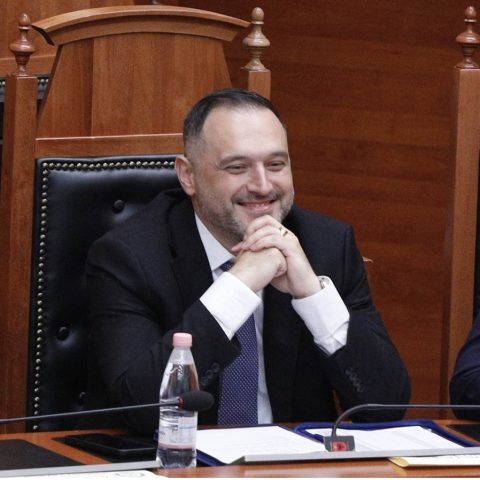
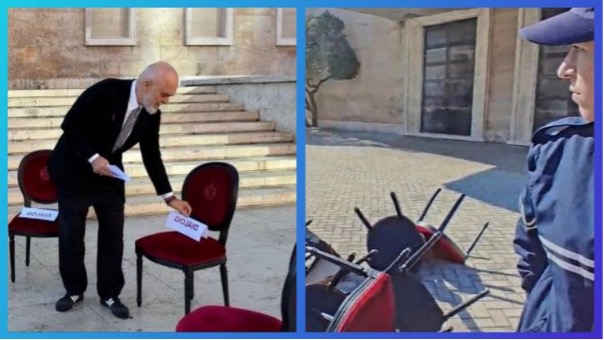
That shift was evident outside the prime minister’s office, where chairs labelled “dialogue” had been placed for talks. According to Reporter.al, Media and Information Agency director Manjola Hasa invited lecturers to meet Rama, but union leader Aleksandër Kovaçi rejected the approach, arguing that police violence had destroyed the conditions for dialogue.
The exchange captures the distance between an invitation to negotiate and public confidence that negotiations can achieve anything. For those refusing the meeting, the immediate issue is whether the government can credibly offer dialogue while protesters report beatings and intimidation.
Several participants explicitly distanced themselves from violence by demonstrators. Writer and publisher Rita Petro emphasised the vulnerability of young people, while artist and lecturer Ardian Isufi condemned violence and urged greater care in the state’s treatment of students. These positions matter because they articulate a demand for restraint without endorsing attacks on police or public institutions.
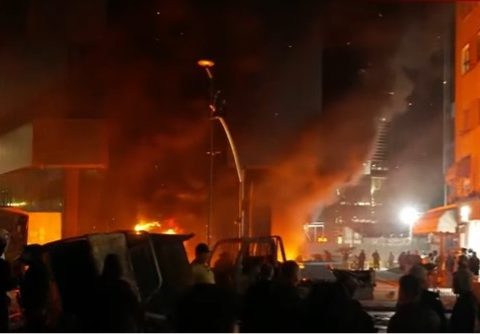
Allegations about police conduct have intensified that demand. Lapsi.al described footage that it said showed officers pursuing and striking young people, including minors, in streets away from the principal confrontation points. Those accounts raise serious questions about the conduct and supervision of police operations. The supplied material, however, does not independently establish the circumstances of every incident or substantiate the outlet’s broader numerical claims about those assaulted.
Rama’s reported announcement of a €2,500 bonus for officers deployed during the protests adds political sensitivity. Recognition of police service does not itself establish encouragement of misconduct. But announcing rewards amid allegations of excessive force risks being understood as unconditional endorsement unless accompanied by clear restraint and credible scrutiny of alleged abuses.
The government’s references to ANTIFA, Russia and Iran introduce another difficulty. The supplied reports provide no independently verifiable evidence establishing those alleged connections. As lecturers and parents join the demonstrations, explanations focused on foreign influence risk further alienating citizens whose concerns centre on education, accountability and the treatment of their children.
The crisis is therefore becoming increasingly difficult to resolve through crowd control or public messaging alone. Demands for resignation and a caretaker government have moved the confrontation beyond education policy into a dispute over political authority.
The lecturers’ intervention could still create space for de-escalation by strengthening voices that reject violence while defending the right to protest. Whether that opportunity develops will depend on credible restraint, accountability for alleged abuses and a dialogue capable of addressing substantive grievances. Without those conditions, invitations to talk may continue to be rejected, while the response to the protests draws new groups into them.