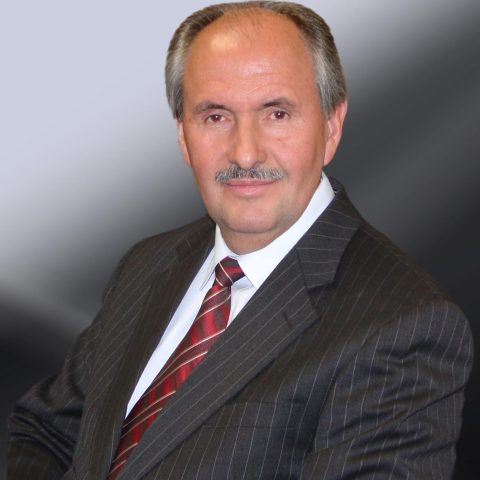
TIRANA, July 1- Dr. Bashkim Habibi’s was assigned a research duty by superiors on the 100th anniversary of Albania’s independence. Dr. Habibi is an orthopedic surgeon with a passion for history. After lengthy research with his wife Dezdemonda into the local and family archives of former hospital workers, Habibi published three years later a 500-page book titled “History of Durrà«s hospitals,” comprising of 1500 photographs and documents describing the path of the health system in the port city during the past century.
Dr. Habibi is part of a small group of local intellectuals in Durres who, although are not historians by profession, they are passionate about it and are using local archives to write pieces of city history. These “historical” books published by them are not always written for the broader reader, but nevertheless are finding a growing audience among Albanian students studying at European universities that are interested in exploring the past of Durres.
Teuta Dhima who is book specialist in the city library, said these students prefer to choose for their diplomas topics that address the history of Albania, the customary tradition, the history of Albanian language, ethnography and architecture, adding that “oreign teachers also support these initiatives.
This coastal city which is also the country’s largest port, has an ancient history and a rich archaeological heritage layered under the foundations of the multi-storey buildings and clay of the surrounding hills. But while the city’s antique history has a rich bibliography by local and foreign authors, the social and professional developments during the last century on the other hand. have not received the same attention.
To fill this void, intellectuals from different spheres are using the archives of the city to shed light on the recent past and its personalities. Dr. Lorenc Agalliu who is chief of department at the Durres archive, said that this institution has many documents that once belonged to the archives of large industrial enterprises and city factories.
“The archive has plenty of data for enterprises that no longer exist as the Shipyard, Commercial Fleet, Tire Plastics, Radio-Tv Mill, Agricultural Mechanics, or the first STAMLES cigarette factory in Balkans, founded in 1924; all with national values ”‹”‹that deserve to have their own history,” Agalliu said.
He pointed out that many of the researchers who are referring to local archives are not professionals in the field, thus he calls for support and understanding from experts to their passion’s development. Most local authors rely on personal savings, their family and social networks to cover the costs of publishing their books.
Among them is also deserved Teacher Dr. Astrit Hoxha. He started researching in 1995 and has since published the monographs “History of high schools in Durres” and “History of the ‘Naim Frashà«ri’ school,” two important bibliographic references for interested researchers in the field of education in this district. Hoxha has brought these publications to life with the financial support of family members and former students.
His colleague Xhod Beja who has published several books dedicated to the city, the presence of Italian families prior and after the Second World War, and on the economic development of Durres in the same period, has followed the same path. On the shelves of the city library a photographic album of Durres in the years 1930-1950 can be found, which is published with author’s Aristidh Mima costs. This collection also contains Mima’s personal and family photos.
However, there are scholars and historians who have prepared monographs and researchings but cannot publish them because they cannot find financial support. For example, researcher Halim Maloku who died four years ago, left behind some unpublished manuscripts after a long research work in local and national archives. The unpublished texts include “History of Education in Durres,” “Durres Prefecture, 1912-2012,” and “Short Notes on the Archbishopric.”
“Publishing of this kind can be found in the city library, but one feels sorry for the complete lack of attention from the institutions to which these publications are dedicated,” Teuta Dhima said. “However, they remain highly sought-after texts, especially from local and foreign university students.”