The new e-ticketing system is a joint investment by the Albanian Culture Ministry and the Albanian-American Development Foundation (AADF)
TIRANA, July 16 – The national park of Butrint, a UNESCO World Heritage site since 1992 situated in southernmost Albanian district of Albania, has become the first important cultural heritage site with an electronic ticketing system whose income will be managed by park authorities themselves. The new e-ticketing system is a joint investment by the Albanian Culture Ministry and the Albanian-American Development Foundation (AADF). U.S Ambassador to Albania Alexander Arvizu and Culture Minister Aldo Bumci were the first visitors to get e-tickets in Butrint last weekend. Inaugurating the system, minister Bumci said the investment by the AADF is good news not only for Butrint but the whole Albanian cultural heritage. “The government decision to allow the park manage the revenue on its own will make Butrint one of the most well-managed Mediterranean parks,” added Bumci.
Rajmond Kola, the park’s director, said that apart from modernizing the system, the e-ticking will also give an end to speculations about abuse of income.
Ambassador Arvizu pledged the United States government will continue supporting cultural heritage projects in Albania.
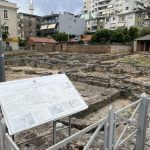
Inhabited since prehistoric times, Butrint has been the site of a Greek colony, a Roman city and a bishopric. Following a period of prosperity under Byzantine administration, then a brief occupation by the Venetians, the city was abandoned in the late middle Ages after marshes formed in the area. The present archaeological site is a repository of ruins representing each period in the city’s development.
Excavations carried out by Albanian and foreign expeditions continue shedding light on the ancient settlement.
The portico of 2,000 year- old forum believed to have been sunk by seismic waves has recently been discovered in the Butrint archeological park. The discovery was made by an Albania-US expedition which has also uncovered a church and 13 tombs belonging to the 13th century.
The Butrint settlement became an important stop along the merchant trade routes and reached the height of its glory in the 4th century BC as one of the major maritime and commercial centres of the ancient world. The sight of the fortifications alone, which date from the 6th century BC, evokes the military and economic potential of the city at the time. The hill on which the acropolis stands is encircled by a wall built from huge stone blocks. The amphitheatre, dating from the 3rd century BC, bears witness to the cultural riches of the city: the stone banks of seating, of which 23 rows have been preserved, would have held an audience of 1,500. The theatre is situated at the foot of the acropolis, close by two temples, one of which is dedicated to Asclepios, the Greek god of medicine, who was worshipped by the city’s inhabitants.
Excavations have brought the light to many objects – plates, vases, ceramic candlesticks – as well as sculptures including a remarkable ‘Goddess of Butrint’ which seems to completely embody, in the perfection of its features, the Greek ideal of physical beauty.