TIRANA, Nov. 20 – The European Union, dedicated on preserving and promoting cultural heritage, has supported the rehabilitation of Via Egnatia inside of Elbasan castle, with Euro 500,000. The rehabilitated road, inaugurated last week, is part of a larger assistance of the EU of Euro 9 million, which includes similar works in Himara, Kruja, Tirana, Shkodra, Berat and Korca.
The EU-funded rehabilitation of Via Egnatia, adds value to this quarter, which is now expected to attract more tourists, encourage the development of local businesses and consequently establish a better use of resources.
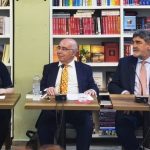
During the inauguration ceremony, the Head of Delegation of the European Union to Albania, Ambassador Ettore Sequi pointed to the need and the real possibility to reconcile Albania’s economic development with preservation and promotion of cultural heritage. Ambassador Sequi went on to emphasize that the rehabilitation of historical sites should be approached through a socio-economic perspective in urban and in rural areas, saying that “making these sites better known and more accessible invites people to gather, and that in turn invites businesses to prosper. Cultural heritage is an integral part of European values and respect for heritage”, he added “is vital for developing Albania’s European identity”. Dedicated to the preservation and promotion of sites of historical and cultural importance, the EU will continue to support the rehabilitation of infrastructure of such sites, by also revitalising the area around the Basilica in Elbasan, which will be completed by the end of February 2013. Overall the EU assistance to Elbasan, amounts to more than Euro5 million.
Via Egnatia
The Via Egnatia is an ancient roman road constructed in the second century BC. The road stretched from Durres, on the eastern shores of the Adriatic Sea, through the Balkans, to Constantinople. It serves as a tangible reminder of the importance which the region that now constitutes the Western Balkans enjoyed for centuries. The route which extends through present day Albania, Macedonia and Greece into Turkey was the principal connection between Greece and Rome, the capital of the empire. With the rise of the Byzantine Empire, it continued to serve as an important link between Eastern and Western Europe.
In Albania the Via Egnatia connected the important towns of Durres and Apollonia. The port of Durres was opposite Brindisi on the Western coast of the Adriatic, a stretch that could be navigated fairly easily by ship. From Brindisi there was a direct route to Rome on the famous Via Appia. The Via Egnatia was thus a direct extension of the main road to Rome, making the port of Durres a natural gateway to both Italy and the Balkans.