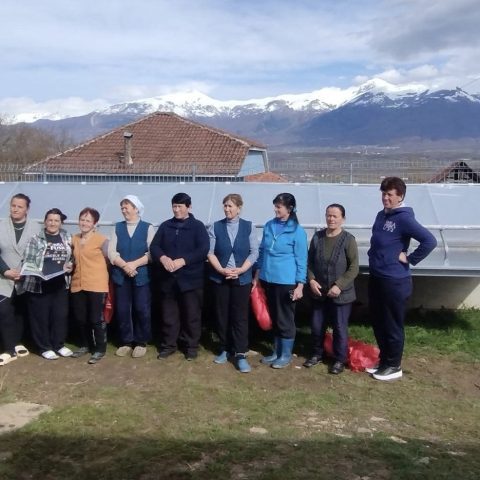
Some 20 women in the communes of Lunxheri and Antigone have been self-employed in the dyeing of sheep wool with natural paint obtained from plants.
TIRANA, June 4 – The centuries-old tradition of wool processing in the southern Albanian region of Gjirokastra is back again this time with a chain involving local shepherds and craftspeople. A project implemented by Sweden-based Cultural Heritage without Borders (CHwB) with financial support by the Swiss Agency for Development and Cooperation (SDC) and the Centre for International Migration and Development (CIM) has revived this tradition in the UNESCO World Heritage site of Gjirokastra.
The revitalization of the sheep wool processing tradition has brought income to both shepherds in the communes of Lunxheri and Antegone who now have found a market for their wool and local craftspeople, says the CHwB.
Some 20 women in the communes of Lunxheri and Antigone have been self-employed in the dyeing of sheep wool with natural paint obtained from plants. Some 14 other craftspeople from these two communes have also been trained by professionals of wool processing and textile design to create and produce new handicrafts products with lower costs and higher quality than the ones created with imported material.
The project named “From Shepherds to Artisans – The Revival of Wool Processing in Albania” creates opportunities for higher income for the local community also diversifying the market with more quality products.
“Imported wool dyed with chemical paints does not make the handcraft products attractive and force artisans to sell products at a high price and poor quality. By replacing imported products with domestic ones, both the production and processing costs drop and artisans can produce quality products for the local market and tourist,” project coordinators say.