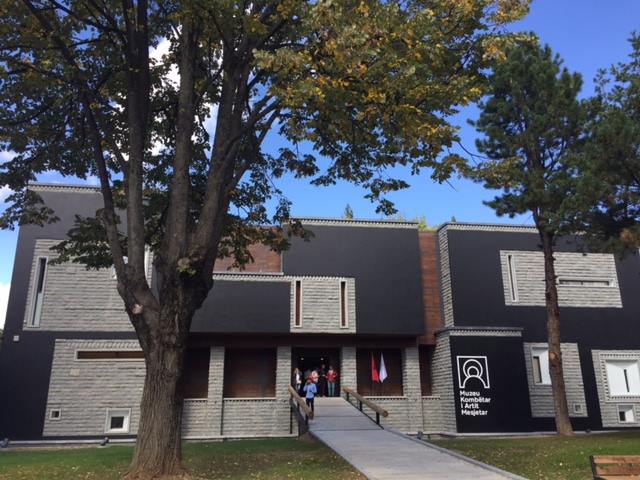
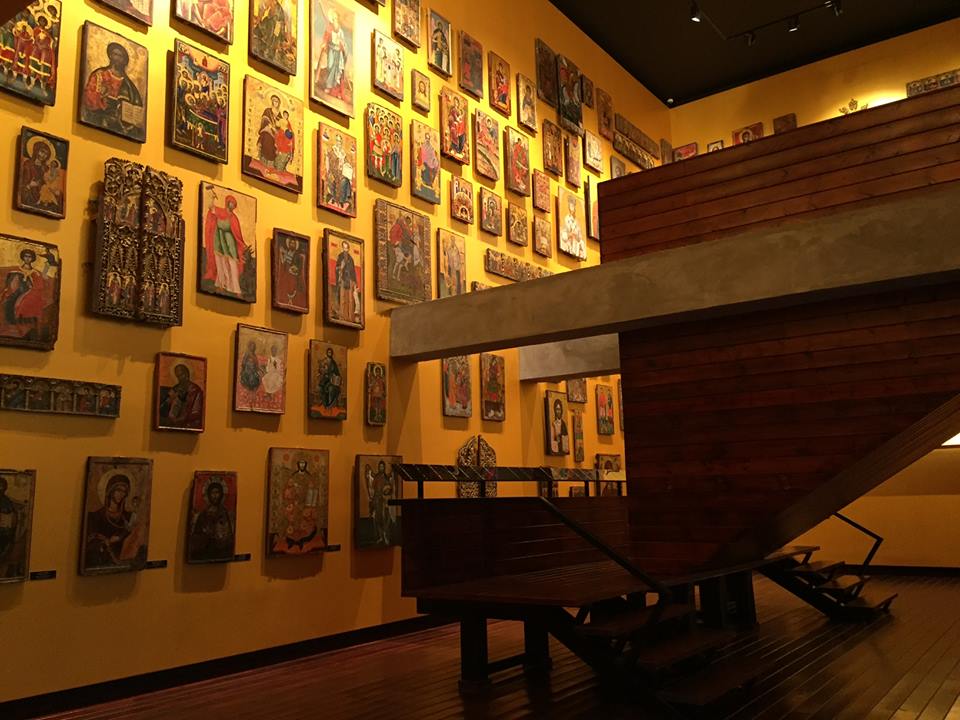
 TIRANA, Oct. 3 – The museum of medieval art in the southeastern city of Korà§a and its rich collection of thousands of artworks, mostly icons, finally has a new home.
“We are here to promote what we did at the right time and the right choices with the Golden Hall, the Back Maze, the Red Hall, the White Room and the Panoramic Balcony. We are happy not only for saving the treasure but also enlightening an important window of Albanian culture,” said Culture Minister Mirela Kumbaro at the inauguration of the new museum this week.
“The new museum will no longer cover in dust some 8,000 items, 6,500 of which icons, but will archive, preserve, restore and promote through the best technology the Albanian medieval art treasures,” she added.
The museum’s collection includes, stone, precious metals, carved wood, paper and textile works, chronologically displaying the development of Albanian iconography through 10 great masters including Onufri, a mid-16th century priest who was the most important painter of icons and murals of the early post-Byzantine era in Albania.
The new permanent exhibition will feature some 400 icons, 250 of which are being put on display for the first time in the museum, a joint investment of the Albanian and Greek governments whose construction started eight years ago.
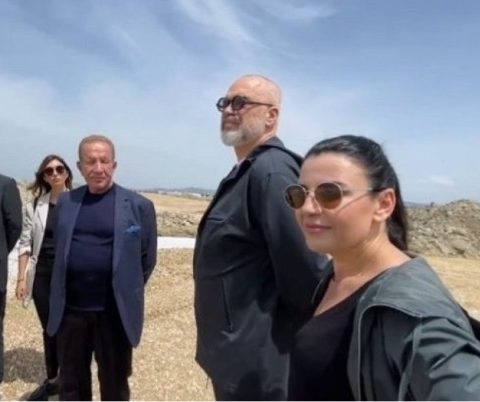
Prime Minister Edi Rama said “finally, some priceless heritage is being protected and has been made available to the public while research can be carried out under optimal conditions.”
Inaugurated in 1980 under communism, the museum had degraded during the past decade due to lack of reconstruction and inappropriate housing and display conditions.
Nicknamed “The small Paris of Albania” and the “City of serenades,” the southeastern Albania city of Korà§a, also features a prehistoric museum, a national education museum where the first Albanian language school opened in 1878 and the Vangjush Mio house museum.
The city also boasts some ancient churches and a 19th century bazaar which has been revitalized.
The historical town of Korà§a has a well-preserved historical center with cobblestone streets and many surviving villas that were built in the early 20th century, says the Western Balkans Geotourism Mapguide portal about Korà§a. From 1916 – 1920, the town was under French control and eventually it was declared an autonomous region with French support. The continental influence resulted in the construction of neoclassical villas, two famous cinemas and a tradition of photography and art appreciation. Korà§a was known at one point as the “Paris of Albania.” The town is also famous for its Orthodox churches, including the oldest surviving Orthodox church in Albania, the Church of St. Mary in the village of Mborja, just outside the city.
Korà§a is also known as the city of festivals, with the Beer and Carnival festivals, as the most popular events.