
TIRANA, Dec. 15 – Dozens of linguists from Albania, Kosovo and Macedonia discussed the standard Albanian language in a three-day conference held in Durres from 15 to 17 December, an initiative of the Language and Literature Institute of the Centre for Albanological Studies in Tirana. The conference focusing on “Albanian under the current stage; Policies for its improvement and enrichment of standard” came 38 years after the Orthography Congress of 1972 and 20 years after the collapse of the communist regime.
Some scholars still believe the 1972 Congress, which based about eighty percent on the southern Albanian Tosk dialect, was unfair and biased against the northern Geg dialect, the language of many great poets and writers such as Gjergj Fishta, Ndre Mjeda, Migjeni, also because of the fact that late Albanian dictator Enver Hoxha and most communist elite were from southern Albania.
However, the participants’ overall stance was to further enrich and not change the standard Albanian ahead of the globalization era, under which the Albanian language has been suffering from the continuous use of many foreign norms, or expressions considered incorrect or unacceptable.
The modern literary language (gjuha letrare), agreed upon at the Orthography Congress of 20 to 25 November 1972, is a combination of the two dialect groups, though based about eighty percent on Tosk. It is now a widely accepted standard both in Albania and elsewhere, though there have been increasing tendencies in recent years to revive literary Gheg.
The Albanian language (shqip) is spoken by over six million people in the southwestern Balkans, primarily in the Republic of Albania and in the neighbouring countries which once formed part of the Yugoslav federation (Kosova, Macedonia, Montenegro and Serbia). In Albania itself, the language is spoken by the entire population of 3,087,159 inhabitants (census of April 2001), including some bilingual ethnic minorities.
Linguists gather to discuss standard Albanian

Change font size:
Latest from Culture
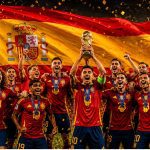
Spain Rules the World Again
Change font size: - + Reset Spain clinches second FIFA World Cup title as Europe continues its dominance on football’s biggest stage By Gautam Karve, Editor-in-Chief, World Media Organization Tirana Times, July
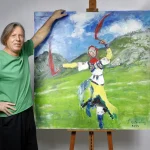
K’cimi dancing of Tropojë – Gazmend Freitag
Change font size: - + Reset by Monika Grill Tirana Times, July 11, 2026 – “K’cimi i Tropoja” – the dance that endured over centuries and kept the Albanian identity alive, has
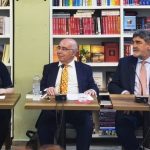
In Search of Albania’s Soul: Manuel Montobbio Returns to Tirana Through Literature
Change font size: - + Reset Tirana Times, July 02, 2026. The Albanian Institute for International Studies and Tirana Times book house hosted a special literary evening in Tirana with Ambassador Manuel Montobbio, diplomat, writer, poet

This Auditorium Comes With a Price Tag -Corruption in Albania’s Public Universities
Change font size: - + Reset Corruption remains one of Albania’s most stubborn obstacles toward development and its dream for European integration. Although the country marked its biggest historical leap in Transparency
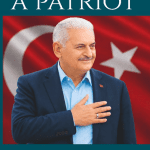
The Heart Of A Patriot That Beats For The People
Change font size: - + Reset by Dr. Jorgji Kote Tirana Times, June 11, 2026 – ”Heart of a patriot” is the new book dedicated to Binali Yildirim, an outstanding political leader and personality