TIRANA, Nov. 8- A beloved figure for the Albanian culture is Pietro Marubi, claimed as the first photographer in our country, operating in Shkodra in the end of the 19th century. His legacy doesn’t consist in his own personally photographed pictures, but in the inheritance from his successors.
Originally an Italian immigrant, Pietro Marubi arrived in Shkodra in 1850 due to political reasons, and founded the first photography business in Albania. The method he was using was with wet plates, collodions. He was assisted by two brothers, Rrok and Kel Kodheli, and after Marubi’s death in 1903, Kel took the business and adopted the last name too.
Kel Marubi started advancing the techniques in photography, by using special effects and learning to retouch the negatives. He also acquired more advanced cameras in order to take pictures outside his studio.
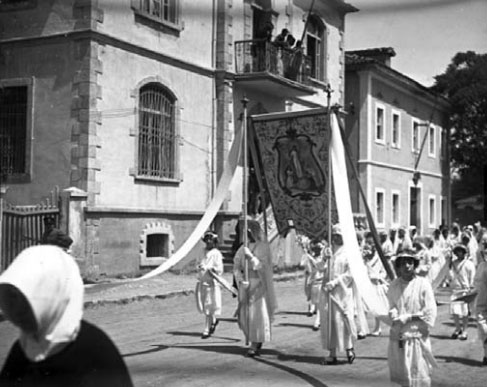
This cultural inheritance is well-documented in the National Museum of Photography ‘Marubi’ in Shkodra. 170 pictures of its collection will be exhibited at Triennale in Milan from Nov. 16 until Dec. 9 2018, in a collaboration between ‘Marubi’ Museum, La Triennale and Museo di Fotografia Contemporanea (Museum of Contemporary Photography).
Photography has made some pretty significant progress nowadays by integrating with technology and allowing everything to turn into a photographic objective. We are able to photograph everything, our meals, the sunsets, our outfits, the street, etc., at all times we find it fit and appropriate (or not) to our wills and desires.
But a century ago when photography was being discovered and developed, the whole process of it was quite ceremonial. People would dress in their best clothing, would commit to various preparations, both psychological, for this new thing will reproduce their image into a small picture, but also appear in the proper emotional state.
During the communist regime, photographs were made in special occasions, even though the technology was much more advanced than that of beginning 20th century. That is because it was expensive to produce pictures, and thus would only be taken on birthdays, weddings and other family celebrations of significance; during the national independence days, May 1st (laborers’ day), etc.
There 500 thousand negatives that the ‘Marubi’ Museum holds, which depict standings, portraits, outfits, information regarding the time from when the pictures originate, the social status of the individuals, etc.. 170 pictures of Pietro and Gege Marubi, Kel Kodheli (Marubi), Pici, Jakova, Rraboshta and Nenshati were chosen from curator Zef Paci for the exhibition ‘’Marubi archive. The photographic ritual.’’ (L’archivio Marubi. Il rituale fotografico.).
‘’The exhibition is built around the confrontation of ritualistic structure and the practical one inside the the studio,’’ said Paci.
Many photographs are a result of a long process. They depict unique gestures and objects. We find process, alchemy, special environment, attitude in them. They grasp an alienation of the individual in those pictures, in symbolization of the ritual of photoshooting.
Paci said that there were the pictures themselves who led him to their selection and idea of the exhibition. The selection was made on some photographs that were labeled as useless, due to their topology, positions, or reflections that contradicted the values of the system. There is still unknown history, or biased history regarding our nation, and these pictures complement the image of what has happened.
‘’We have a history with many ups and downs, and sometimes the written history is only a version of the real facts. It is a window to the past and if we combine them with additional facts, it might be useful to understand more,’’ said Paci.